Reform UK Accuses Andy Burnham of Planning £38bn Tax Rise If He Wins Downing Street
Reform UK has accused Andy Burnham of drawing up plans for a £38 billion tax raid on British households and businesses — a claim that. Key angle: Reform UK…
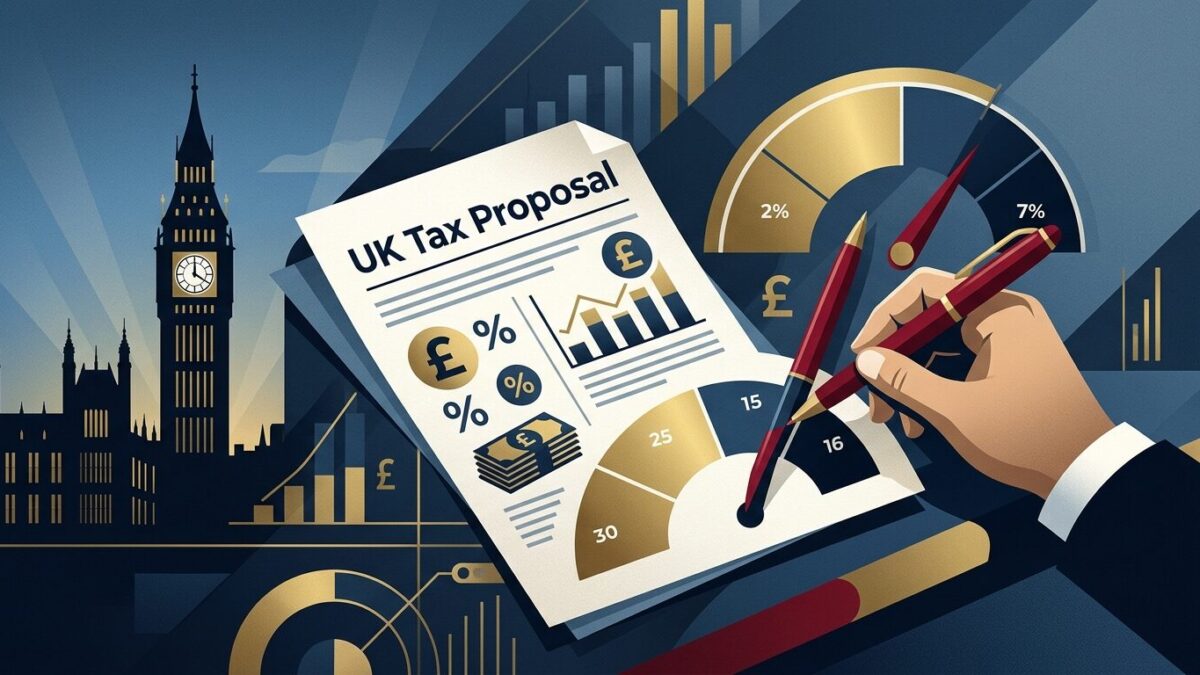
Reform UK has accused Andy Burnham of drawing up plans for a £38 billion tax raid on British households and businesses — a claim that lands squarely in the middle of what is shaping up to be one of the most combative pre-election battles in recent British political history. The allegation, aired publicly by Reform, puts the Greater Manchester mayor on the defensive just as he positions himself as a credible alternative to the Labour establishment ahead of any future national leadership contest.
Reform's charge is blunt: Burnham, they say, has privately modelled a package of tax increases totalling £38 billion that he would seek to implement if he reached Downing Street. The party has not released a detailed breakdown of where those figures come from, but the sheer scale of the number — equivalent to roughly a third of the NHS annual budget in England — is designed to stick in the minds of voters already anxious about the cost of living.
## A Number Built to Wound
Thirty-eight billion pounds. That's not a rounding error.
Reform has long made fiscal hawkishness a central plank of its political identity, targeting what it describes as the tax-and-spend tendencies of both Labour and much of the Conservative mainstream. By pinning a specific, eye-catching figure to Burnham's name, the party is attempting something calculated: to kneecap his crossover appeal before it fully materialises. Burnham has spent years cultivating a reputation as a pragmatic, northern voice of working-class Britain — a politician who can speak to voters who feel abandoned by London-centric politics. A £38 billion tax label cuts directly against that image.
For context, the UK's total tax receipts in recent fiscal years have hovered around £1 trillion. A £38 billion increase would represent one of the largest single-parliament tax expansions in modern British history, larger than the headline tax rises announced in several recent budgets. Whether Burnham's actual plans — whatever they are — come close to that figure is disputed. But in political combat, the accusation often travels faster than the correction.
## Burnham's Balancing Act
Burnham has been openly exploring a future in national politics, and his profile as Mayor of Greater Manchester has given him a platform that few regional politicians in Britain have managed to translate into genuine prime ministerial credibility. He is associated with bold public investment — the "Trident of the North" integrated transport vision, free bus travel for young people in Greater Manchester, ambitious housing targets — and he has never shied away from arguing that public services need serious money behind them.
That's precisely the vulnerability Reform is probing. Any politician who argues for expanded public investment has to answer the question: where does the money come from? Reform is simply choosing to provide its own answer, loudly, before Burnham gets to frame it himself.
His team has not, as of the publication of this article, provided a detailed public rebuttal of the £38 billion figure. The silence — or the lag in response — is itself being read by political observers as an indication of how caught off guard the accusation landed.
## Reform's Strategic Play
This is not purely about Burnham. Reform under its current leadership has been aggressively targeting the political space that a post-Blair, post-Corbyn Labour Party has left partially unguarded — working-class voters in northern England who feel no particular tribal loyalty to any party. By going after Burnham now, before any general election campaign has formally begun, Reform signals that it views him as a serious enough threat to warrant a pre-emptive strike.
The £38 billion figure will circulate on social media, in radio call-ins, and in pub conversations in exactly the towns that Burnham needs to win if he is to build a coalition capable of challenging for national power. Reform knows this. That is why they chose this number and chose this moment.
Whether the claim holds up to scrutiny — or whether detailed factual rebuttal eventually deflates it — the political damage from an uncontested accusation of this scale can be lasting. Burnham's next move will be watched closely.