Xi Jinping Challenges US Tech Dominance, Calls for Global AI Equity
The global race for supremacy in artificial intelligence is no longer just about who builds the fastest machine, but who holds the keys to the
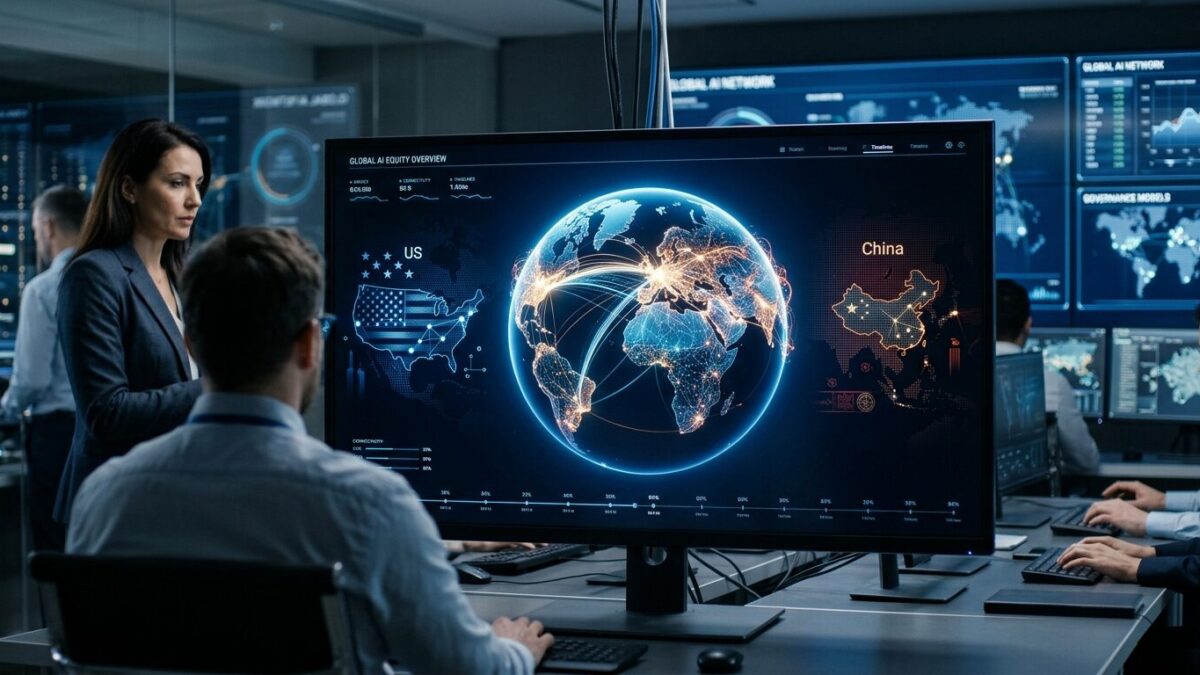
The global race for supremacy in artificial intelligence is no longer just about who builds the fastest machine, but who holds the keys to the future. President Xi Jinping declared on Friday that the development of this transformative technology should not be a solo performance by any single nation, marking a sharp pivot in the ongoing battle for digital dominance.
Speaking at the opening ceremony of the World Artificial Intelligence Conference in Shanghai, Xi emphasized that the world must avoid a scenario where one country dictates the rules of the road. His message arrived as China’s own AI models rapidly close the gap with their American counterparts, often drawing international users with significantly lower operating costs.
The Symphony of Cooperation
Xi’s address framed the current competitive landscape as a potential trap for global progress. He explicitly cautioned against the tendency to overstretch national security concepts to stifle rivals. By prioritizing one nation’s security over the collective good, he argued, the world risks fracturing a sector that requires broad collaboration to mature safely.
"AI development should not be a solo performance by a single country, but a symphony of international cooperation," Xi told the audience. He warned that placing narrow security interests above all else creates a zero-sum environment that benefits no one. This rhetoric serves as a direct rebuttal to the current climate of trade restrictions, where the United States and the European Union have tightened controls on high-end tech imports from China.
Closing the Gap
The urgency in Xi’s words mirrors the rapid progress seen on the ground in China. The Shanghai conference serves as the primary stage for the country’s tech industry, showcasing advancements that aim to directly challenge the most powerful offerings from the United States. While Washington and various AI labs grapple with internal questions about who truly controls access to top-tier technology, Chinese developers are carving out a niche. Their models are gaining traction globally, fueled by efficiency and, crucially, lower price points.
The shifting power balance is evident in the hardware race as well. China recently claimed the crown for the world’s fastest supercomputer, a symbolic victory that highlights the country’s intent to lead in the underlying infrastructure that powers AI. However, this growth brings complex questions about the future of global access.
Navigating New Injustices
Beyond the geopolitical sparring, the conference highlighted the immediate risks of unchecked deployment. As AI becomes more autonomous, the potential for its use by hackers, terrorists, or in military combat has become a central point of debate among experts. The fear is that without a unified governing framework, these technologies could be weaponized before international norms can be established.
Xi proposed a different path, one he described as "people-centred." He focused on China’s responsibility to ensure developing nations have equitable access to AI capacity-building. Without this, he suggested, the world is creating "new historical injustices" that will keep the global south on the sidelines of the digital revolution. This focus on equity is a recurring theme in Beijing’s diplomatic strategy, aimed at positioning China as a champion for emerging economies in the tech sector.
Governing the Frontier
The challenge remains how to translate these high-level calls for cooperation into tangible policy. With hundreds of experts warning that the world must prepare for the immediate impact of AI, the window for consensus is narrowing. The tension between security-driven protectionism in the West and China’s push for a more open global architecture creates a volatile environment for businesses and governments alike.
The conference in Shanghai continues to serve as the definitive barometer for the direction of China’s AI sector. As the industry moves forward, the divide between those who believe AI should be a shared global utility and those who treat it as a strategic national asset will likely define the geopolitical landscape for years to come.
For now, the message from the podium in Shanghai is clear: China intends to be a central architect of the global AI order, regardless of the barriers erected by its rivals. Whether this leads to a "symphony" of shared development or deeper technological decoupling depends on how quickly these competing powers can find common ground on the governance of the machines they are building.