Johnson faces sharp questioning as corruption inquiry weighs Carrim postponement
Independent Directorate Against Corruption head Advocate Andrea Johnson spent four bruising days under questioning at the Madlanga Commission, where her cred...
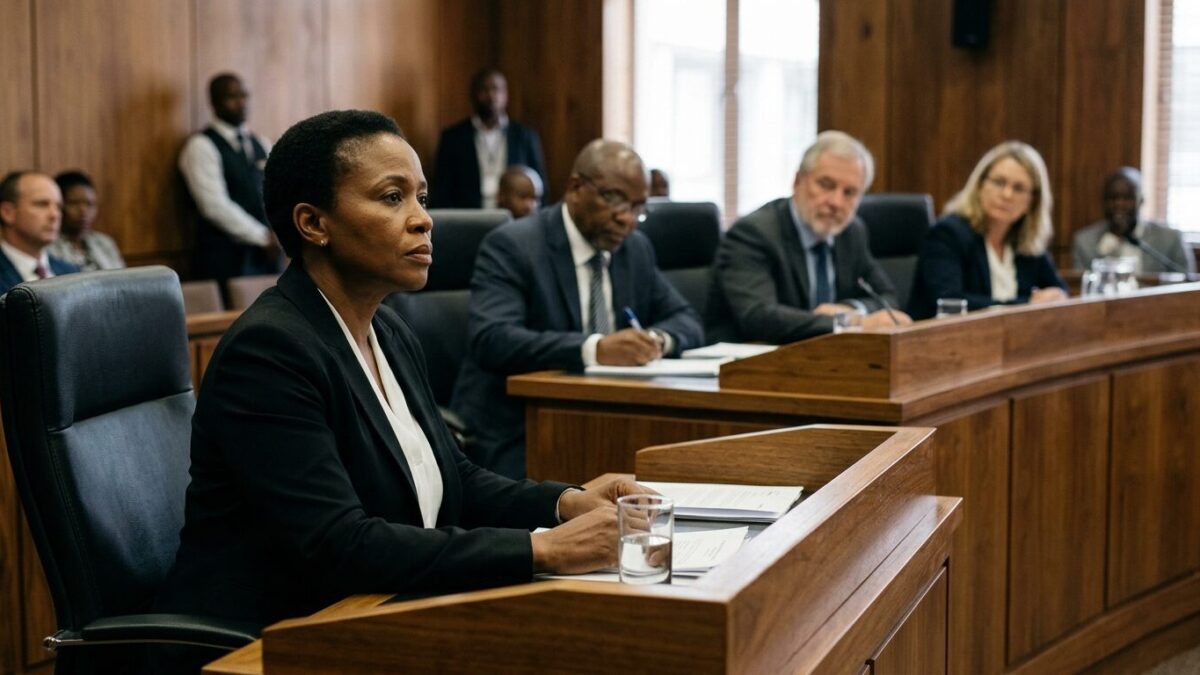
Independent Directorate Against Corruption head Advocate Andrea Johnson spent four bruising days under questioning at the Madlanga Commission, where her credibility and the legality of her agency’s decisions came under sustained attack. The hearing ended on Friday with the commission chair reserving judgment on North West businessman Suliman Carrim’s fifth request to delay his testimony.
The stakes were plain. Johnson’s answers were tested against earlier evidence she gave before Parliament’s Ad Hoc Committee on the SAPS inquiry, and the commission kept circling back to whether her version matched the record. The scrutiny went beyond one witness. Commissioners also examined whether IDAC acted within its legal powers when it investigated and arrested Crime Intelligence head Lieutenant-General Dumisani Khumalo and other senior officers.
Johnson pressed on evidence, law and consistency
The hearing room spent much of the week on the same hard question: did IDAC stay within the law, and did Johnson explain its decisions consistently? That question cut through the testimony from the first day and kept returning in different forms. Johnson faced detailed challenges over how she read the law, how her office handled the investigation, and why her account before Parliament did not always line up with what she told the commission.
For investigators and prosecutors, credibility can decide how far a case travels. For oversight bodies, it can shape whether the public trusts the process at all. That made Johnson’s appearance more than a routine update. It became a test of authority. Each answer seemed to invite another probe, and each inconsistency, real or perceived, gave the commission more to examine.
At the center of that scrutiny was IDAC’s handling of senior police figures, including Khumalo. The commission looked closely at the basis for the arrests and at the statutory powers that IDAC invoked. Those issues go to the heart of any corruption inquiry: who can investigate, how far that power reaches, and whether arrests rest on solid legal ground.
Carrim seeks another delay
While Johnson faced questions on substance, the week ended with a separate fight over timing. Suliman Carrim, a North West businessman, made his fifth bid to postpone his testimony before the commission. By Friday, the arguments had been laid out and Justice Mbuyiseli Madlanga had reserved judgment.
It was a familiar kind of procedural battle, but one with real weight. A postponement can slow an inquiry, but it can also shape what evidence comes first, which witnesses testify under what pressure, and how public the delays appear. Five requests tell their own story. They also leave the commission with little room for patience.
The commission has not said when Madlanga will rule on Carrim’s latest application. That leaves the matter hanging as the inquiry moves deeper into the questions raised this week. Johnson’s testimony has already put IDAC’s conduct under a brighter light. Carrim’s request now adds another delay test to a process that has already drawn close scrutiny from the bench.
For now, the record stands where Friday left it: Johnson’s credibility remains under challenge, the legality of IDAC’s actions remains under examination, and Carrim’s fifth postponement application waits for a ruling. As the hearings pause, one line from the week keeps echoing through the room: the commission is still deciding not just who to believe, but how far the law allowed the investigators to go.