Shorncliffe’s 1897 seaside station reopens after eight-month overhaul
The Shorncliffe train station, a small but storied stop on Brisbane’s seaside line, will reopen to the public on Monday after eight months behind barriers,
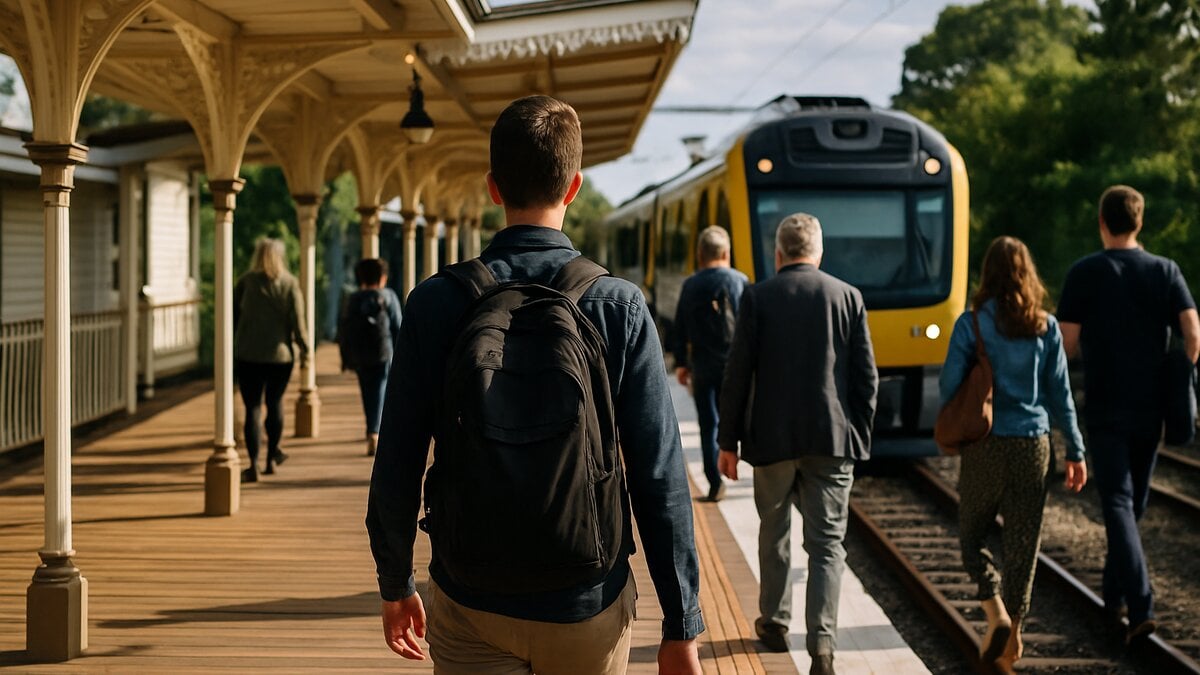
The Shorncliffe train station, a small but storied stop on Brisbane’s seaside line, will reopen to the public on Monday after eight months behind barriers, scaffolding and temporary footings. The upgrade has returned the 1897 station building to its original place and added a raft of accessibility improvements for passengers.
For a station that once served turn-of-the-century holidaymakers heading to the coast, the closure gave it an unusual second life: a platform with no trains and no passengers. That ends now. Shorncliffe, the final stop on the line, is back in service after a major renewal that aimed to keep its heritage character intact while making it easier to use for everyone.
A return to the original platform
The station building itself had to be moved out of the way during construction. Workers carefully shifted the old structure into the car park on temporary footings, then brought it back to its original location once the refresh was complete. The process sounds neat on paper. In practice, it required precision and patience, the sort of work that can’t be rushed when a building has stood since the 19th century.
That heritage matters here. Built in 1897, the station was designed as a resort stop for people escaping to the seaside at the end of the line. Its setting still carries that older mood: a quiet terminal station, close to the water, with a scale that feels different from bigger suburban interchanges. The reopening gives commuters and visitors back a piece of that history, but with a modern layer underneath.
Archaeology under the ticket office
The renovation did not just reveal new ramps and raised platforms. Before construction began, archaeological work uncovered hundreds of artefacts beneath the ticket office. Among them were a steam-era slush lamp, metal tins, stamp handles and a sailor’s cap. Small objects, but evocative ones. Together they offer a glimpse of the station’s earlier life, when rail travel and coastal leisure were tightly linked.
Some of those finds will stay on site. A purpose-built cabinet will display selected artefacts at the station, allowing waiting passengers to read the building’s history without leaving the platform. That kind of detail matters in heritage transport spaces. It keeps the station from becoming a polished relic with no memory. Instead, it tells the story in place, where people can see it between trains.
Accessibility was the main brief
The revamp also delivered practical changes that will shape the daily experience of passengers. About 90 metres of high-level platform has been raised to accessible boarding points, reducing the gap between train and platform. New hearing augmentation loops have been installed, along with tactile ground surfaces, accessible ramps and toilets, security cameras and customer information systems.
Those upgrades are the sort that often go unnoticed once they work well. But for older passengers, people with disability, parents with prams and travellers carrying luggage, they change whether a station feels usable at all. At a heritage site like Shorncliffe, the challenge is obvious: preserve the character, but do not freeze the place in time. The reopened station tries to do both.
Monday’s return marks the end of a long shutdown for a station that has always had a different role from the busy hubs deeper in Brisbane. It sits at the edge of the line, near the coast, and now it comes back with its old building in place, its new access features in service, and a small cabinet of archaeological finds ready to greet the next wave of passengers. The sailor’s cap and the slush lamp will wait there too.