Oil prices edge higher as Iran conflict drags on with no clear path to deal
Prices ticked higher on Tuesday as the war involving Iran showed no sign of a breakthrough, keeping traders focused on the risk of fresh
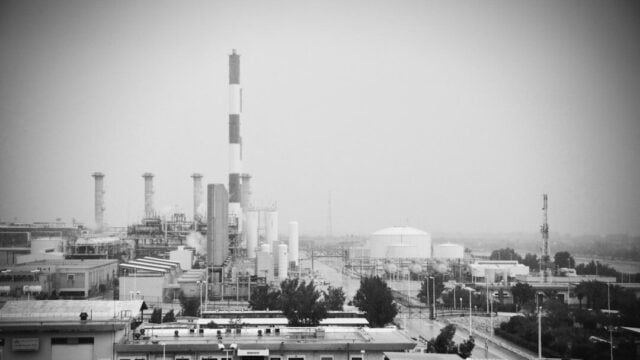
Oil prices ticked higher on Tuesday as the war involving Iran showed no sign of a breakthrough, keeping traders focused on the risk of fresh disruption to a vital shipping lane. Brent crude and U.S. West Texas Intermediate both firmed as diplomatic efforts stalled and a memorandum of understanding tied to the dispute expired without a resolution.
The move was modest, but the market signal was clear. Traders are still weighing whether the conflict will stay contained or spill further into the Strait of Hormuz, through which a large share of the world’s crude normally flows.
Talks stall, traders stay nervous
Brent crude futures were up on the day, while WTI also moved higher, after a choppy session in which both benchmarks had slipped sharply before recovering some ground. The latest gains came as investors digested the lack of progress in U.S.-Iran diplomacy and the expiration of the memorandum of understanding, which had briefly raised hopes of a path toward de-escalation.
Last week, both oil contracts jumped more than 5% after attacks on tankers operated by Abu Dhabi National Oil Company in the Hormuz strait and on a Saudi Aramco refinery. That jolted the market back to a familiar fear: a wider conflict can quickly cut into supply, even if barrels are still moving for now.
Hormuz remains the pressure point
Analysts said prices were unlikely to climb much further unless the flow of crude through the Strait of Hormuz slowed significantly or the Bab el-Mandeb Strait was shut. For now, shipments continue, even if the route is under strain and uncertainty hangs over every tanker crossing.
Retired U.S. Marine Col. Mike Jernigan said on “America Reports” that Iran is running out of room to maneuver as the conflict grinds on. He said Tehran’s economy was already weak before the war and argued that sanctions and pressure are pushing the country toward an “end game.”
“Iranians are running out of assets and options,” Jernigan said.
He also described Iran’s Islamic Revolutionary Guard Corps as a hardline negotiator. “The IRGC is a maximalist negotiator,” he said, adding that it wants to keep nuclear weapons and maintain control over the Strait of Hormuz.
Still, he argued the chokepoint is not fully closed. “It’s not closed; it’s closed to Iran,” he said, describing a queue of ships being checked by the U.S. Navy before passing through.
Iran’s foreign minister, Abbas Araqchi, said over the weekend that Tehran had not decided whether to resume talks with the United States. U.S. President Donald Trump, for his part, urged Americans to accept slightly higher gasoline prices as the standoff dragged on.
Market attention now turns to whether the current pause in escalation holds, or whether the next move comes from the waterway itself. Traders are still pricing risk, one tanker at a time.