South Africa Bets on a Bigger Growth Push as Government, Business Sketch 5% Target
South Africa’s business leaders and government are pushing a bold new growth agenda that aims to lift the economy to 5% a year, a target
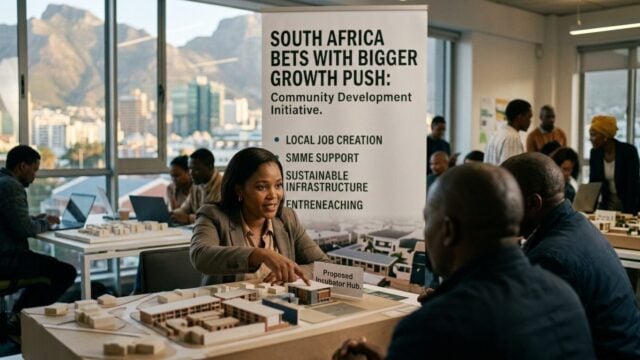
South Africa’s business leaders and government are pushing a bold new growth agenda that aims to lift the economy to 5% a year, a target that would mark a sharp break from the country’s slow-growth reputation. The pitch is simple: make it easier to invest, build and hire, and the payoff could be felt far beyond boardrooms.
The plan comes as policymakers in other countries face the same dilemma. How do you spend more on growth without blowing up the books? In South Africa’s case, the answer appears to rest on closer coordination between the state and the private sector, with the hope that fresh capital and fewer bottlenecks can unlock faster expansion.
A wider global race for growth
South Africa is not alone in trying to break out of stagnation. From Britain, where new Chancellor John Healey is being pressed to be bold on borrowing to fund investment, to Vietnam, which has launched an eight-resolution reform drive, governments are leaning hard on public policy to revive growth.
Australia is taking a similar route in Western Sydney, where Bradfield City is being marketed as a future hub for innovation, industry and jobs. In Nigeria’s Kogi state, officials are also pitching a more business-friendly climate to attract investors. The message is familiar. Growth needs help.
What the South African plan is chasing
The South African effort is aimed at a big number: 5% annual growth. That would require not just steady policy but a long run of private investment, better execution and less friction for businesses trying to operate.
Moneyweb reported that the plan reflects a rare show of ambition between business and government. The details released in the source material are thin, but the direction is clear enough. South Africa wants to turn cooperation into momentum.
That matters for jobs, for consumer confidence and for the everyday businesses that live or die by demand. It also matters for a country that has spent years fighting weak growth and low optimism. If the plan sticks, the next test will be whether it can move from announcement to action.
For now, the target hangs out in the open. The real question is whether the talks can produce the kind of policy discipline and investment climate that make 5% feel less like a slogan and more like a number within reach.