India’s space programme marks the long road from Thumba launch pad to lunar landing ambitions
BENGALURU — India’s space programme is using National Space Day to look back at a journey that began with a sounding rocket at Thumba and
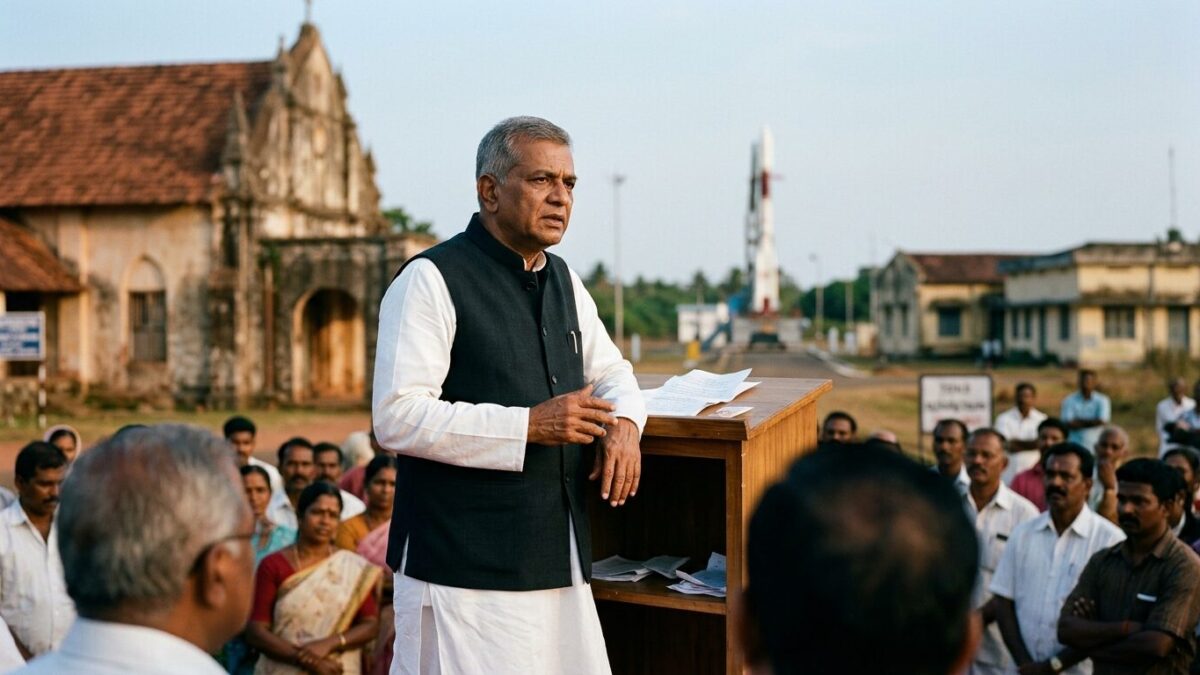
BENGALURU — India’s space programme is using National Space Day to look back at a journey that began with a sounding rocket at Thumba and now reaches the Moon’s south polar region. The contrast is stark: from a small launch range near Thiruvananthapuram to a lunar landing that put a lander and rover to work.
Aug. 23, 2023, gave India the image it had waited decades to see. Chandrayaan-3 settled on the Moon. Its lander and rover began operating near the lunar south polar region, a feat that was easier to grasp when set against the programme’s early, modest beginnings.
From a bare launch range to a national programme
Six decades before that landing, India was still learning how to launch a sounding rocket from Thumba. There were no Indian satellites. No launch vehicles capable of placing them in orbit. No sprawling network of mission control centres, tracking stations or testing facilities. The space programme, in the form known today, had not yet come together.
The first step came in 1962, with the creation of the Indian National Committee for Space Research, or Incospar, and the decision to set up the Thumba Equatorial Rocket Launching Station. The first sounding rocket lifted off from Thumba on Nov. 21, 1963.
Six years later, on Aug. 15, 1969, the Indian Space Research Organisation, or Isro, was formed. That date marked a new phase for India’s work in space. In 1972, the government took another step in building the institutional base for the programme.
Why Chandrayaan-3 mattered
Chandrayaan-3’s landing did more than add another entry to the mission log. It showed how far India had moved from its launch-point origins. The mission’s lander and rover working near the lunar south polar region gave the country a visible marker of maturity in a field where infrastructure, patience and repeated testing matter as much as ambition.
For India, the milestone sits on top of a long chain of decisions, starting with Incospar and Thumba and stretching through Isro’s formation. For the wider world, it places India among a small group of spacefaring nations able to land on the Moon and operate on its surface.
The distance between Thumba’s first sounding rocket and Chandrayaan-3’s lunar touchdown remains the clearest measure of the programme’s rise. And the next leap is already the point of the story: what India chooses to send beyond the Moon from here.