China’s Industrial Robot Surge Fuels Global Tech Race
China has deployed over two million industrial robots in its factories, signaling a massive push for manufacturing efficiency and global technological dominance.
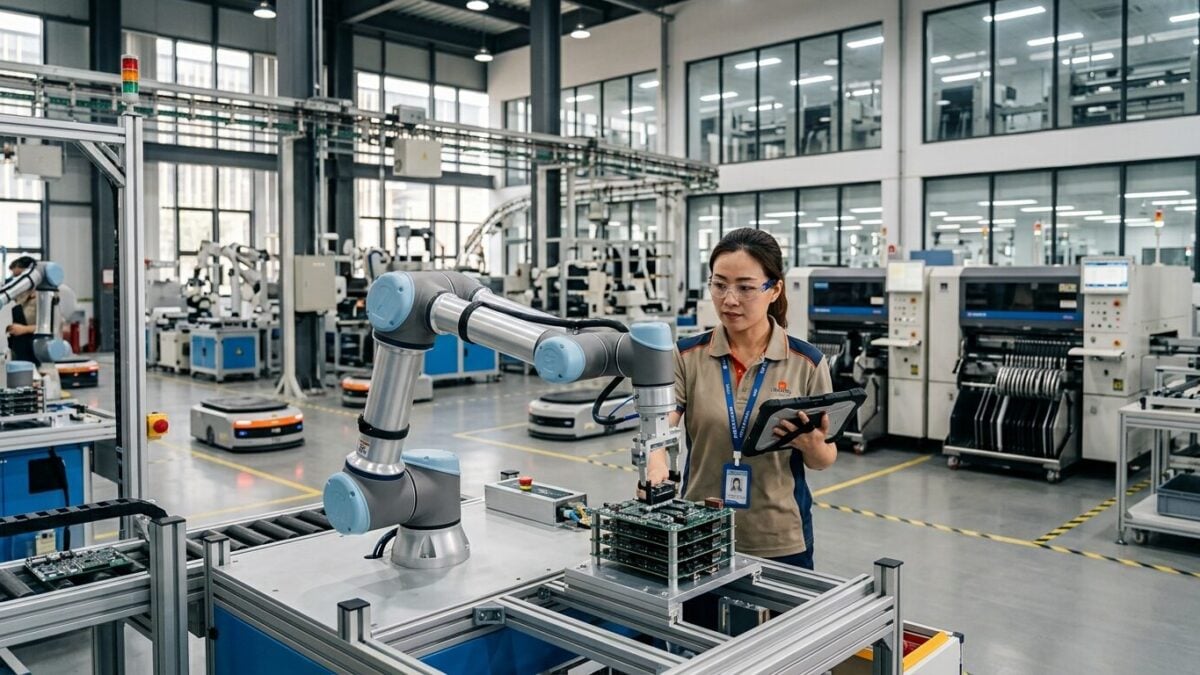
China has firmly established itself as the world’s leader in factory automation, with more than two million robots currently operating across its vast manufacturing sector. This unprecedented deployment is not merely a display of technical prowess; it is the cornerstone of Beijing’s strategy to secure productivity, efficiency, and geopolitical leverage in the intensifying global technology race.
Robotics Enters the Classroom
In Beijing, AI and robotics educator Chen Tianyu has adopted a hands-on approach to keep his curriculum relevant. He spends his off-hours visiting factories that are transitioning to full automation to identify the specific skills currently in demand. "I take a nap and the world changes," Chen says, reflecting on the relentless pace of industrial evolution.
His classroom offers a window into this transformation. Roughly 30 students work in a space where programming lessons are directly applied to industrial hardware. Students alternate their gaze between computer code and robotic arms tasked with the precise movement of cylindrical components. The line between the factory floor and the laboratory in China has effectively vanished.
The Drive for Domestic Autonomy
While global headlines often focus on the flashy capabilities of humanoid robots, the true strategic shift is happening in the mundane, high-precision tasks of industrial assembly lines. China’s scale of installation has put it far ahead of its peers, allowing companies to streamline production while the state strengthens its broader industrial base.
This ambition extends well beyond factory robotics. China has recently tightened protections for chip designs by updating integrated circuit layout regulations, creating new pathways for photonics and quantum computing. In the realm of supercomputing, China previously dominated the TOP500 list with the LineShine system in Shenzhen, which utilizes domestic chips. Simultaneously, Beijing is accelerating its space program with the goal of landing humans on the moon by 2030.
Manufacturing Remains the Core Bet
Public attention may be fixated on the evolution of humanoid robots, an area where Beijing is aggressively building a mass-production ecosystem. According to CNBC Indonesia on August 27, 2026, China is positioning itself as a central player in the future of the global humanoid robotics industry.
However, for the industrial sector, the real impact lies in the thousands of robotic arms already operational in factories. This shift is fundamentally reshaping China’s workforce, technical education, and industrial trajectory. As educators like Chen Tianyu have realized, the industrial world is moving at a blistering pace. With millions of robots already integrated into production lines, the transition continues unabated.