Modi Heads to Central Asia for Uzbekistan Talks and SCO Summit Amid Regional Shift
Prime Minister Narendra Modi touched down in Uzbekistan on Saturday to kick off a four-day Central Asian tour that underscores New Delhi's growing strategic ...
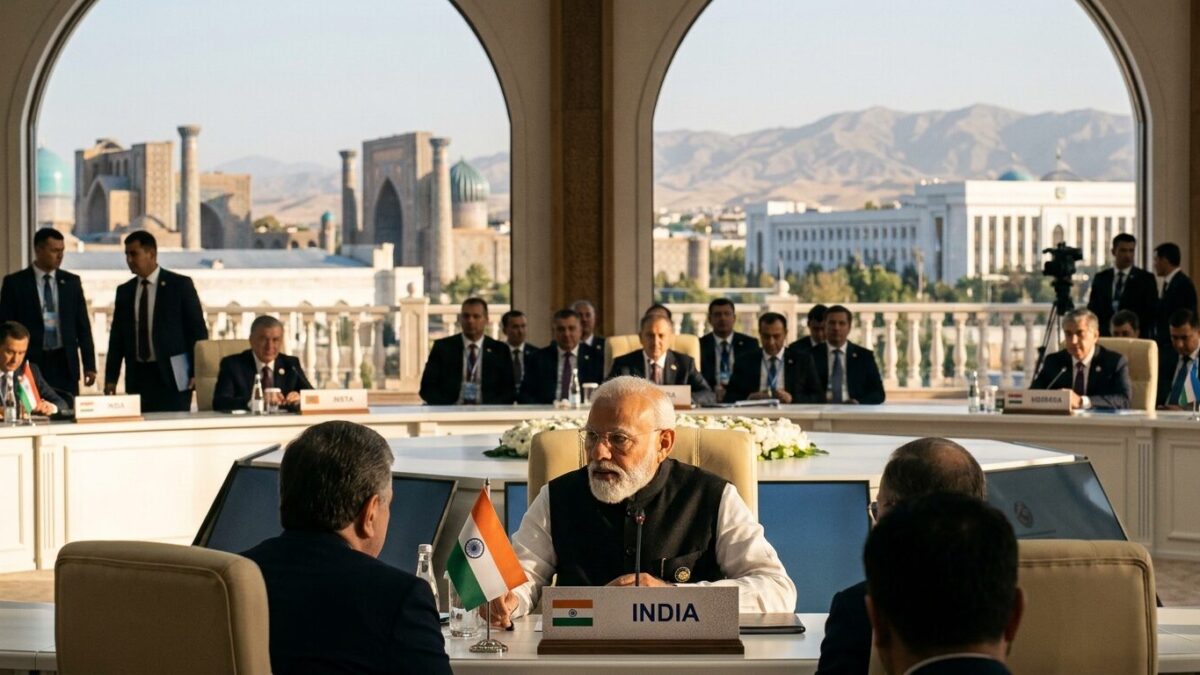
Prime Minister Narendra Modi touched down in Uzbekistan on Saturday to kick off a four-day Central Asian tour that underscores New Delhi's growing strategic focus on the region. He arrived in Tashkent for a bilateral visit before heading to Kyrgyzstan later this week for the 26th Shanghai Cooperation Organisation summit.
The trip reflects India's pivot toward Central Asia as a zone of mounting geopolitical weight. At a moment when regional security concerns and trade corridors are reshaping global power alignments, Modi's back-to-back engagements signal how seriously New Delhi views its partnerships here.
Tashkent Welcome and Cultural Messaging
Uzbek President Shavkat Mirziyoyev greeted Modi at the airport. Across Tashkent's skyline, iconic structures—including the Hilton Hotel—glowed in India's tricolour, a deliberate visual statement of bilateral warmth. The choreography wasn't accidental. Modi later highlighted the cultural programming on social media, noting performances that blended Bollywood dance with local Uzbek folk traditions, alongside classical Indian Kathak by students from the Lal Bahadur Shastri Centre for Indian Culture.
This is his fourth visit to Uzbekistan. Each return signals continuity in a partnership that Delhi wants to deepen across multiple fronts.
What's on the Bilateral Agenda
In Tashkent, Modi and Mirziyoyev plan delegation-level talks focused on expanding their strategic partnership. Trade and investment top the list. So do digital infrastructure projects, defence cooperation, energy initiatives, and education ties.
Modi said before departure that recent years have seen the bilateral relationship "advance significantly" and that he expects substantive discussion on how both nations can move forward together under India's "Viksit Bharat" (developed India) vision and Uzbekistan's "Yangi Uzbekistan" (new Uzbekistan) framework. The dual-vision framing suggests both countries are pitching this as a partnership of equals building toward shared modernisation goals.
A wreath-laying ceremony at Yangi Uzbekistan Park with President Mirziyoyev underscored the symbolic weight of the visit. Modi also plans to visit the Shastri Memorial and the Mahatma Gandhi Centre at Tashkent State University of Oriental Studies—moves he framed as honoring the historical and cultural bonds between the two peoples.
The Kyrgyzstan Leg: SCO and Security Focus
From Tashkent, Modi travels to Bishkek for a two-day SCO summit stint. At the regional bloc's gathering, India will push its own priorities: security architecture, connectivity frameworks, and economic opportunity. Central Asia's security landscape—buffeted by spillover conflicts, terrorism concerns, and great-power competition—is expected to dominate discussion.
The timing matters. Kyrgyzstan hosts this summit as regional tensions simmer, making India's voice on collective security measures directly relevant to member states weighing their own strategic positions.
Modi's visit spans a zone where traditional boundaries between regional and global security blur. His presence in both capitals signals that New Delhi sees Central Asia not as a distant periphery but as integral to its own strategic architecture.