Anak Krakatau Erupts: Volcanic Ash Blankets Five Provinces
Mount Anak Krakatau erupts, spreading ash across five provinces in Indonesia. Authorities maintain Level III alert as flight safety monitoring continues.
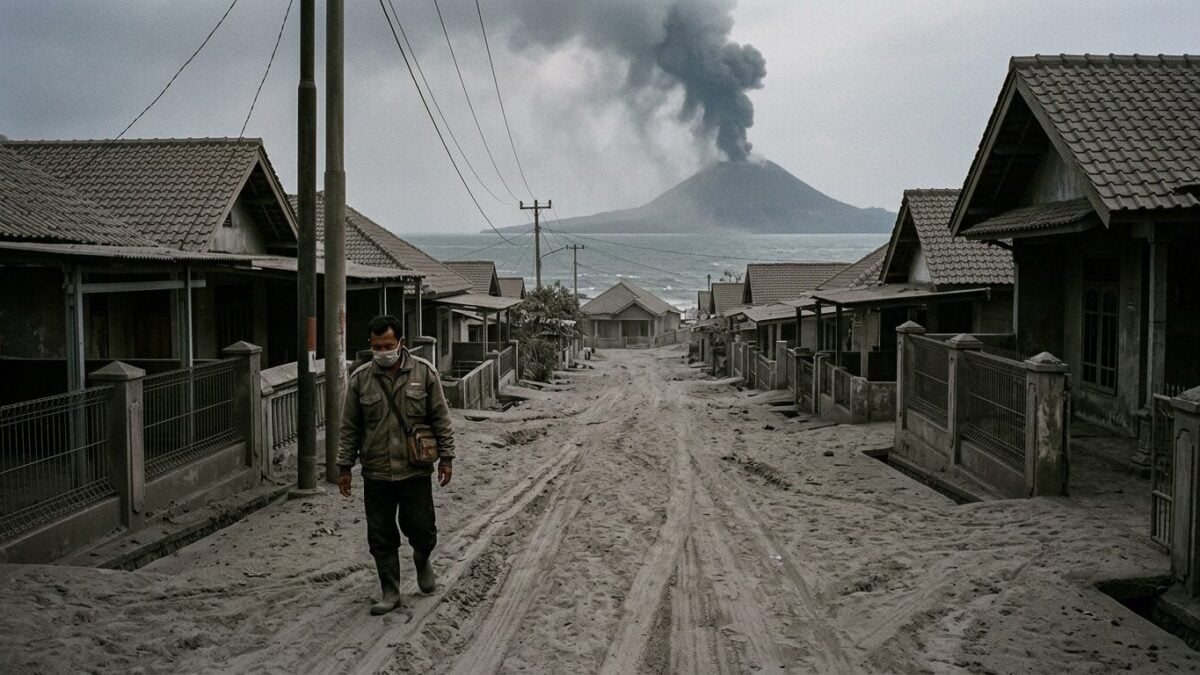
JAKARTA — Mount Anak Krakatau, located in the Sunda Strait between the islands of Java and Sumatra, erupted late Sunday, Sept. 6, 2026, forcing a widespread dispersal of volcanic ash across five provinces. The activity, which intensified at 8:23 p.m. local time (WIB), marks a significant escalation in the volcanic behavior of one of Indonesia’s most volatile peaks.
Indonesia's Geological Agency, under the Ministry of Energy and Mineral Resources, reports that the ash has spread across Banten, parts of West Java, Jakarta, Lampung, and Bengkulu. The assessment draws on data from the Center for Volcanology and Geological Hazard Mitigation (PVMBG), the Darwin Volcanic Ash Advisory Centre (VAAC), and satellite imagery from the Himawari-9 weather satellite operated by the Meteorology, Climatology, and Geophysical Agency (BMKG).
Aerial Hazards and Provincial Impact
Data from the BMKG identifies two distinct ash layers posing potential risks to aviation and surface environments. The first plume, reaching altitudes of up to 20,000 feet, is moving toward the northeast and south, affecting Jakarta, Banten, and West Java. A second, more severe plume is rising as high as 50,000 feet, drifting toward the southwest and northwest, reaching as far as Sumatra.
In Lampung province, the impact is already being felt on the ground. Residents in South Lampung, Bandar Lampung, Pesawaran, and Tanggamus have reported eye irritation and respiratory distress due to the settling ash. While official reports focus on five provinces, supplemental accounts indicate that atmospheric conditions have carried the debris across six provinces in the region.
Shift to Strombolian Activity
The volcano has undergone a distinct change in character over the last 25 hours. According to the Geological Agency, a continuous eruption sequence that began on Friday, Sept. 4, at 11:07 p.m. WIB, concluded early Sunday morning. Following this, the volcano entered a phase of "strombolian" activity—a pattern characterized by recurring, relatively mild explosions.
Geologists recorded three such strombolian events shortly after the continuous eruption phase ended. This shift suggests a prolonged period of volcanic volatility, requiring continuous, rigorous monitoring from government scientists.
Emergency Status and Monitoring
Mount Anak Krakatau remains at Level III (Siaga/Alert), placing it among six volcanoes currently under heightened monitoring across the Indonesian archipelago. The status reflects a broader increase in national volcanic activity that officials are tracking closely through the MAGMA Indonesia platform, which provides near real-time updates for the public.
Lana Saria, Head of the Geological Agency at the Ministry of Energy and Mineral Resources, emphasized that the current priority is tracking the ash dispersal and its impact on regional air quality and aviation safety. "The government has not relaxed its monitoring efforts," Saria stated. "As long as ash remains in the atmosphere, our primary focus remains the path of dispersal, air conditions, and the safety of flights."