Experts Warn of Risks from Indonesia’s Mount Semeru and Mount Merapi
Geophysics experts highlight Mount Semeru and Mount Merapi as priority concerns for disaster mitigation due to their proximity to densely populated areas.
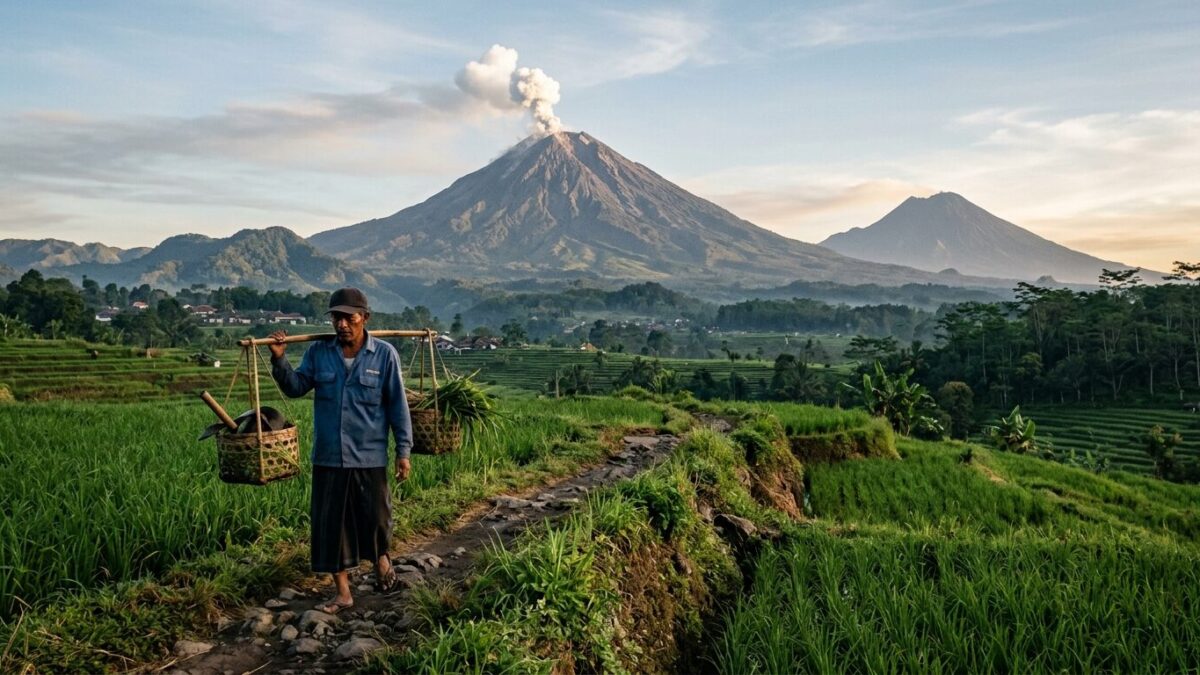
SURABAYA — Indonesia’s geological experts are urging heightened vigilance toward Mount Semeru and Mount Merapi, identifying them as higher-risk concerns than the historically volatile Anak Krakatau. Due to their proximity to densely populated regions on Java Island, these two volcanoes require more rigorous monitoring to ensure public safety.
"I believe Semeru and Merapi are the volcanoes that require our focus at this time," said Alutsyah Luthfian, a geophysical expert from the Sepuluh Nopember Institute of Technology (ITS) in Surabaya, East Java, on Monday. "Both demand attention because they are situated near major population centers."
The Unpredictable Threat of Mount Semeru
Mount Semeru, the highest peak in Java, remains a primary concern for vulcanologists due to its erratic eruption patterns. Unlike volcanoes that show clear precursors, Semeru is known for its ability to trigger major explosions with little to no advance warning, posing a significant challenge for emergency management and evacuation protocols.
Luthfian emphasized that the combination of this unpredictable behavior and the high density of residents living within the mountain’s impact zone creates a compounded risk. Authorities continue to stress that communities in these areas must remain alert and strictly adhere to early warning systems provided by the Center for Volcanology and Geological Hazard Mitigation (PVMBG).
Merapi’s Proximity to Urban Centers
Mount Merapi, straddling the border of Central Java and the Special Region of Yogyakarta, is similarly categorized as a priority for disaster mitigation. Given its location just kilometers from urban hubs, any shift in its volcanic activity necessitates immediate and coordinated responses from local government and emergency services.
While Merapi’s eruption history is well-documented, its fluctuating activity levels require constant vigilance. Experts maintain that clearly defined evacuation routes and robust local communication networks remain the most effective tools for minimizing the humanitarian impact of a potential eruption.
Clarifying Volcanic Myths
Amidst public speculation that concurrent activity at several Indonesian volcanoes suggests a synchronized seismic phenomenon, experts are working to dispel these claims. Luthfian clarified that each volcano operates within its own unique magmatic system and cycle, meaning that activity at one peak does not automatically trigger or correlate with another.
"Volcanoes possess their own distinct characteristics and cycles. Simply noting that two mountains are active simultaneously is not proof of a deeper connection," Luthfian stated. He noted that Anak Krakatau—despite its status as a high-profile volcano—presents a different class of danger, specifically the risk of underwater slope collapses capable of triggering tsunamis, as seen in the 2018 disaster in the Sunda Strait.
To avoid unnecessary panic, officials urge the public to rely exclusively on official data from the PVMBG rather than speculative analysis circulating on social media. Understanding the unique volcanic systems is essential for effective disaster preparedness across the archipelago.