Indonesia Deploys Cloud Seeding to Combat Transboundary Haze Crisis
Indonesia uses advanced cloud seeding and satellite data to combat forest fires, as haze levels in neighboring Malaysia reach emergency thresholds.
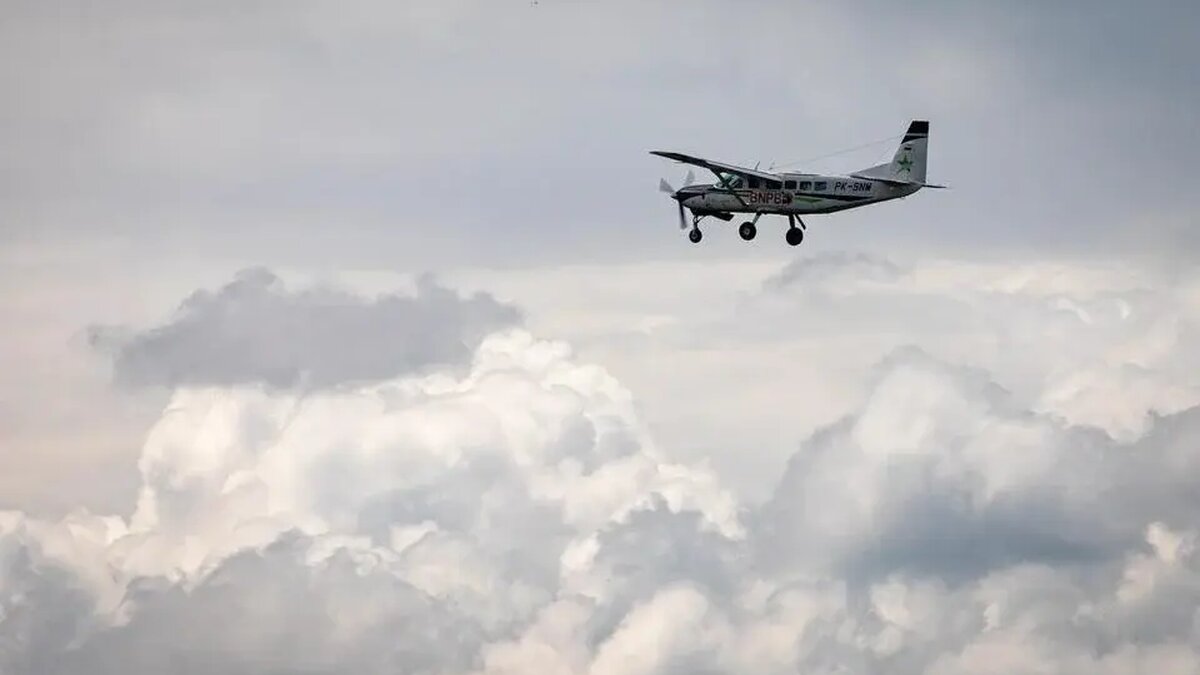
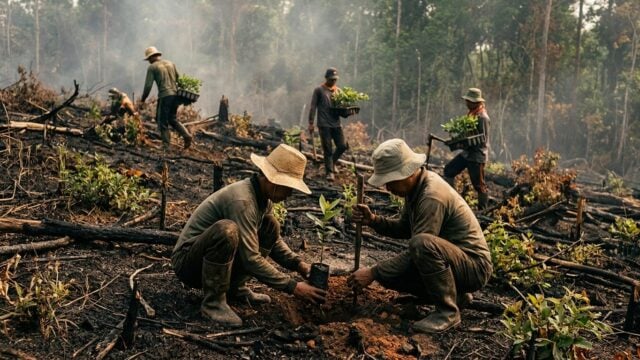
JAKARTA — As thick smog chokes the Borneo region, Indonesia is deploying sophisticated weather modification technology to stimulate artificial rainfall and dampen areas plagued by persistent forest and land fires. The operation, a critical component of regional disaster mitigation, relies on a complex synergy between satellite surveillance, meteorological analysis, and targeted aerial salt dispersal.
On Aug. 25, 2026, Indonesia’s National Disaster Mitigation Agency (BNPB) conducted two sorties over West Kalimantan. Aircraft released 2,000 kilograms (4,409 pounds) of sodium chloride (NaCl) into cloud formations above the Bengkayang, Landak, and Sanggau regions. These operations serve as a vital intervention during the dry season to suppress flames and clear hazardous smoke particles.
"The identification of cloud growth potential provides a window of opportunity for rainfall to aid in fire suppression," said Berton SP Panjaitan, Acting Head of the Data, Information, and Communication Center at the BNPB. Officials emphasize that this technology does not create rain from clear skies but rather optimizes existing meteorological conditions.
Refining the Science of Cloud Seeding
According to research from Indonesia’s National Research and Innovation Agency (BRIN), Weather Modification Operations (OMC) function as an optimization tool rather than a rain-making machine. The process requires three fundamental pillars: viable cloud mass, effective seeding agents, and specialized aviation support. The effectiveness of the operation hinges entirely on identifying clouds already nearing the threshold of precipitation.
Salt acts as a hygroscopic particle, influencing the microphysics within a cloud. By introducing these particles, meteorologists increase the efficiency of collision and coalescence processes, which are essential for producing rainfall in tropical climates. This delicate process is heavily dependent on real-time atmospheric data, including wind speed and moisture density, to determine if an operation will proceed or be aborted.
Satellite Surveillance and Regional Cooperation
To pinpoint the ideal targets, experts utilize data from the Himawari 8 satellite. Using a "daytime microphysics RGB" scheme, meteorologists can identify potential cumulus clouds one to two hours before aircraft reach the target site. This granular data, when paired with ground-based radar, allows for highly precise seeding missions.
The severity of the current fire season has necessitated cross-border cooperation. On Aug. 24, 2026, the Indonesian government granted official clearance for Malaysian authorities to enter its airspace to conduct cloud seeding operations near Sarawak. This move highlights the urgency of addressing transboundary haze, as pollutant levels in parts of Borneo have plummeted into hazardous territory.
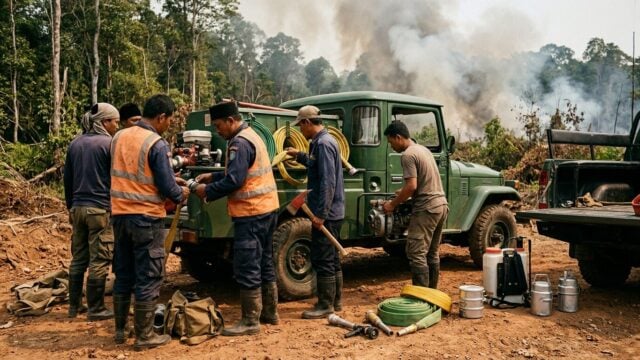
By Friday, Sept. 4, 2026, Malaysia’s National Disaster Management Agency (NADMA) reported that the air pollutant index in Serian, Sarawak, hit 510 at 9:00 a.m. local time, soaring past the 500-mark emergency threshold. The district subsequently declared a state of emergency as indices peaked at 519. Dasrul Chaniago, Director of Land Fire Control at Indonesia’s Ministry of Environment and Forestry (KLH/BPLH), stressed that while cloud seeding is a strategic asset, it remains one part of a wider arsenal that includes peatland rewetting, ground-level firefighting, and strict environmental law enforcement.