Indonesia Volcano Eruption Disrupts Thousands of Flights
Volcanic activity in Indonesia hits travel sector as 3,000 flights are cancelled, affecting 341,000 passengers and local tourism economies.
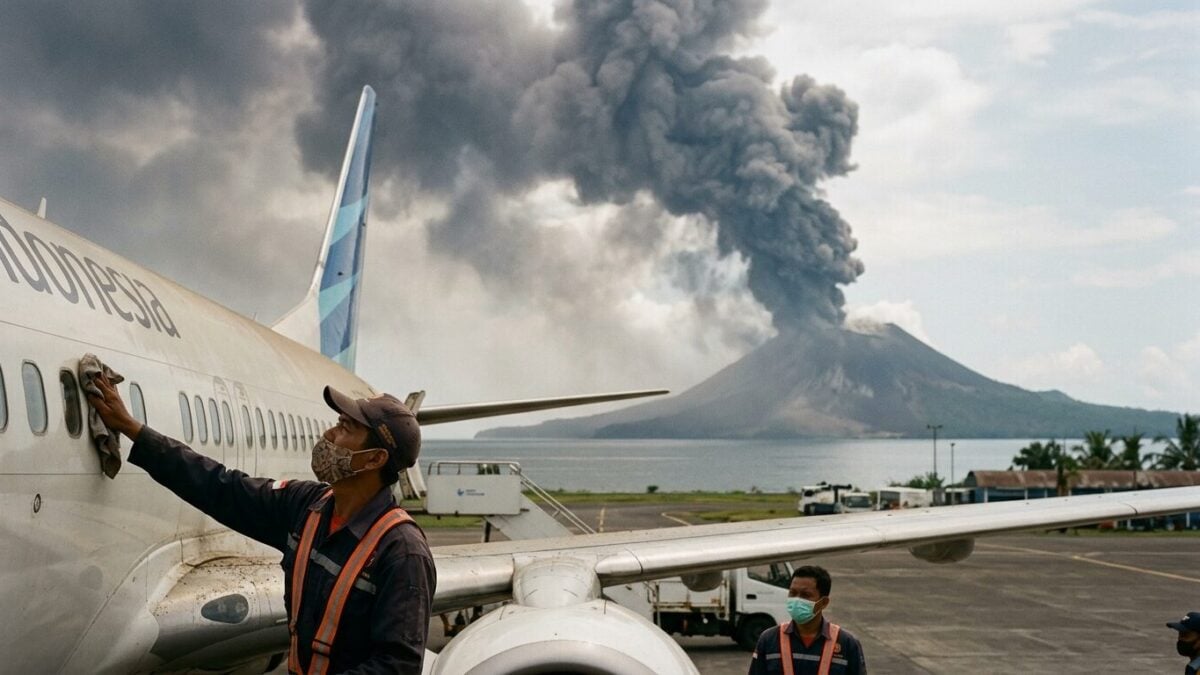
JAKARTA — Volcanic activity from Mount Anak Krakatau has paralyzed regional travel networks, forcing the closure of eight airports and triggering the cancellation or delay of nearly 3,000 flights. The disruption, which peaked on Sept. 7, 2026, has left an estimated 341,000 passengers stranded, underscoring the acute vulnerability of Indonesia’s tourism industry to the seismic hazards of the Pacific Ring of Fire.
Gandung Pardiman, a member of the Indonesian House of Representatives' Commission VII, warned that the fallout extends far beyond immediate aviation safety. The halt in air traffic has triggered a cascading economic impact, severing supply chains that support small-to-medium enterprises, local restaurants, and hotel occupancy rates across the region. "Volcanic eruptions are not merely geological events; they are deep economic crises that devastate the entire tourism ecosystem," Pardiman stated on Tuesday, Sept. 8, 2026.
Prior to the latest eruption, Indonesia’s tourism sector had been recording robust growth. Data from Statistics Indonesia showed that international arrivals reached approximately 1.38 million in May 2026, a 5.83% year-on-year increase. Domestic travel also saw a surge, with 106.16 million trips recorded, marking an 8.69% rise compared to the previous year. However, signs of volatility were already emerging; North Sumatra, for instance, saw international tourism arrivals drop by 17.76% in June compared to May.
Aviation Network Strained by Volcanic Ash
The intensity of the early September volcanic activity forced an immediate suspension of operations at major hubs, including Soekarno-Hatta International Airport in Jakarta. Out of the 3,000 impacted flights, 622 were international services, creating a logistical bottleneck that has reverberated through global travel schedules. Aviation authorities continue to monitor ash dispersion, which poses a severe threat to jet engine health.
Pardiman argued that the economic damage is amplified by the sensitivity of the tourism market to perceived safety risks. Even after air corridors reopen, the psychological impact on travelers often leads to prolonged booking cancellations. "When flights are grounded, it creates a domino effect. Hotels lose guests, and small businesses lose their livelihoods. The economic ripple is felt well beyond the immediate disaster zone," he noted.
The Paradox of the Ring of Fire
The situation highlights a stark challenge for Indonesian policymakers: balancing the nation’s vast tourism potential with its high-risk location along the Pacific Ring of Fire. Pardiman emphasized that disaster mitigation strategies must evolve from purely reactive emergency measures into an integrated system that coordinates aviation, tourism, and small-scale economic sectors.
To mitigate future losses, officials are being urged to implement more effective public communication and inter-sectoral coordination. The goal is to provide real-time updates that manage international perceptions of safety and help businesses pivot during periods of restricted travel. Without a proactive framework, even short-lived volcanic events will continue to threaten the stability of Indonesia’s multi-billion dollar tourism recovery.