Volcanic Eruptions No Cure for Global Warming, Expert Warns
Indonesia's National Research and Innovation Agency (BRIN) clarifies that volcanic eruptions, including Anak Krakatau, are not a solution for warming.
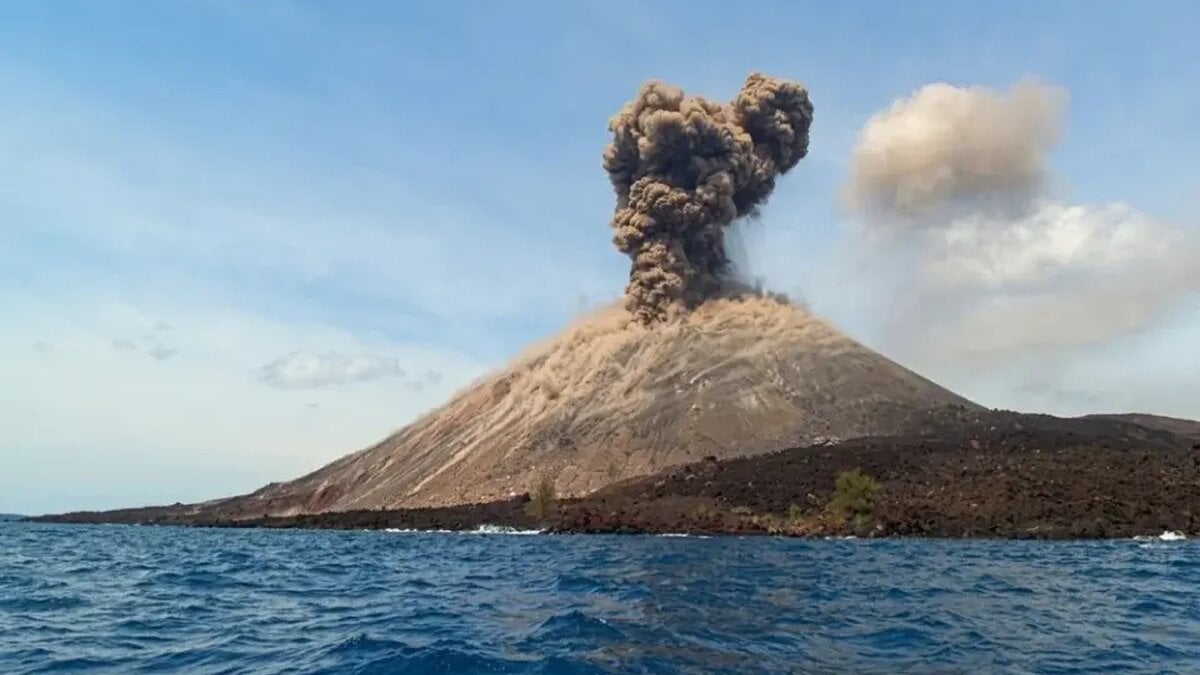
JAKARTA — The eruption of Mount Anak Krakatau and other volcanoes provides no reprieve from global warming, according to Indonesia's National Research and Innovation Agency (BRIN). Experts have dismissed the notion that volcanic activity could act as a natural brake on planetary heating, labeling such beliefs as a significant misconception.
"The idea that volcanic eruptions can serve as a solution for global warming is fundamentally flawed," stated Arief Darmawan, head of the Climate and Biosphere Research Group at BRIN, on Tuesday, Sept. 8, 2026. While massive eruptions can temporarily mask the effects of greenhouse gases, the cooling impact is ephemeral, as sulfate aerosols eventually settle out of the atmosphere, leaving human-induced greenhouse gases to continue their heat-trapping accumulation.
The Stratospheric Threshold
For a volcanic eruption to affect global temperatures, it must inject massive quantities of sulfur dioxide (SO2) into the stratosphere—the layer of the atmosphere sitting 16 to 50 kilometers above the surface. Once in the stratosphere, these gases react with water vapor to form sulfate aerosols, which reflect incoming solar radiation back into space.
However, the height of an eruption plume does not guarantee significant stratospheric injection. During the September eruption of Mount Anak Krakatau, ash clouds reached altitudes of 13 to 14 kilometers, or approximately 40,000 to 50,000 feet. This height barely touches the upper troposphere, falling well short of the stratospheric threshold required for long-term climatic influence. "Determining the climate impact requires precise measurement of the sulfur dioxide mass released and the amount reaching the stratosphere," Darmawan explained.
Lessons from History
The scale of an eruption is the deciding factor in its climatic footprint. Darmawan pointed to the 1991 eruption of Mount Pinatubo in the Philippines as the gold standard for volcanic climate impact. That event released approximately 17 to 20 million tons of sulfur dioxide into the stratosphere, causing a detectable drop in surface temperatures for several years following a three-to-four-week lag. In contrast, the current activity at Anak Krakatau remains minor, with negligible potential for global cooling.
Immediate Health and Aviation Risks
While the global climate remains largely unaffected by the current volcanic activity, the immediate environmental impact poses tangible risks to local populations. The sulfur dioxide and ash lingering in the troposphere directly compromise local air quality.
"Ash causes eye and respiratory irritation, reduces visibility, contaminates water supplies, and presents severe hazards to aviation," Darmawan warned. He advised residents in affected areas to limit outdoor activities during periods of heavy ash fall and to utilize high-quality face masks to prevent the inhalation of fine particles. Protecting water sources and clearing ash deposits with caution remain critical steps for residents to mitigate the localized damage caused by the eruption.