Durban anti-migrant protesters bring sleeping mats to road blockade
Protesters in Durban raised the stakes on Thursday by turning up with sleeping mats and saying they would spend the night on the road if
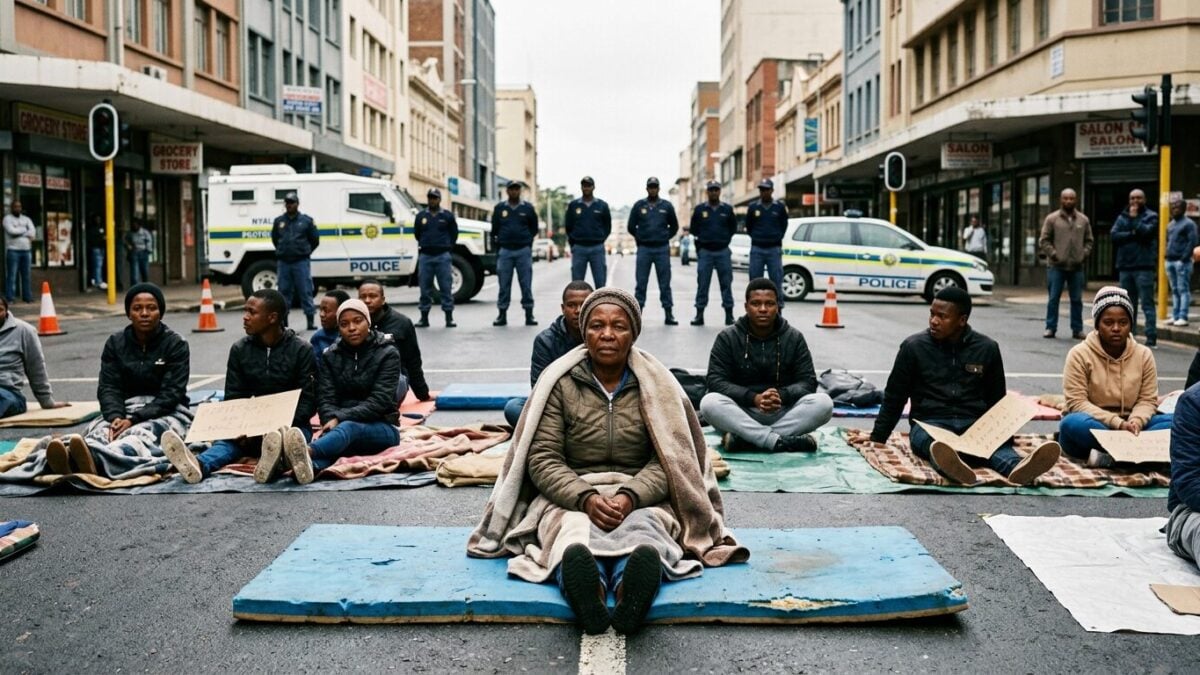
Protesters in Durban raised the stakes on Thursday by turning up with sleeping mats and saying they would spend the night on the road if that was what it took to force authorities to act on migrants camped outside a refugee reception office.
About 300 members of the March and March group gathered again on Che Guevara Road, where migrants have been staying for months outside the home affairs refugee reception offices. Their leader, Jacinta Ngobese-Zuma, carried a traditional mat and told the crowd: “If the government allows the Congolese to sleep on the streets, so will we. We are sleeping here today.”
Police return to a tense scene
The protest followed a violent confrontation on Sept. 3, when police used teargas and rubber bullets to break up clashes between protesters and migrants. At least three people were injured and one person was arrested. Thursday’s gathering was calmer, but the mood stayed hard-edged. The group said it wanted the camp cleared and pressed the government to deal with the situation.
The migrants were driven to the pavement after anti-illegal immigration protests on June 30 chased them from their homes and businesses, according to the material from the group and earlier reporting on the dispute. March and March has called the camp an eyesore and a health hazard.
Complaint deepens beyond Durban
The standoff in South Africa’s port city has become part of a wider debate over migration, housing and public order that reaches well beyond Durban. Across Europe and elsewhere, similar street protests have put pressure on governments trying to balance border enforcement, asylum rules and public health concerns with the rights of people seeking refuge.
Activists quoted in the source material pushed back against blaming migrants for unemployment, poverty and poor service delivery, arguing those problems come from elsewhere. Ngobese-Zuma, though, said South African law does not allow people to sleep on pavements or build homes there, and urged police to enforce it.
She also referred to the 2012 Marikana massacre while addressing police and protesters, a stark warning that underlined how quickly the dispute can turn volatile. The next move now sits with officials, who face mounting pressure to respond before another confrontation spills over.