South Africa’s water minister faces backlash after swearing at disabled resident, says nothing publicly
?s Water and Sanitation Minister Pemmy Majodina has come under fresh criticism after a video showed her swearing at a disabled resident, deepenin...
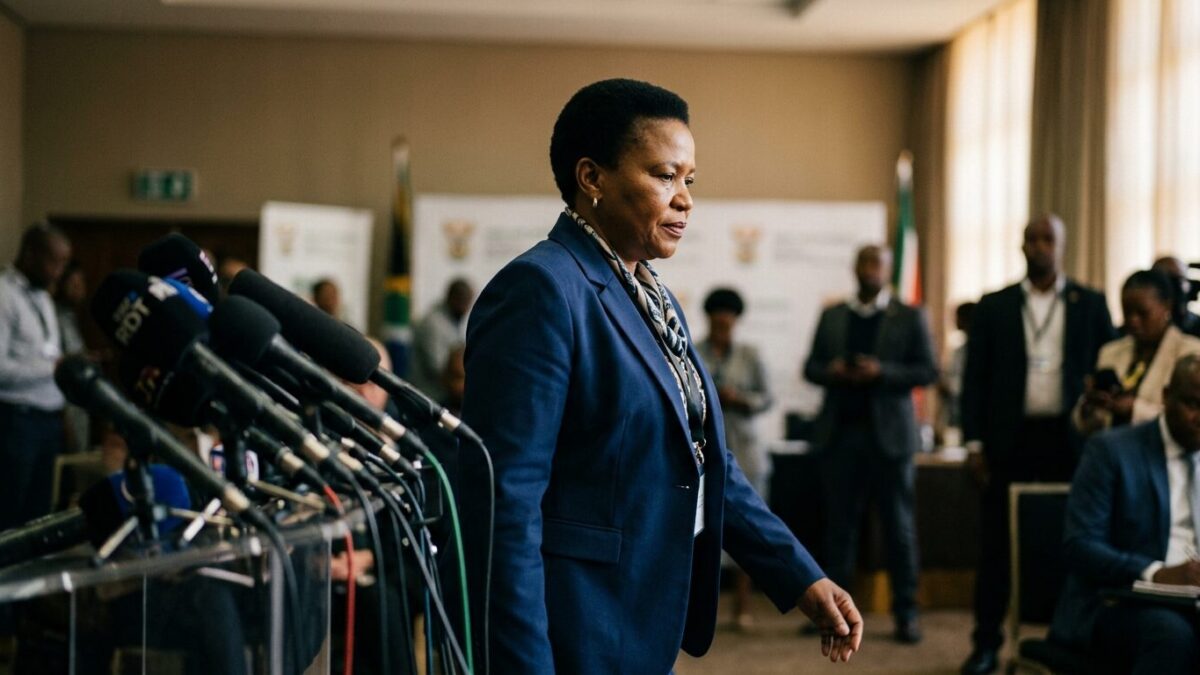
South Africa’s Water and Sanitation Minister Pemmy Majodina has come under fresh criticism after a video showed her swearing at a disabled resident, deepening concerns over the conduct of senior African National Congress leaders. She has not publicly addressed the incident.
The fallout matters beyond one exchange. South Africa’s water sector is already under pressure, and Majodina has spent months pitching water security as central to the country’s economic recovery. Now, the public row risks overshadowing that message.
Public anger grows
Analysts quoted by local media said the confrontation feeds an old complaint: that ANC leaders appear detached and arrogant when dealing with ordinary people. The Citizen reported that the incident has drawn renewed criticism, with the focus falling on Majodina’s language and tone.
Short. Sharp. Ugly.
The video has also sharpened the political stakes for a ministry already tasked with fixing one of South Africa’s most visible failures. Water shortages have been a recurring source of public frustration, and previous commentary has warned that the country’s water crisis is not inevitable if the state can move from breakdown to competence.
Water politics under strain
Majodina has recently argued on the continental stage that Africa cannot achieve meaningful economic growth without urgent investment in water infrastructure. Speaking in Addis Ababa in February during the 39th Ordinary Session of the African Union Assembly, she said, “We cannot have Africa developing economically when there is no water.”
That message now sits uneasily beside the video circulating at home. Her ministry has also been operating in a policy environment marked by complaints about state failure, from water infrastructure backlogs to wider governance lapses that analysts say have allowed criminal networks and waste to thrive.
For Majodina, the silence may prove costly. The longer it lasts, the louder the question becomes: how does a minister asking the public to trust the state’s water future answer a resident in this way?
The political damage could linger. And the optics are hard to ignore.