Cyclone Arnab Triggers Heavy Rain Alerts in 16 Indian States
Heavy rain, hail, school closures and evacuations are spreading across India as Cyclone Arnab and its related weather system trigger alerts in 16 states.
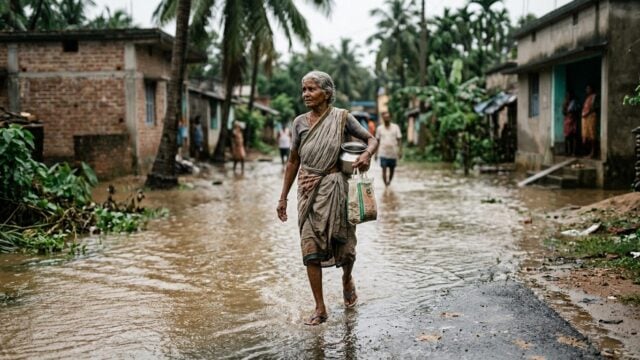
NEW DELHI — आज का मौसम turned severe across large parts of India after Cyclone Arnab and its related weather system triggered heavy rain alerts in 16 states, with Odisha facing the sharpest impact. The warning stretch now reaches Uttar Pradesh, Delhi, Punjab, Bihar and other regions as authorities move people, close schools and brace for more downpour.
The immediate fallout is already visible. Odisha has shifted 5,000 people to safe locations, seven districts have shut schools, and Puri has been marked a red zone as the sea-to-land system tightens its grip. Hail is also expected in parts of the affected belt. Short, but serious.
Odisha faces the first hard hit
The weather system over the Bay of Bengal has pushed Odisha to the front line. Local administration and disaster teams have been preparing for heavy rain and strong conditions along the coast, with the alert centered on districts that could see the heaviest rainfall first.
Puri has drawn special attention after being placed in the red zone. In practice, that means officials are treating the district as a high-risk area for rain-related disruption and possible coastal impact. The warning also matters beyond Odisha, because the same system is expected to keep feeding moisture into inland states.
The evacuation of 5,000 people shows how quickly the risk can turn from forecast to action. Families in vulnerable areas have been moved out before the worst weather arrives, while school closures in seven districts signal that officials are trying to keep movement down and avoid exposed travel during heavy rain.
Why the alert matters beyond the coast
The storm’s reach is not limited to Odisha. Uttar Pradesh, Delhi, Punjab and Bihar are among the states flagged for heavy rain, and that creates a different kind of disruption: traffic, waterlogging, flight or rail delays, and pressure on local emergency services. Rain over a wide area also makes it harder for response teams to focus on just one zone.
For residents, the key issue is timing. When a weather system pushes across multiple states at once, the impact usually spreads fast. Commuters, students and market workers feel it first. Roads slow down. Schools close. Outdoor work stops. In farming belts, hail and heavy rain can be a bigger concern than the storm label itself.
Authorities have also warned of hail in some places, adding another layer of risk. That can damage crops, break windows and turn already difficult travel into a hazard. The alert across 16 states suggests the system is large enough to affect both coastal and inland areas at the same time.
What officials are watching next
The focus now is on how far the rainfall band moves and which districts get the strongest burst. Odisha remains the center of attention, but the wider alert zone means state governments in north and east India will be watching for sudden changes in wind, rain intensity and local flooding.
The latest official actions — 5,000 people relocated, seven districts with schools shut, and Puri in the red zone — show the response is already underway. What happens next depends on how long Cyclone Arnab keeps its strength and where the rain band settles over the next few hours.
For now, the most concrete sign of the scale is this: 16 states are under alert.
Source: livehindustan.com