Bank Indonesia Shifts Rupiah Defense As Dollar Nears 18,000
Bank Indonesia is leaning harder on hedging and liquidity tools as dollar ke rupiah comes under pressure near 18,000, with the dollar firm and oil prices…
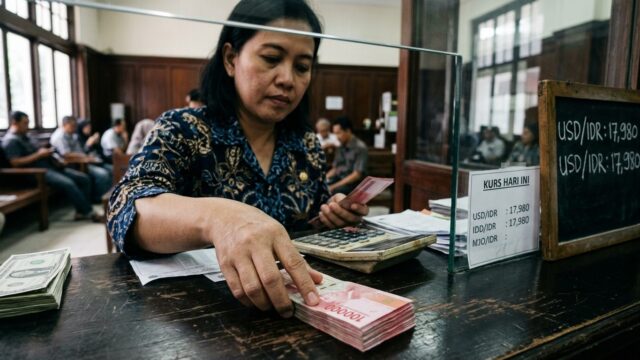
JAKARTA — Bank Indonesia is changing how it defends the rupiah as dollar ke rupiah hovered near 18,000 this week, with the central bank leaning more on hedging and liquidity tools while cutting back on costly spot market interventions.
The move comes as the US dollar held near a two-month high against other currencies and oil prices rose on the standoff between the United States and Iran. The rupiah breached the 18,000 level again on Monday, after Bank Indonesia kept its benchmark rate unchanged at 5.75 percent despite a recent rate hike by the US Federal Reserve.
BI trims interventions
At a hearing with the House of Representatives on Monday, BI Governor Destry Damayanti said the central bank had reduced its spot market foreign exchange interventions to 30 percent of total interventions because they were too costly. She said BI would rely more heavily on hedging to shield the rupiah from external pressure.
Destry also said BI would strengthen the monitoring of foreign exchange flows and keep boosting liquidity adequacy through repo monetary operations for non-government securities. The central bank has opened repo facilities for non-government securities issued by mortgage lender PT Sarana Multigriya Finansial (SMF).
Starting in October 2026, that facility will be expanded to cover corporate bonds issued by infrastructure financing firm PT Sarana Multi Infrastruktur (SMI). BI said the step is meant to deepen domestic financial markets and increase liquidity in the domestic money market for both types of corporate instruments.
Why the shift matters
The pressure on the currency is not just a market headline. When the dollar stays strong and capital flows move toward developed markets, the room for currencies like the rupiah narrows fast. That can make imports more expensive, raise the cost of energy exposure, and force policy makers to balance defense of the exchange rate against the price of intervention.
ANTARA reported that BI’s defensive posture reflects capital outflows from emerging markets toward developed economies, driven by higher US interest rates. The US Federal Reserve raised its benchmark rate by 25 basis points to a range of 3.75–4.00 percent on September 16, while BI projected one more quarter-point hike in the fourth quarter of 2026.
ANTARA also said the US Dollar Index stood at 101.11, while the dollar index against Asian currencies reached 96.26. Those levels helped keep pressure on regional currencies even as BI sought to stabilize domestic liquidity.
In a separate report, The Jakarta Post said the rupiah weakened to 18,000 on Monday against a US dollar hovering near a two-month high, and noted that the currency had once again breached the psychological 18,000 level last week. The report said BI had reduced spot market intervention to 30 percent because it was too costly.
For Indonesian markets, the next test is whether BI’s mix of tighter monitoring, repo operations and larger use of hedging can slow the slide without draining reserves or pushing intervention costs higher. Destry’s message at the House hearing was blunt enough. The central bank is changing tools, not standing still.
“We will strengthen the monitoring of foreign exchange flows and continue to bolster liquidity adequacy through repo monetary operations for non-SBN securities,” Destry said in Jakarta on Monday.
Source: thejakartapost.com