Stock futures inch lower as Treasury yields stay elevated
U.S. stock futures edged lower after Treasury yields climbed to levels last seen more than two decades ago, weighing on bank and technology shares. The Dow…
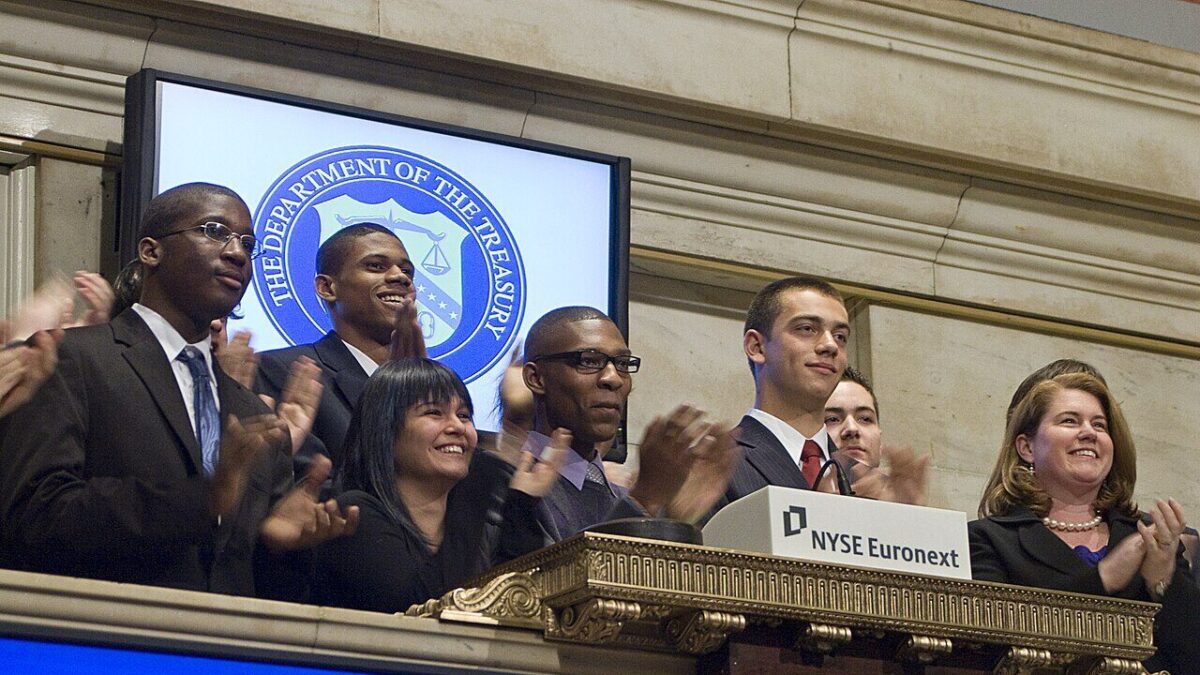
Stock futures inch lower as investors weigh Treasury yields that reached their highest levels in more than two decades, adding pressure to U.S. equities and raising concern about borrowing costs for companies. The latest market decline followed the S&P 500’s close above 7,800 for the first time on Tuesday.
The Dow Jones Industrial Average fell 341.41 points, or 0.66%, to close at 51,179.87 on Wednesday. The S&P 500 shed 0.22% to 7,801.77, and the Nasdaq Composite slipped 0.22% to 27,538.69.
Bond yields drove much of the session. The 10-year Treasury note yield reached 5.365%, its highest level since April 2002, while the 30-year yield rose to 5.732%, its highest since May 2002.
The move matters beyond the bond market: higher borrowing costs can weigh on lending activity and make it harder for businesses to finance investment. Investors also questioned whether companies can meet earnings expectations as rates rise.
Yields pulled back from their session highs after the Treasury sold $39 billion in 10-year notes. The auction helped stocks pare some losses. Bill Merz, head of capital markets research at U.S. Bank Asset Management, said the bid-to-cover ratio and participation from indirect bidders were “quite strong.”
“There's investor interest at these relatively elevated yield levels compared to what people have become used to in the last 15 to 20 years, but we need to take it with a grain of salt. There are a lot of other drivers out there that we need to take into consideration as well on a standalone basis,” Merz said. “It was a solid auction.”
Demand offered some relief. It did not erase the rate concern.
Minutes from the Federal Reserve’s September meeting added another focus for investors. Most participants said another increase in the federal funds rate would likely be appropriate by year-end, but the minutes did not specify when officials might act.
“Participants emphasized, however, that they approached each meeting with an open mind and decisions at future meetings would depend on incoming information and its implications for the outlook and the balance of risks,” the minutes said.
Bank shares fell as investors considered the effect of higher rates on lending. Goldman Sachs and Bank of America each lost 1%. Wells Fargo, Citigroup and JPMorgan also closed lower.
Technology shares faced pressure over the possibility that more expensive borrowing could constrain investment in artificial intelligence. CrowdStrike fell almost 5%, while Palo Alto Networks lost more than 3% and Meta Platforms declined more than 2%.
Mike Dickson, head of research and quantitative strategies at Horizon Investments, told CNBC that the margin for error on earnings had narrowed as rates rose. Earnings could “still carry the market higher,” he said, while warning that yields could not be treated as irrelevant.
Inflation expectations appeared “very well anchored,” Dickson said. He cautioned that a rise in the 10-year yield driven by unanchored inflation expectations could become harder to control.
Energy prices also moved lower Wednesday. U.S. crude settled down 1.3% at $88.28 per barrel, while Brent crude futures ended at $100.20 a barrel, down 0.4%.
The S&P 500 had closed above 7,800 for the first time on Tuesday, led by chipmakers, before all three major U.S. indexes ended Wednesday in the red. Investors now face the next market moves with Treasury yields and the Federal Reserve’s rate outlook still central to trading.
Source: cnbc.com