Hurricane Isaias Threatens Gulf Oil and Fuel Supply
Hurricane Isaias disrupted U.S. crude production in the Gulf of Mexico and threatened refineries in Mississippi and Alabama as it approached the coast…
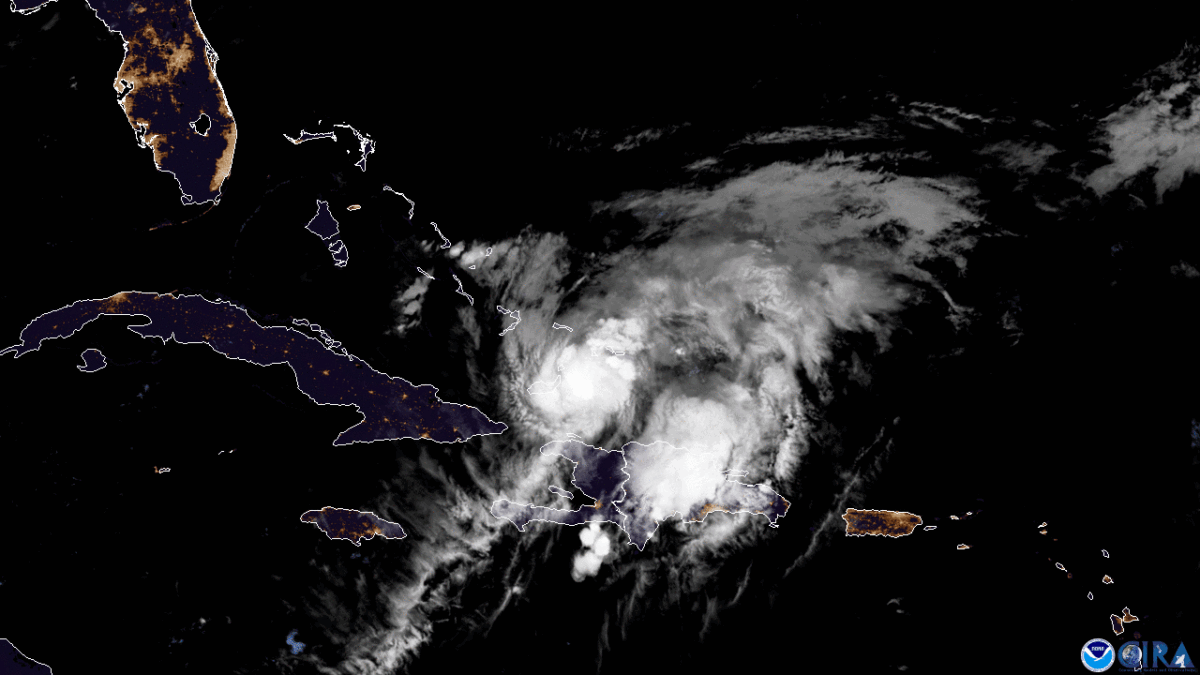
For U.S. fuel markets already facing tight supplies, a major storm moving toward Gulf Coast refineries carries risks well beyond the shoreline. Hurricane Isaias disrupted crude oil production in the Gulf of Mexico and threatened facilities in Mississippi and Alabama as it approached landfall.
Oil companies had shut in about 1.3 million barrels per day as of Thursday, roughly 63% of total U.S. production in the Gulf, according to the Bureau of Safety and Environmental Enforcement. The storm was churning toward Mississippi, Alabama and the Florida panhandle as a Category 3 hurricane, with maximum sustained winds of 120 mph, the National Hurricane Center said.
Fuel deliveries could feel the effects. Analysts warned that refinery interruptions and delayed tanker traffic could restrict supplies of gasoline, jet fuel and diesel, with Florida facing delays in receiving all three.
Chevron’s refinery in Pascagoula, Mississippi, remained operational on Thursday, company spokesperson Ross Allen said. The storm could also affect a Vertex Energy refinery in Saraland, Alabama; Vertex officials were not immediately available for comment.
Refineries face power and flooding risks
The two facilities can produce a combined 466,000 barrels per day, or 2.4% of U.S. refining capacity, Andy Lipow, president of Lipow Oil Associates, said. Both areas were under hurricane warnings.
“The biggest risk to these two refineries are a loss of electricity or flooding damage,” Lipow wrote in a Friday note. If either refinery shuts down without sustaining damage, restarting it could take one to two weeks, he said.
That matters because Gulf Coast refineries were running at 95% of capacity, leaving little room to replace lost output, Lipow said. He also warned that tankers could be delayed both bringing crude to refineries and carrying refined fuel away.
“Florida will experience delays in receiving gasoline, jet fuel and diesel,” Lipow said.
The storm appeared to be veering away from the dense refining region in southern Louisiana near New Orleans and Baton Rouge. Still, the possible exposure of the Mississippi and Alabama facilities adds pressure to fuel markets already contending with constrained refining supplies.
Diesel supplies were at their lowest level for this time of year since the Energy Information Administration began reporting in 1982, Lipow wrote. He said losing refinery capacity under those conditions would be a concern.
U.S. refiners have exported diesel to markets around the world, particularly Europe, as wide profit margins encouraged shipments abroad. CNBC reported that fuel prices have risen during previous Gulf refinery outages even as crude prices fell, because refineries stopped buying crude while also producing less fuel for consumers.
Oil operators take precautions
Companies with offshore operations moved personnel and equipment away from the storm’s path. Shell and BP evacuated personnel from nearby offshore facilities, mainly deepwater platforms. Chevron evacuated offshore drilling rigs and planned to redeploy them after the storm passed.
Exxon told NPR in an emailed statement that it was “closely monitoring the weather. Operations are normal.”
Bryan Domangue, Gulf of America region director for the federal Marine Minerals Administration, said the storm’s track had passed just south of some major deepwater oil and gas facilities and was following the eastern boundary of the infrastructure. Operators were also shutting off safety valves below the ocean floor and moving mobile drilling facilities when possible, he said.
“At this point, it's swept just a little south of some of our major deepwater oil and gas facilities, and then it's hugging the eastern boundary of where the infrastructure is,” Domangue said.
Refineries can take longer to restart than offshore rigs or mobile drilling operations because their processes depend on continuous power, Enverus manager Carl Larry told NPR. “Restarting these things is like starting up an old car,” he said.
Hurricane Isaias was expected to make landfall Friday night or early Saturday, according to the National Hurricane Center, while tanker delays remained a risk for fuel moving through the Gulf.
Source: npr.org