Indian Americans Become Focus of a Wider U.S. Political Debate
A debate over Indian Americans has gained prominence among right-wing commentators after a Texas political candidate criticized a photo of University of Texas…
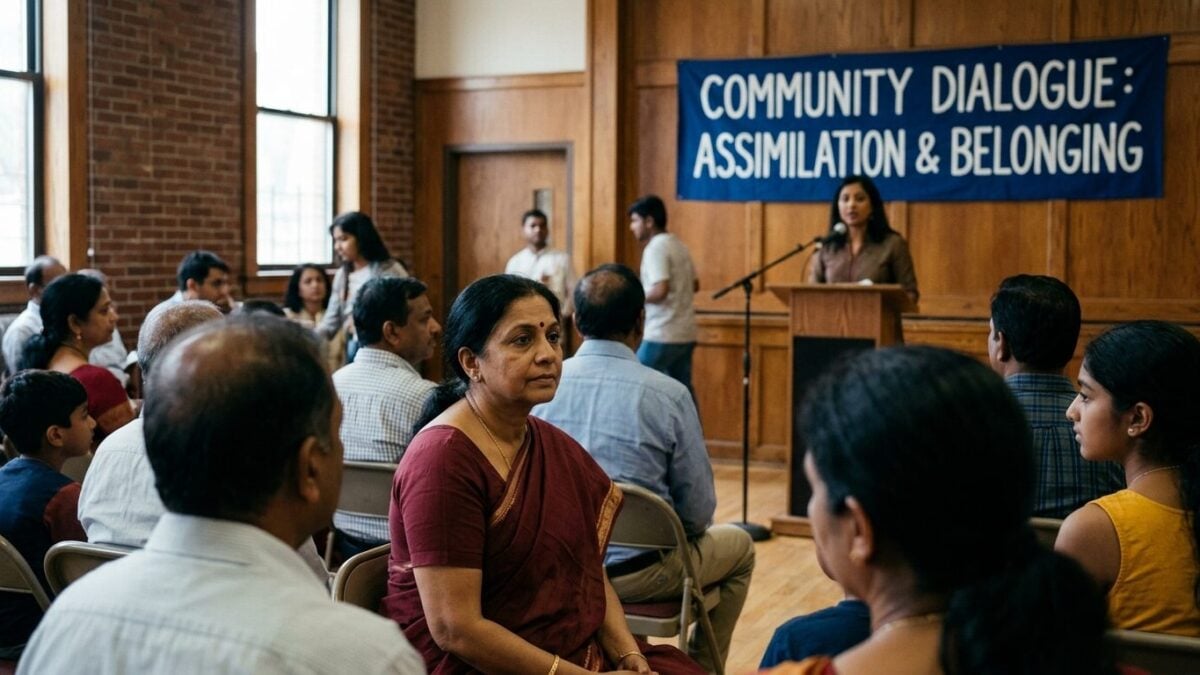
For Indian Americans, a dispute over who belongs in the United States has moved from a social media post to a wider political debate. Right-wing activist Christopher Rufo and commentator Jonathan Keeperman framed the discussion as “The Indian Question” on their podcast, focusing on whether people with roots in the Indian subcontinent can assimilate into American society.
The debate followed a post by Bo French, a Republican candidate for Texas railroad commissioner, who criticized a photo of University of Texas at Austin students celebrating their football team’s comeback win against Ohio State. The post was widely condemned across the political spectrum, while French continued to portray the students as “foreigners” displacing “Texans,” according to CNN.
The wording carries a longer history. Historians say putting a minority group at the center of a political “question” has often cast that group as a problem for society to solve, rather than as people whose rights and place in public life are being debated.
Rufo introduced the podcast discussion by citing French’s post, which had stirred the MAGA universe over the previous few weeks, CNN reported. Rufo and Keeperman spent more than an hour discussing whether people tracing their roots to the Indian subcontinent could assimilate, whether their culture conflicted with American culture and what should be done about their growing numbers and prominence in the United States.
Why the phrase carries historical weight
The podcast description asked whether the issue was about race, class or another factor, and called it “America’s most uncomfortable immigration debate.” A pinned comment from the hosts’ account asked: “Was Bo French’s tweet racist, or just the truth people are afraid to say?”
Holly Case, a historian of modern Europe at Brown University and author of “The Age of Questions,” told CNN that phrases such as “the x question” emerged in the late 18th century and became common in the early 19th century. Public figures used them to frame debates about groups and political issues, including what became known as the woman, worker, Jewish and Eastern questions.
In the late 19th century, “the Indian question” referred to Indigenous people who had lived in North America before European settlers arrived. The phrase’s meaning in the current debate is different, but its structure invites public judgment about a group’s place in society.
“Instead of being understood as questions to be answered, these were treated as problems to be solved,” Case wrote in her book. She also told CNN that the answers were not always predetermined. In some cases, the group at the center of a question raised it itself to bring a political issue into public discussion.
Lila Corwin Berman, a professor of American Jewish history at New York University, said Jewish thinkers had engaged with debates about the “Jewish question,” including the extent to which their communities should integrate into the societies where they lived. The history, she said, shows how such language can frame arguments over rights and belonging.
French, a Republican candidate for Texas railroad commissioner with a history of extreme posting, shared an image of University of Texas at Austin students celebrating their team’s comeback against Ohio State. He wrote: “I heard UT graduation this year looked like this. I didn’t believe it. The problem is now obviously far worse than anyone imagined.”
Many of the students in the photo appeared to be of South Asian heritage, CNN reported. The post was condemned by people across the political spectrum. French then continued to describe the students as “foreigners” displacing “Texans,” claims CNN said were false.
That framing gives the argument consequences beyond the podcast. It shifts attention from the students’ celebration to their perceived identity, making belonging itself the subject of political scrutiny. The discussion also asks whether Indian Americans can be regarded as part of the country, rather than simply as fellow citizens and community members.
Case said the format of a political “question” can draw the broader public into debating the status of a group. That mechanism helps explain why the phrase chosen by Rufo and Keeperman has drawn attention: it gives a familiar historical shape to a contemporary argument about immigration, ethnicity and American identity.
CNN reported that the post and podcast drew condemnation, including from many Republicans. The debate now centers on a question the hosts posed directly: “Was Bo French’s tweet racist, or just the truth people are afraid to say?”
Source: sports.yahoo.com