Birdman copper plate 700-year-old may depict woman warrior
A copper plate from Etowah, now held by the Smithsonian National Museum of Natural History, shows a bird-costumed figure carrying a severed head and a club or…
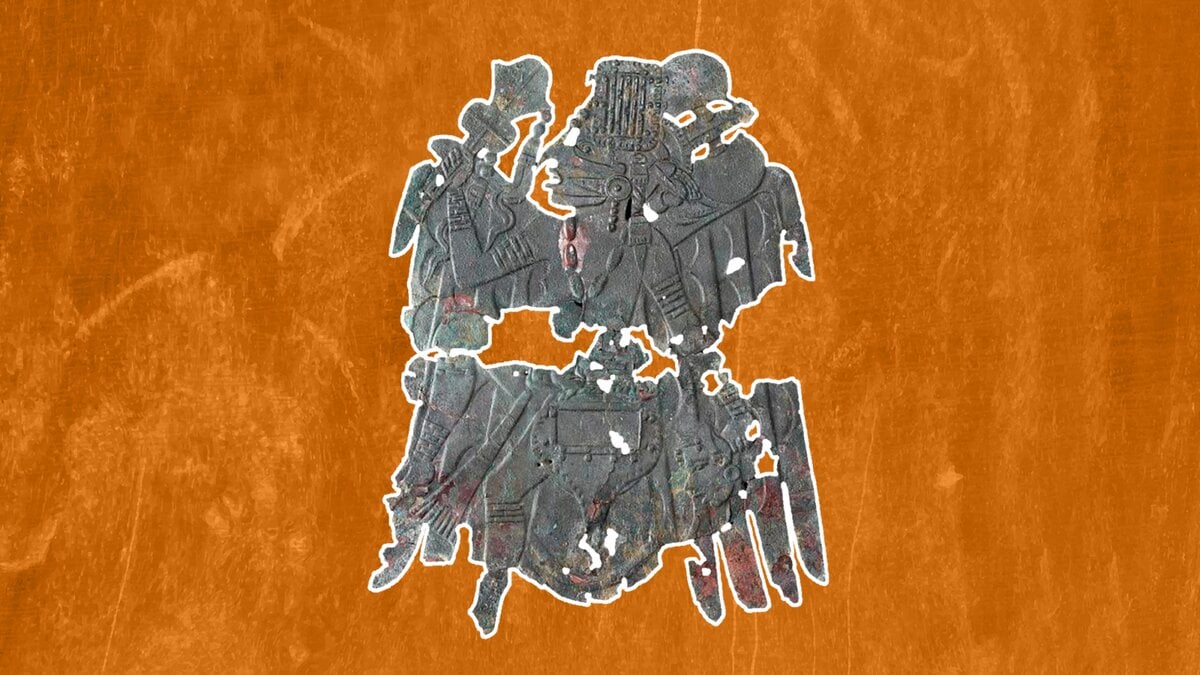
A copper plate found in a burial at Etowah in Georgia may show more than a warrior in a bird costume. The birdman copper plate 700-year-old artifact has a figure with prominent right breasts, a detail researchers say challenges the long-held view that it depicts a man.
The plate was unearthed in the late 19th century and is now held by the Smithsonian National Museum of Natural History in Washington, D.C. Its figure carries a severed head by the hair and holds a club or mace, while the artifact itself may have been made hundreds of miles away at Cahokia, in Illinois.
The interpretation matters because the object was buried with a high-status person and may offer evidence of how Indigenous communities understood gender roles and status. Researchers Billie Follensbee and Katie Buford have argued that the figure could represent a woman warrior or a gender-variant individual.
Details challenge the male-warrior reading
Smithsonian archaeologist John P. Rogan found the plate in the 1880s, one of two hammered copper plates recovered from a burial mound at Etowah. The village was occupied by thousands of Native Americans from 1000 to 1550, according to the source report.
The plate, also called Rogan Plate 1, is roughly 11 inches (28 centimeters) tall. Experts believe it was an heirloom made decades before the burial, then traded south from Cahokia to Etowah. It had been placed with a high-status person who likely died at Etowah in the mid-14th century, though the sex of the skeleton is unclear.
The figure wears an elaborate bird costume and a pleated skirt or loincloth that may have been made from human scalps. Researchers have described similar figures as dancing warriors, eagle warriors, hawk dancers and falcon warriors. Birdman or Morning Star is another common name for the figure, which the source describes as a prehistoric Mississippian hero associated with agriculture and rebirth.
For decades, archaeologists generally interpreted the figure as a male warrior. In a 2004 study, archaeologist Adam King wrote that “this plaque would have served as an emblem of office awarded to a chieftain, and would have accompanied him as a sign of his strength among the ancestral spirits.”
A possible woman warrior
Follensbee and Buford revisited that assumption in a 2017 study. They noted that the burial skeleton’s sex is uncertain and that Etowah had high-status graves of both men and women. Their examination of Rogan Plate 1 and Rogan Plate 2 identified slender bodies and prominent right breasts on the figures, which they said could indicate that Birdman was female.
“A female bird-human warrior could have represented a gender variant individual in the form of the well-known Native American phenomenon of the 'manly-hearted woman,' a woman who has assumed the usually male role and the garb of a combat soldier,” the researchers wrote.
The source report says Indigenous North America has also used the broad term “two-spirit” for gender-variant people, a term Indigenous people coined in 1990. Follensbee and Buford said the plate’s possible commemoration of such a person, alongside its placement as a high-status grave good, “not only demonstrates the Native American cultural acceptance of such gender variant roles but also further serves to celebrate the elite status and achievements of these 'manly-hearted women,'” they wrote.
The artifact also points to connections between Indigenous communities across the southeastern United States. Etowah belonged to the Mississippian phase, whose communities maintained extensive trade networks and shared artistic and ceremonial traditions known as the Southeastern Ceremonial Complex. The plate’s likely movement from Cahokia to Etowah places the object within those long-distance exchanges.
Source: livescience.com