Hungary’s government faces Brussels over rule-of-law reforms
?s new prime minister, Péter Magyar, has a two-thirds parliamentary majority, but EU funding decisions have not ended Brussels’ scrutiny. The Council lifted…
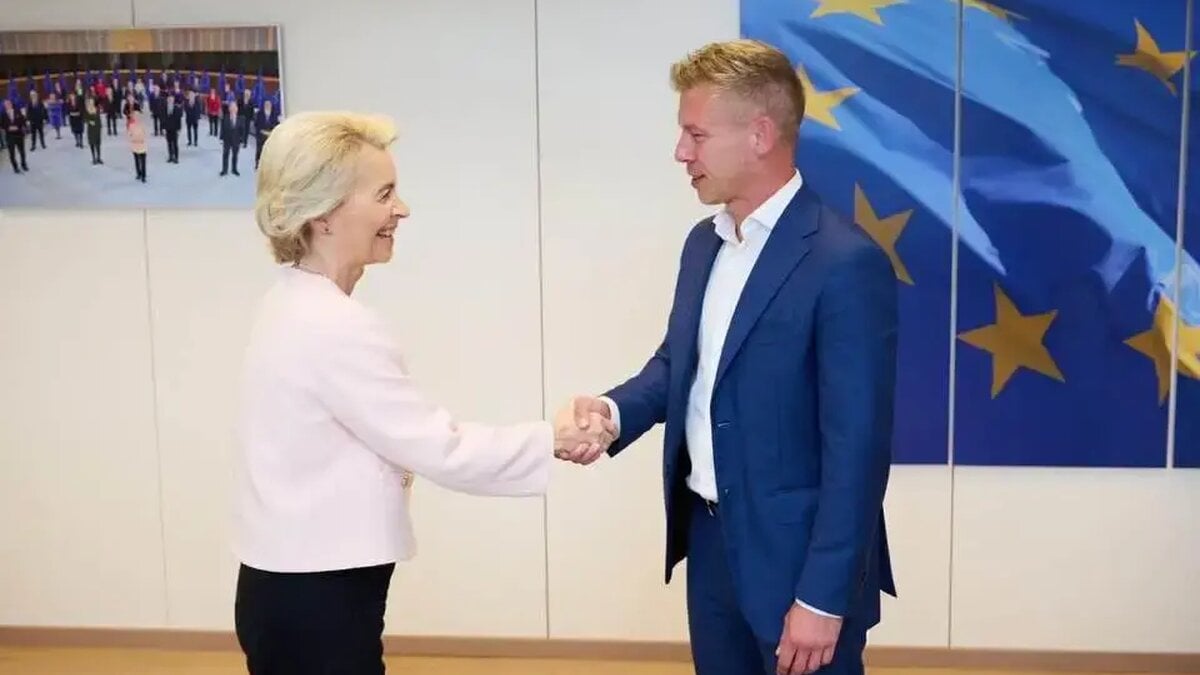
Hungary’s new prime minister, Péter Magyar, has a two-thirds parliamentary majority in Budapest, but the European Union has not ended its scrutiny of the country’s rule of law. The Council lifted financial measures that had blocked €4.2 billion in cohesion funding and access to Erasmus+ and Horizon Europe for affected institutions, while a separate Article 7 procedure remains open.
The distinction matters for Hungarian institutions, students and researchers: the decision restored access to some EU support, but it did not settle every condition attached to European funding. Approximately €3.5 billion in cohesion funding remains subject to separate EU conditions, according to Daily News Hungary.
Magyar inherited the parliamentary majority after Viktor Orbán left power following sixteen years as prime minister, the outlet reported. The votes give Magyar scope to change domestic laws. They do not, by themselves, resolve Brussels’ concerns or guarantee access to all EU funds.
Funding measures lifted, Article 7 continues
On 23 September, the European Commission proposed lifting financial measures imposed on Hungary in 2022. The proposal could release €4.2 billion in cohesion funding and restore access to Erasmus+ and Horizon Europe for affected institutions. The Commission cited progress on public procurement, anti-corruption safeguards and conflicts of interest.
The Council approved lifting those measures on 13 October. Daily News Hungary reported that the restrictions were removed, while other financial conditions remained in place.
One decision did not close the other case.
At the General Affairs Council in Luxembourg on 13 October, EU ministers examined Hungary’s position under Article 7 of the EU Treaty. The procedure began in 2018 over concerns about the rule of law. Budapest presented reforms already undertaken and further measures planned, while ministers also discussed the EU’s 2028–2034 budget, the publisher reported.
The Council’s funding decision has a direct bearing on organisations that had lost access to European programmes. Erasmus+ opportunities for students and Horizon Europe access for researchers at affected institutions have been restored, according to the report. But the remaining conditions mean the available support is not the same as unrestricted access to all cohesion funds.
Domestic changes face an institutional test
Magyar’s government has started changing constitutional rules. In June, Parliament amended the Constitution to impose an eight-year limit on the premiership. A broader amendment followed in July, addressing senior state institutions, the judiciary and rules governing key legislation.
Those steps show the government can use its parliamentary majority to pass changes. The question raised by the report is whether the new rules will make institutions independent of political power, rather than simply place them under different leadership.
The issue also extends to public-interest foundations established under Orbán, whose governance became central to the funding dispute. Daily News Hungary identified transparent appointments, independent audits and enforceable conflict-of-interest rules as possible safeguards against political interference.
Public procurement has similar practical stakes for businesses. The report said open competition and effective oversight could give Hungarian companies a better chance of securing contracts without political connections. That prospect depends on how rules are applied, not only on whether Parliament passes amendments.
The article cited Poland as a warning about the difficulties of institutional repair. Donald Tusk returned to government in December 2023 promising to restore judicial independence, but the methods of reform became controversial. Magyar faces the challenge of dismantling political control without creating another system of control under new leadership, the report said.
The next EU budget was also on the agenda at the ministers’ meeting. For now, the Council’s decision has reopened €4.2 billion in cohesion funding, while approximately €3.5 billion remains under separate EU conditions.
Source: dailynewshungary.com