Israel’s Elections Wide Open as Netanyahu Fights to Stay
Is are voting in a tightly contested election that could decide whether Benjamin Netanyahu remains prime minister. Polls differ on which bloc has the…
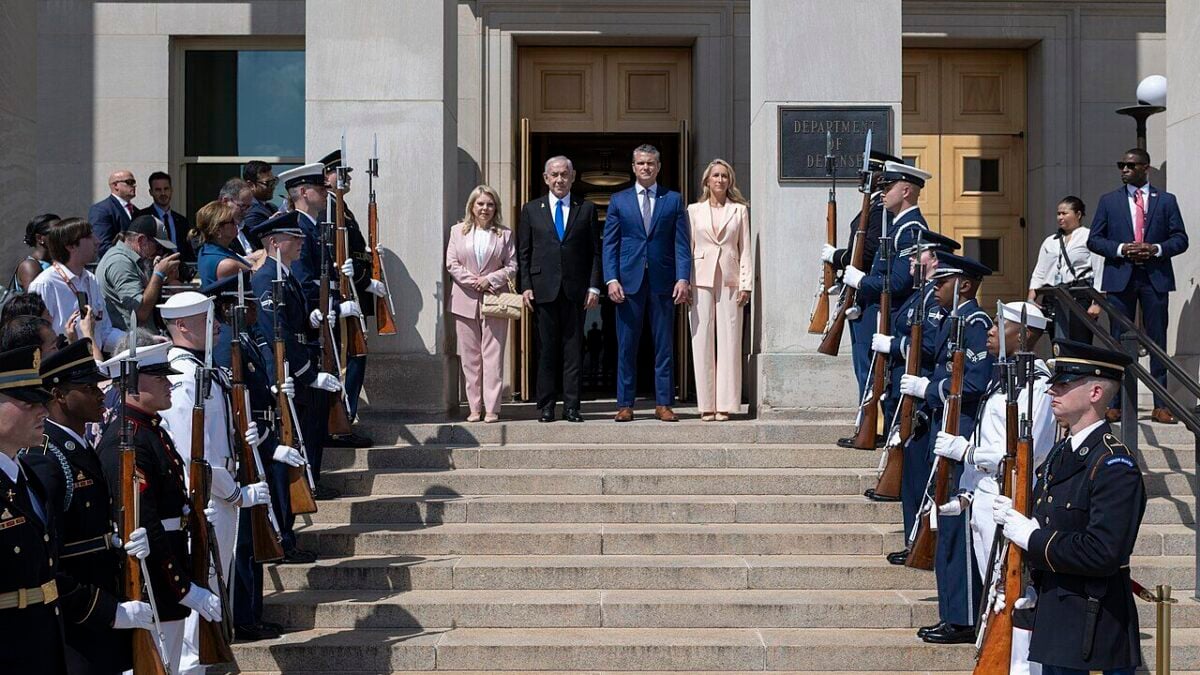
For Israelis voting after years of conflict, the election could reshape the government while leaving the country without a clear parliamentary majority. Israel's elections wide open as Prime Minister Benjamin Netanyahu fights to remain in office, with polls showing a close contest and no certain path to a quick result.
Voters are going to the polls Tuesday in an election that will determine the next government. Polls differ sharply: right-leaning pollsters give an advantage to the bloc led by Netanyahu, while left-leaning pollsters favor the opposing change bloc.
The uncertainty has consequences beyond election night. Most polls suggest neither side will secure a decisive majority in the Knesset, Israel's parliament, which has 120 seats. The result could bring prolonged coalition negotiations across ideological lines, a minority government or another election.
“It looks like an indecisive outcome is the most likely outcome,” Yohanan Plesner, president of the Israel Democracy Institute, told CBS News.
Israel's elections wide open amid security concerns
This is the first Israeli election since the Oct. 7, 2023, attacks by Hamas. Authorities have acknowledged those attacks as the country's most catastrophic security failure since its founding in 1948.
Israel is still fighting a multi-front war involving Gaza, Lebanon and Syria. The country has also gone through two direct rounds of conflict with Iran, while Netanyahu has advocated for a third, according to CBS News.
Netanyahu, Israel's longest-serving prime minister and leader of the Likud party, is seeking another coalition like his current government, which relies on ultranationalist and Jewish religious parties. His campaign argues he can form a government without support from Arab parties, which he says could endanger the country if they gain enough seats to influence its engagement in conflicts.
He has also argued that Israel's military campaigns in Gaza, Lebanon and especially Iran are unfinished, and that he needs more time to complete what his government began. The security argument is central to his effort to retain power.
US President Donald Trump endorsed Netanyahu last week, according to CBS News, and reiterated his administration's support for the war the two men launched jointly against Iran almost eight months ago. Trump also warned that he might not continue the effort if Netanyahu loses office.
“If Israel has the wrong Leader, which would be anyone other than Bibi, America will have to do this work ourselves, and I am not inclined to do so,” Trump said.
A fragmented challenge to Netanyahu
The opposing “change bloc” brings together Arab, right-wing, left-wing and centrist parties with a shared goal: removing Netanyahu from power. Its diversity may help draw support from different parts of the electorate, but the polling gap between surveys and the absence of a likely majority leave the outcome uncertain.
Since Trump's endorsement, Netanyahu has said he is the leader best positioned to work with the US president to prevent Iran from obtaining a nuclear weapon. Many Israelis view such a weapon as an existential threat, CBS News reported.
Netanyahu has made that concern explicit in his campaign. His slogan, which rhymes in Hebrew, is: “Either right wing or Palestine, either right wing or a nuclear bomb.”
Over the weekend, he posted an AI-generated image of a mushroom cloud over Tel Aviv on social media, with a caption reiterating his claim that Iran poses an existential threat to Israel.
His supporters describe him as an internationally influential leader. “Bibi can handle the whole world,” Benny Abraham, a restaurant owner, told CBS News. “Bibi is charismatic. He has a strong voice. The world loves him.”
“He's the king of Israel,” Abraham added.
The Knesset has 120 seats.
Source: cbsnews.com