China purge leaves two military commission seats filled
Xi Jinping’s anti-corruption campaign has punished at least 7.9 million Chinese Communist Party members and officials, while a purge has left only two of seven…
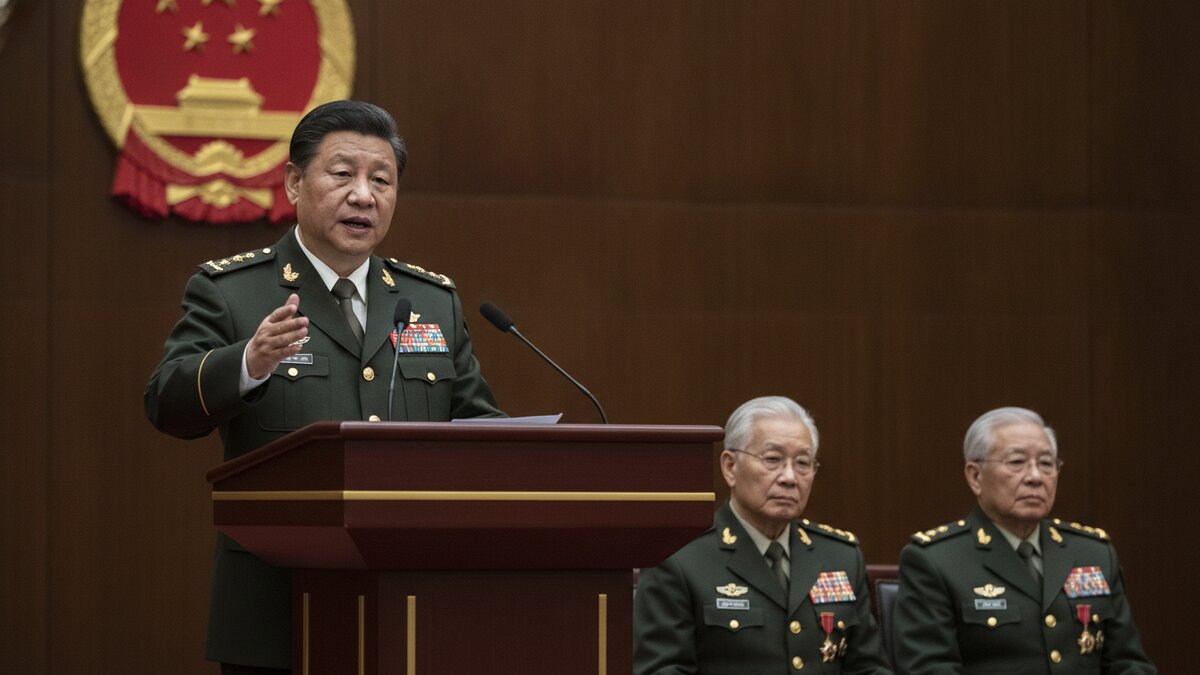
Chinese President Xi Jinping’s anti-corruption campaign has punished at least 7.9 million Communist Party members and officials, while a purge has left only two of seven members of China’s Central Military Commission in place. The shake-up leaves gaps in the country’s supreme military command as the party presses ahead with an ambitious military expansion.
The latest removals came during a meeting of the Communist Party’s 20th Central Committee this week, where 33 members and alternate members were expelled, including 16 from the military. Five purged seats on the commission remain unfilled.
Only two remain.
The moves form part of Xi’s campaign to enforce party discipline, now in its 14th year. The campaign has targeted alleged corruption among both senior officials, known as “tigers”, and lower-ranking members, or “flies”.
The purge has also reduced the size of the Central Committee, leaving a record number of vacant seats and making it smaller than usual. The scale of the removals is unprecedented in nearly half a century, the account said.
The empty posts put pressure on a command structure responsible for overseeing China’s military expansion. The purge has raised questions about how that expansion will proceed while senior decision-makers remain unsettled.
What does the purge mean for Xi’s leadership?
The fifth plenum reinforced Xi’s position at the centre of the party and tied strict discipline to his political will. He is widely expected to seek an unprecedented fourth term as general secretary at the party’s next congress in the second half of 2027.
Observers have often viewed the anti-corruption drive as a way to remove Xi’s rivals. But the campaign has also reached people close to him, including former foreign minister Qin Gang and senior military leader Zhang Youxia.
Those actions can strengthen Xi’s authority even when the purge touches his own circle. The party’s internal rivalries have long shaped its power balances, but further centralisation may make it harder to express opposition within the political system.
“If I were to put in absolute terms, I would say his next term is 100 per cent,” said Deng Yuwen, a former editor of a Communist Party newspaper.
Chen Minglu, an associate professor of Chinese politics at the University of Sydney, said the campaign has objectives beyond rooting out corruption.
“Fighting corruption is only one part of the equation,” Chen said. “It is also about the party's governing capacity, its relationship with the people, and ensuring that central government policies are implemented.”
Three former Politburo members were expelled this week, creating vacancies at the top and opening opportunities for lower-ranking officials to advance. Xi could use leadership renewal to bring in new figures without weakening his own authority.
Military overhaul remains in focus
The plenum called for faster modernisation of the People’s Liberation Army and continued work on the party’s military priorities. Xi’s military mission has shifted from taking political power to maintaining national security and defending Communist Party rule.
Taiwan remains one of the politically significant objectives in that context. The goal of national reunification is tied to China’s territorial claims and to Xi’s stated vision of “national rejuvenation”.
The campaign has punished at least 7.9 million party members and officials for alleged corruption.