Private Investment in RoRo Ships Eased, Says Minister
Private investment in RoRo ships is getting easier as the government cuts extra costs and simplifies business hurdles, says Dudy Purwagandhi.
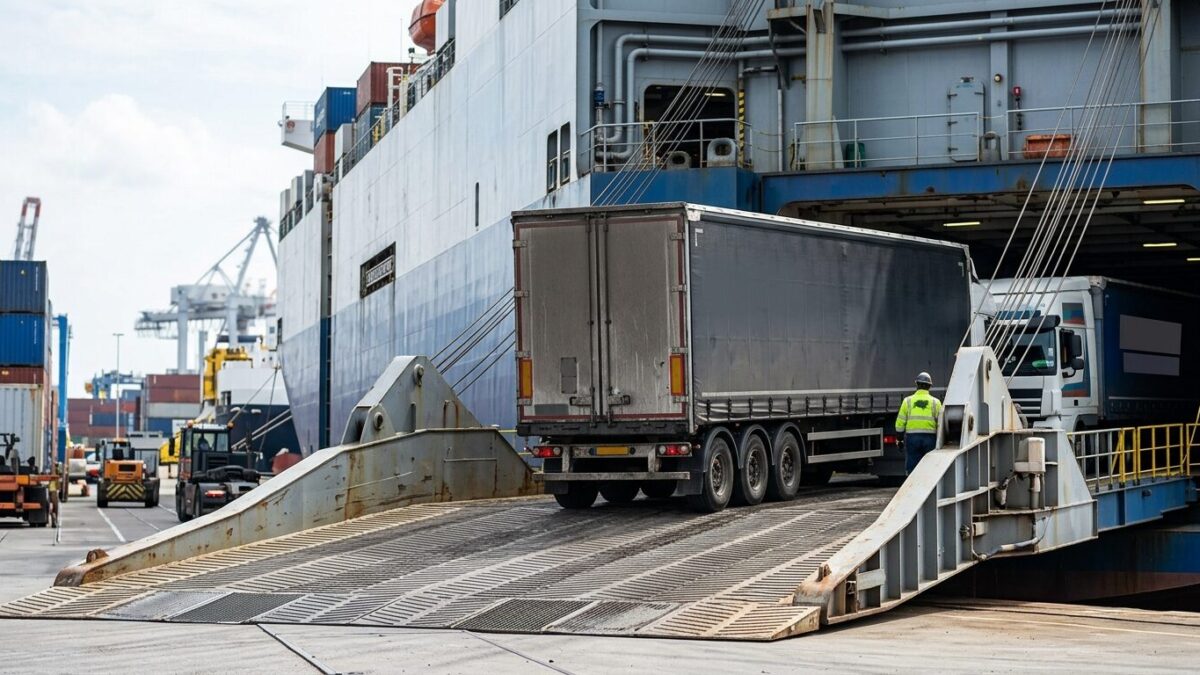
JAKARTA — private investment in RoRo ships is being made easier by the government after it removed business hurdles and extra operating costs. Transportation Minister Dudy Purwagandhi said the policy in Jakarta on Friday night, June 26, was meant to help the sector move with less friction.
The move matters for sea logistics, where costs and permits can quickly shape whether a project is worth pursuing. The government wants the roll-on/roll-off ship business model to be simpler, so operators can enter the market without paying charges that do not directly support vessel operations.
Extra costs trimmed as private investment in RoRo ships opens wider
Dudy said the government is opening the door as widely as possible for businesses that see potential in RoRo freight services. He stressed that Jakarta does not want to make the business process complicated.
“We are removing the obstacle, the barrier for them, so we make things smooth and they do not have any additional cost to spend,” Dudy told reporters in Jakarta on Friday night, June 26.
That signals a fairly clear policy direction: the state is not adding pressure, but trimming what it sees as unnecessary. In practice, that can affect how investors calculate a project from the start, from the initial entry decision to plans for adding more ships.
RoRo, short for roll-on/roll-off, is commonly used to carry vehicles and cargo through a more practical loading and unloading flow. In logistics, time efficiency and cost efficiency often decide everything. Even a small saving can affect business margins.
That is why removing extra charges is not just an administrative move. For businesses, it reaches the core of the calculation. For the government, it is part of an effort to improve logistics connectivity without relying on subsidy spending.
No subsidy plan for operators
Dudy also said the government is not preparing a subsidy scheme for RoRo ship operators. He said freight services are business activities that should run on each company’s own economic calculations.
In other words, the government is not positioning RoRo as a service backed directly by state funds. What it is opening is business space. The climate is being made more comfortable. The barriers are being reduced.
In his explanation, Dudy said the government will focus on creating a more supportive business environment. He pointed to licensing procedures and extra cost burdens as two things that should be reduced so investors can enter more easily.
“If we can remove those barriers, companies can focus on operating costs,” Dudy said. In his view, that kind of setup will improve business efficiency and make investment more attractive.
The logic is simple. If unnecessary costs are cut, investors can read a project more clearly. If permits are tangled, time costs rise too. And when everything becomes expensive from the outset, many business plans never move beyond paper.
Why private investment in RoRo ships matters for logistics
In logistics, RoRo ships play a significant role. This mode is often used on inter-island routes that need a quick flow of vehicles and cargo. Indonesia, with its wide archipelagic geography, depends heavily on that kind of connectivity.
That is why private investors can help expand capacity. Fleets can grow. Routes can become more varied. And at certain points, distribution costs may become more efficient if infrastructure and market demand move in balance.
An Antara report also reinforced the same policy direction: the government is opening as much room as possible for businesses, while stressing that logistics success still depends on economic calculations and market demand. In short, the government is creating space, but the market remains the deciding factor.
The signal is clear enough. The government wants this sector to grow through business mechanisms, not through dependence on subsidies. That model usually demands tighter cost discipline from operators, while pushing them to find the most efficient routes, loads, and schedules.
For readers tied to distribution, inter-island trade, or transport businesses, this policy could affect medium-term logistics costs. If investors come in and services expand, competition may become healthier. If that happens, tariffs and delivery speed could move toward greater efficiency. Not overnight. But the direction is there.
A simpler path for investors, stricter business math for operators
What stands out in Dudy’s remarks is the government’s focus on simplification, not on large fiscal incentives. From what he said that night, Jakarta wants to remove extra costs that appear outside core operations.
In business terms, that means reducing friction costs. These are costs caused by barriers, not by producing the service itself. For investors, that kind of expense is often frustrating because it is hard to predict and can disrupt return-on-investment calculations.
Still, a looser investment environment also brings responsibilities. Operators must keep calculating demand, load factors, sailing schedules, and fleet efficiency. If market demand is weak, easier rules alone will not automatically create profit.
Dudy also signaled that the government views the market as the main factor. If a business is not profitable, he said, the cause must be examined broadly, including from the demand side. At that point, the government does not want subsidy to become the shortcut.
So this policy is better read as opening the door, not guaranteeing profit. Investors are given room. Extra costs are cut. Administration is simplified. The rest still depends on how well operators read the fast-moving sea logistics market.
And behind it all stands one date that marks the policy signal clearly: Friday, June 26. That was when Dudy Purwagandhi delivered the message in Jakarta that private investment in RoRo ships would face fewer barriers going forward.