Stop Rice Imports: Sudaryono Backs Gradual Ban Plan
Stop rice imports is Sudaryono’s message in Pontianak, tied to self-sufficiency, farm prices, and a broader shift away from food imports.
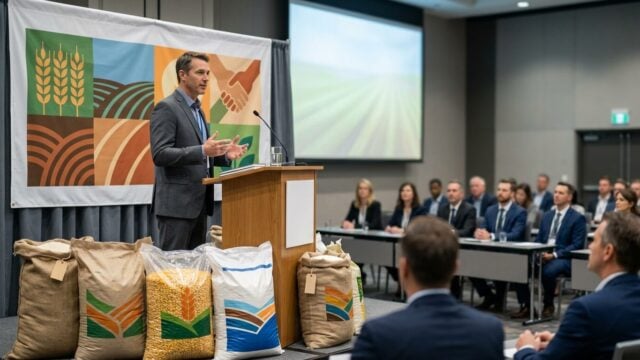
PONTIANAK — stop rice imports was reaffirmed by Deputy Agriculture Minister Sudaryono. He said the government will end imports of rice, corn and sugar, then gradually reduce dependence on other food commodities.
He delivered the statement in Pontianak, West Kalimantan, on Sunday, while attending the inauguration of the West Kalimantan Regional Leadership Board of the Indonesian Farmers Harmony Association, known as HKTI. Sudaryono spoke in his dual role as Deputy Agriculture Minister and chairman of HKTI's national executive board.
Indonesia rice imports, corn and sugar are the first targets
Sudaryono said the policy is not just about trade. The government wants to strengthen domestic production so Indonesians can meet basic food needs from local farmers.
“Indonesia must no longer depend on food imports. Under President Prabowo’s direction, we are committed to stopping rice, corn and sugar imports, and gradually reducing dependence on other food commodity imports,” Sudaryono said in a statement quoted by Republika.co.id.
The message matters. For markets, stopping imports usually affects supply flows and prices. For farmers, it can mean a wider market if domestic production truly covers national demand. Without strong output, though, an import ban can squeeze stocks and trigger price swings.
Sudaryono framed food self-sufficiency as a long-term goal. That means the government is not only chasing full warehouses or stocked markets. It also wants farmers to keep an incentive to plant.
Farmers are expected to benefit too
In his remarks, Sudaryono stressed that food policy should end in farmer welfare. He said rice, corn, palm oil, coffee, rubber and other commodity farmers should make a profit from their work.
“Most importantly, Indonesian farmers must become more prosperous. Farmers should no longer live in hardship,” he said.
That puts a heavy task on the government and the food supply chain. If imports are curbed, farm-gate prices must be protected so they do not collapse. At the same time, consumers still need stable supplies. Those two interests often move close together. Sometimes they pull in different directions. That is where government action becomes decisive.
Sudaryono said the government must make fertilizer available, raise production and keep harvest prices stable. He linked the food agenda to President Prabowo Subianto’s instruction, which sets food self-sufficiency as a major national project.
Surplus commodities and the next challenge
The deputy minister also said several food commodities have already reached self-sufficiency and surplus status. They include rice, cooking sugar, large chilies, bird's eye chilies, corn, cooking oil, chicken meat, eggs and shallots.
The list suggests the government believes part of domestic food demand can already be met without imports. But surplus on paper does not automatically mean every region has secure supplies. Distribution remains a problem, especially for areas far from production centers.
That is where the stop rice imports policy gets tested. If output rises at the farm level but logistics slow down downstream, prices can still swing sharply. Urban consumers feel it at market stalls. Farmers feel it through uneven prices for paddy and harvests.
So Sudaryono’s statement is not a single policy in isolation. It is tied to a long chain: seed, fertilizer, irrigation, harvest, storage, transport and market absorption.
Palm oil fruit prices draw attention in West Kalimantan
In Pontianak, Sudaryono also focused on palm oil farmers. He asked palm oil mills to buy fresh fruit bunches, or TBS, at prices set by regional authorities.
“TBS prices must not be bought below the government’s terms. When global crude palm oil, or CPO, prices are good, farmers should also enjoy the gains,” Sudaryono said.
He added that the prices set by local governments are the result of joint agreements and must be followed. The message matters for palm farmers in West Kalimantan, who often face sharp price swings from buyers. If TBS prices are pushed too low, farmers bear the biggest burden.
Sudaryono also opened the door for direct communication between the government and farmers. He asked that field problems such as irrigation, fertilizer and seed be reported quickly so the government can act. He said that approach is needed so policy does not stop at the podium.
Central, regional and farmer coordination will be tested
In this framework, HKTI is positioned as a government partner. Sudaryono wants the farmers' organization to help strengthen coordination between the central government, regional administrations and agricultural actors in the field. He said that kind of cooperation will speed up Indonesia's path to food independence.
“We want what people consume to be produced by our own farmers. That way Indonesia becomes stronger, farmers become more prosperous and national food security becomes more solid,” he said.
The remarks point to the direction of the policy the government is pushing: reduce imports, strengthen output and keep prices from hurting farmers. The market will now watch the next technical steps. How fast production rises, which commodities can truly be supplied from within the country, and how the government keeps prices stable for both farmers and consumers.
For readers, the impact is direct. If the policy works, domestic food supplies could become safer and farmers could gain stronger bargaining power. But if implementation stalls, price pressure could come from both ends. The government is now being asked to prove that stop rice imports is not just a slogan, but work that reaches rice fields, plantations and markets.