2 Guards of Iran’s Revolutionary Guard Shot Dead at Home
Two IRGC members were shot dead in Paveh, western Iran, near the Iraq border. Two others wounded. Iran calls it a terrorist act as investigation continues.
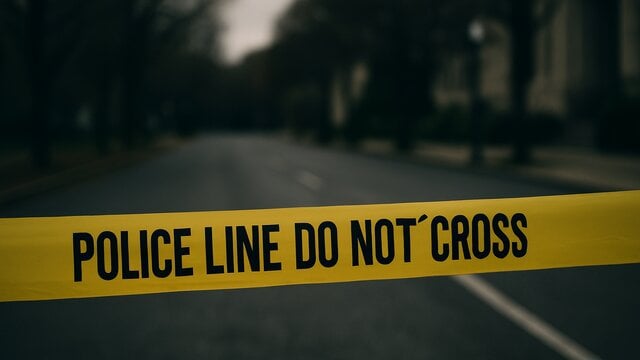
TEHRAN — Two Iranian Revolutionary Guard (IRGC) members were shot dead at their homes in the city of Paveh, western Iran, near the border with Iraqi Kurdistan, on Tuesday (6/30/2026). Two other Guard members were wounded in the attack, and the gunmen remain unidentified.
The incident immediately refocused attention on Iran's volatile border region. For Tehran, incidents like this are never simply criminal matters. They carry political, security, and ethnic dimensions — all tightly intertwined.
Iran calls the attack a terrorist act
Iranian state television described the deaths as a "cowardly terrorist act." The network, as quoted by AFP, said the exact details of the incident and steps to identify the perpetrators were still being examined.
Sepah News, the IRGC's official media outlet, later reported that the Revolutionary Guard had dismantled a team operating for an "anti-government and separatist group" that had entered Iran from the northwestern border. The outlet published blurry photographs showing four bodies of individuals allegedly killed during the operation.
No group has publicly claimed responsibility for the Paveh shooting. But Iranian authorities have long accused Kurdish separatist groups in the area of being behind similar acts of violence. Tehran has also alleged those groups maintain ties with the United States and Israel — accusations that resurface repeatedly whenever attacks occur along its sensitive border zones.
The investigation is ongoing.
Paveh and a sensitive corridor in western Iran
Paveh sits in Kurdistan Province, directly adjacent to Iraq's Kurdish region. Its location matters. Cross-border routes here can be used for armed group movements, smuggling, or small-scale infiltrations that are difficult to detect quickly. That is why any security incident in this area tends to be read as a broader threat.
The IRGC holds an outsized role in Iran's security architecture. They are not simply an elite military force — they are the regime's primary instrument for confronting both internal and external threats. Attacks on IRGC members are typically treated as sharp signals that the security situation is fragile.
On the ground, residents in border areas live under heavy surveillance. Checkpoints, patrols, and intelligence operations are a daily reality. Yet clashes keep happening. Sometimes quickly. Sometimes with brutal force.
A separate attack in Sistan-Baluchestan
In an unrelated incident, Iranian state television also reported that a family's vehicle was sprayed with gunfire in Saravan, Sistan-Baluchestan Province, on Monday (6/29). The father and mother were killed. Authorities have not yet identified the perpetrators or released further details about the victims.
State television attributed the attack to "Zionist-American mercenaries" — the term Iranian officials routinely use to refer to separatist and militant groups. The statement signals one thing clearly: Tehran views these incidents as part of a larger security pattern, not isolated events.
Sistan-Baluchestan borders both Pakistan and Afghanistan. The province has long been a site of clashes between security forces, insurgents, and drug traffickers. As one of Iran's poorest provinces, it is also home to a large ethnic Baloch population — predominantly Sunni Muslims in a majority-Shia country.
That combination of poverty, ethnic identity, and complex border geography makes the region easy to ignite. Every outbreak of violence there carries political resonance. And typically, the Iranian government responds with more aggressive security operations.
Taken together, these incidents reveal that Iran is simultaneously under security pressure at two sensitive flashpoints: the northwest and the southeast. If authorities identify the Paveh shooters, the next move will almost certainly mean tighter operations across the border zone. Everything now hinges on where the ongoing investigation leads.