Venezuela Earthquake Death Toll Hits 1,430 as Aid Slows
Venezuela earthquake death toll reaches 1,430 as families wait, aid teams arrive, and anger grows over a slow official response.
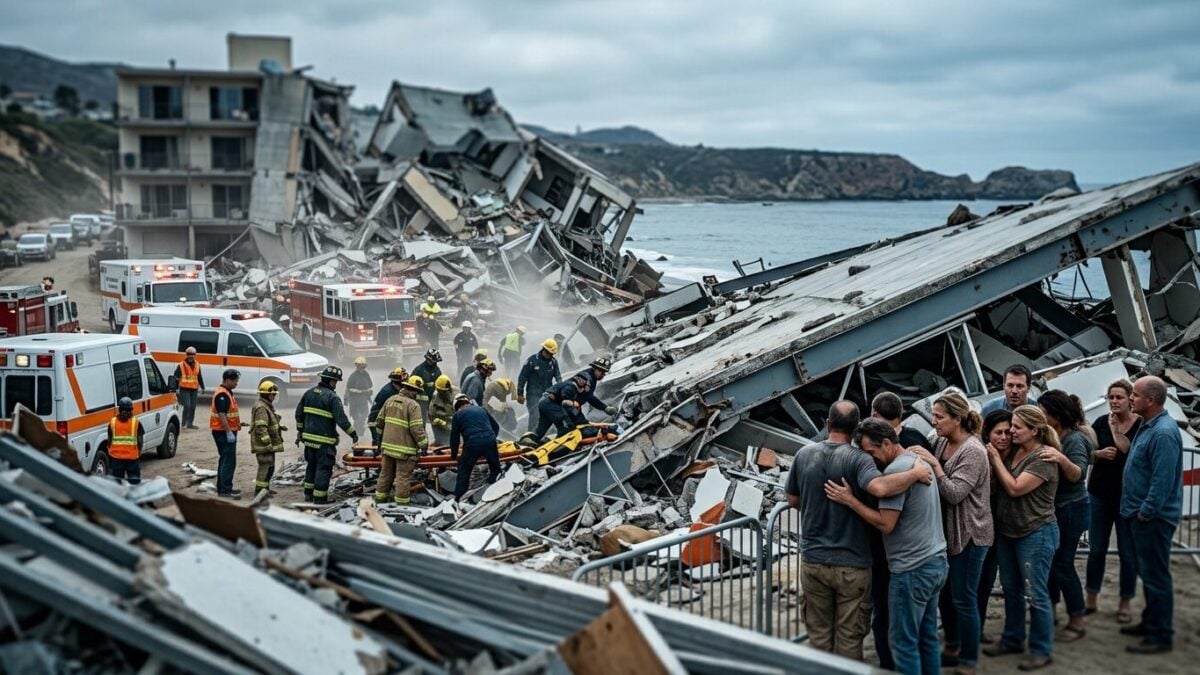
CARACAS — The Venezuela earthquake death toll has climbed to 1,430, while more than 3,200 people were injured and more than 50,000 others remain missing after two quakes of magnitude 7.2 and 7.5 struck the country this week. On the ground, rescue teams are racing against time, but many families have already stopped looking for the living.
The impact is sweeping. The disaster hit the northern coastal area near Caracas, damaged an airport, cut off access routes, and triggered anger from residents who say the government response has been too slow.
Venezuela earthquake deaths rise as the golden window closes
Disaster experts often call the first 72 hours after a catastrophe the most critical window for finding survivors. That window has now passed. In many places, the search has turned into a grim effort to recover bodies from collapsed concrete and rubble.
In La Guaira, the coastal state hardest hit north of Caracas, conditions have worsened. The smell of decay hangs in the air, ambulances keep sounding sirens, and dust clings to the neighborhood. Under punishing heat, residents have started wearing masks as the odor spreads everywhere.
“We pulled them out ourselves. No help came,” one mother told AFP after she was forced to take her daughter’s body to a morgue in Caracas. Her daughter and son-in-law died when their home collapsed in La Guaira on Wednesday.
Because decomposition sets in quickly, the pair did not even get a proper wake. Fast. Very fast.
Residents’ anger grows at the disaster site
Anger at the government is growing louder among residents working through the wreckage. Mileidy Romero, one of the people searching for victims in Caraballeda, said she saw bodies scattered and babies who had still not been evacuated.
“At 8 p.m. there were still people alive under there, and they did not want to help. We had already found several bodies, and they still did not help lift them out,” she said.
At one collapsed building, residents even blocked an excavator from leaving. The heavy machine operator was pulled from the cab shortly after state workers were reported to have posed for photos in front of the ruined structure before walking away without helping.
“They came to eat arepas and take photos so they would look like they were working,” said Yeison Marcano, a resident who has spent three days searching for victims. “Their uniforms were not even as dirty as ours.”
The government has also restricted access to La Guaira and required volunteers to carry permits to enter. The rule has fueled long lines in Caracas, including outside a concert hall where residents waited for permission to join the rescue effort.
“You need a permit to save a life — just imagine that,” said Carlos Itriago, 27. Ezequiel Rivero, 53, added that he had been waiting since dawn to get into the disaster zone.
Foreign aid arrives, but the need is still far greater
Amid criticism of the domestic response, international aid has started to arrive. Twenty-one countries have sent search-and-rescue teams. The United States has deployed more than 250 personnel, including three specialized teams with sniffer dogs to locate victims under the rubble.
Simón Bolívar International Airport, which serves Caracas, has also suffered heavy damage. One runway is still usable, but that is far from enough to support the logistics needs on the ground.
Tom Fletcher, the United Nations humanitarian chief, said more than 50,000 people are still missing. The UN migration agency estimates that as many as 6.76 million people could be affected. The UN also puts the physical damage at $6.7 billion, equal to about 6 percent of Venezuela’s gross domestic product.
The figures show how wide the damage runs. Not just lives lost. Not just homes collapsed. The economy, mobility, and emergency services have also been shaken.
A small sign of hope amid the rubble
Even so, there has been a sliver of good news. On Friday, residents pulled a baby alive from the ruins, about 32 hours after the quake. The moment briefly raised hopes that not everyone trapped beneath the debris was already beyond help.
For many families, though, that hope came too late. Barbara Palacios, for instance, heard her husband’s voice from under the rubble and screamed for him. She refused to leave while the search continued.
“I will not leave until they take my husband out,” she said. When rescuers finally recovered him, he was already dead.
Across Venezuela, residents are now relying on one another. Musician Zaira Castro said ordinary people are the ones helping each other when the state is seen as absent. “We live in a society that is already used to helping one another,” she told AFP. “We do not rely on the government — the government is no longer there for us.”
That captures the mood on the ground: angry, exhausted, and desperate. But also stubborn. People keep digging, calling family names, and waiting for news amid wet earth, shattered walls, and debris that has not yet gone quiet.
“We are still searching,” one volunteer at the site said. “As long as there is a chance, we will not stop.”