India’s e-waste workers face toxic health risks in New Delhi
India’s e-waste workers face toxic health risks in New Delhi as informal recycling exposes them to cuts, fumes, and lead.
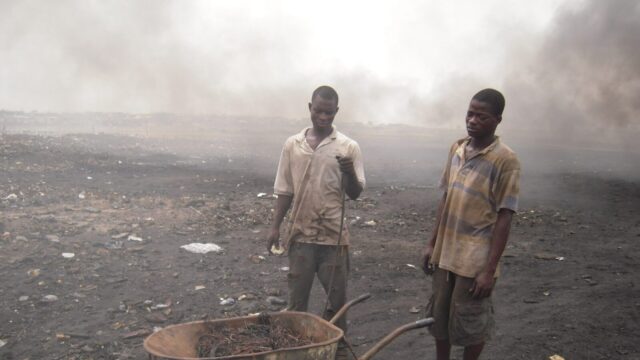
NEW DELHI — India’s e-waste workers face toxic health risks in New Delhi every day as informal dismantlers strip old electronics for copper and other metals with little protection. In Mustafabad, Mateen Malik sorts wires from broken devices with his bare hands while the smell of burnt plastic hangs in the workshop.
The work is fast, dirty and dangerous. Small cuts turn into infections, smoke fills tight rooms, and the people doing the job often earn just enough to keep coming back the next day.
India’s e-waste workers face toxic health risks in New Delhi workshops
Malik, in his early 20s, works as an informal electronics sorter. He has no gloves, no mask and no safety gear. When wires are hard to remove, he uses a blow torch to break apart devices, a method that saves time but sends more chemicals into the air.
“Sometimes the extraction process is difficult, and I don’t have protective equipment — no gloves, no masks. Often my hands get burned too. This is routine in our work. Chemical residue is there too,” Malik told Al Jazeera. “But I depend on this job.”
In another crowded workshop nearby, Muhammad Faizan, a migrant worker from Bulandshahr in Uttar Pradesh, burns insulated cables to pull out copper. Thin black smoke rises from the floor and lingers under the low ceiling as he works from 9 a.m. to 8 p.m.
“This is dangerous work. I sit in the same place every day. While dismantling electronics, I often injure my hands. When I burn plastic to extract metal, I breathe in the smoke,” Faizan said. His pay depends on how much metal he separates. Less output means less income.
The setup is common across informal recycling sites in the Indian capital. Tight rooms, open flames and bare hands. No buffer. No real protection.
India’s growing e-waste load is pushing more workers into danger
The health risks are growing alongside India’s electronic waste. The country is now the world’s third-largest e-waste generator after China and the United States, and the amount recycled is said to be rising by nearly 23% a year.
In March, India’s Minister of State for Environment, Forest and Climate Change, Kirti Vardhan Singh, told parliament that the country generated more than 1.4 million metric tons of electronic waste in 2025-26. About 979,000 metric tons were recycled.
Data submitted by India’s Central Pollution Control Board to the National Green Tribunal in New Delhi showed that the capital accounts for nearly 10% of national e-waste. The figure is estimated at 230,000 metric tons a year. That means the pressure lands hard on informal pockets such as Mustafabad, where dismantling happens far from the clean, regulated recycling plants often described in policy plans.
Behind the scenes sits a chain of scrap dealers, repair shops and backyard dismantlers. Many know how to pull metals from discarded devices. Far fewer understand the toxins released by older electronics, especially when they are burned or broken apart without controls.
Why the risk spreads to families at home
Bharati Chaturvedi, founder and director of Chintan, an environmental research and action group, said one of the most striking parts of India’s informal e-waste economy is how often home and workplace collapse into one another.
“Very often, a worker lives upstairs, while dismantling happens on the ground floor or on the roof,” she told Al Jazeera.
“The first thing you notice is proximity to these items, many of them broken, dumped with lead dust and other toxins. They can catch fire,” Chaturvedi said. “Workers also often use blow torches while dismantling them, which releases even more toxic substances into the air.”
That setup pulls children and other family members into the exposure zone. In these homes, discarded phones and broken televisions can sit beside beds, cooking areas or play spaces. The air moves through all of it.
“There is an impact, especially on children, because of extreme toxins. There is a lack of accountability in improving workers’ conditions,” Chaturvedi said. She listed cuts, infections, lead exposure, toxic dust and hazardous chemicals among the main risks.
Lead exposure, she added, can make iron absorption difficult and leave people weak and anemic. Women and children face the same danger when they live in the same space where recycling work happens.
Why this matters beyond India
The story reaches beyond New Delhi. Countries such as Indonesia face the same basic problem as gadget use rises and old phones, laptops and cables pile up. If collection and recycling systems stay weak, the dirty work shifts to the informal sector, where workers usually have little training and even less protective gear.
The World Health Organization says informal recycling can release lead, mercury, cadmium and dioxins into the environment. Those substances do not stay inside one workshop. They spread through air, dust and household surfaces, then settle where children live and sleep.
The cost looks cheap at first. It is not. Workers get sick. Output falls. Families breathe the same smoke. And the waste stream keeps growing.
Al Jazeera said it had contacted India’s Ministry of Environment, Forest and Climate Change and the Delhi Pollution Control Committee about worker safety and enforcement, but had not received a response. For Malik and Faizan, the question is immediate: who protects the people breaking apart the devices everyone else throws away?
The answer will matter more as new gadgets keep replacing old ones, and the waste pile keeps rising. In New Delhi, the human cost already has a smell: burnt plastic, thick smoke and lead dust in the air.