Uber Robotaxi Launch Set for Houston in 2027
Uber robotaxi plans for Houston in 2027 could reshape ride-hailing, driver jobs, and EV fleets as Lucid and Nuro push autonomy forward.
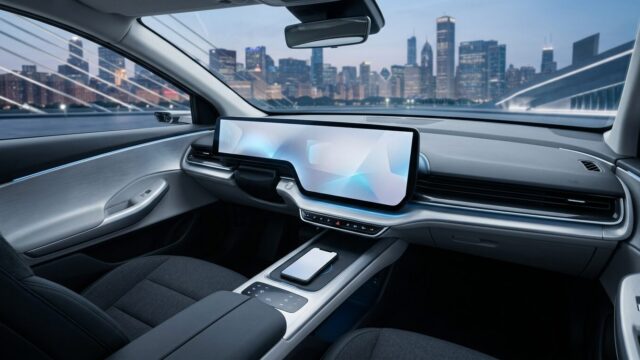
Uber Robotaxi Launch Set for Houston in 2027 will bring the company’s next ride-hailing test to one of the biggest U.S. car markets, with a premium autonomous service planned for mid-2027. The project, built with Lucid and Nuro, shows how quickly ride-hailing is shifting from driver-partner trips to fleet-operated vehicles.
The first rollout is aimed at San Francisco by the end of this year, according to Reuters, before Houston follows as the second market in the partnership. For riders, that means a different kind of Uber experience. For the industry, it signals a harder push into autonomous transport.
Uber Robotaxi Launch Set for Houston in 2027 starts with two cities
Reuters reported on Thursday, June 18, 2026, that Uber is positioning San Francisco and Houston as the opening markets for the program. After those two cities, the company wants to expand to dozens more over the coming years.
That timeline matters. Uber is not pitching a distant concept or a demo on a closed track. It is preparing a service with a defined city-by-city rollout, a partner stack, and infrastructure already taking shape on the ground.
In Houston, Uber has set up a 50,000-square-foot depot and a dedicated charging facility to support operations. The setup is telling. This is not just a booking app with a flashy label. It is a physical fleet model that needs parking, charging, cleaning, inspections, and constant monitoring.
Uber will act as both owner and operator of the robotaxi fleet under the partnership, managing the passenger experience as well as the vehicles themselves. That gives the company more control than its classic marketplace model, where human drivers supply the cars and absorb most of the day-to-day operational burden.
What changes for riders and drivers
The shift is big. Ride-hailing has long rested on a simple structure: the app matches demand, and a driver completes the trip. Robotaxi changes that equation. The car becomes the service.
For riders, the immediate appeal is consistency. A fleet-run vehicle can be scheduled, routed, charged, and dispatched with fewer human variables. For drivers, the picture is less comfortable. If autonomous fleets scale, the work that once flowed through partner drivers starts moving toward software, fleet managers, and vehicle operators.
That does not mean human driving disappears overnight. The Houston launch is still planned for 2027, and both San Francisco and Houston are still in testing. But the direction is clear. Uber is building a service that can run without a person behind the wheel, even if the rollout remains phased and tightly controlled.
Uber is also not starting from a blank slate. The company was once one of the best-known app-based ride-hailing platforms in Southeast Asia before selling its regional business to Grab and exiting the market. Now it is trying to define the next version of that business model.
Inside the technology stack
The robotaxi itself is based on Lucid’s Gravity SUV and uses a sensor suite that includes high-resolution cameras, solid-state lidar, and radar. Each system plays a different role. Cameras read signs and lights. Lidar maps objects and distance. Radar helps track movement when visibility drops.
Nuro’s autonomous driving system processes that data and decides what the car should do next. Slow down. Stop. Change lanes. Keep a safe gap. The decisions come fast, and the margin for error is small.
Testing has already started on public roads in San Francisco and Houston, with a safety driver still inside the vehicle. Reuters reported that Nuro received permission from California’s Department of Motor Vehicles last month to remove safety drivers from its test vehicles, but the public-road rollout still remains carefully staged.
That caution is standard in autonomous vehicle development. Real streets are messy. Lane markings fade. Traffic patterns shift. A cyclist cuts across a lane. A delivery truck blocks a curb. Even a simple rainstorm can change how a vehicle reads the road.
Closed tracks and simulations help, but they do not replace real-world conditions. So the companies are using both. The goal is to make the system reliable enough that the ride feels ordinary to the passenger, even if the technology behind it is anything but ordinary.
Why Houston matters for the EV market
Houston is more than a test city. It is also a useful stress test for the electric vehicle side of the business. Uber has committed to invest US$500 million in Lucid and another US$500 million in Nuro, and it has agreed to buy at least 35,000 Lucid vehicles prepared to operate as robotaxis.
That kind of order could help Lucid with scale. The EV maker has faced the same hard reality that has challenged many electric vehicle startups: building cars is expensive, and building them at volume is harder. Fleet demand from Uber offers a steadier customer base than retail sales alone.
For Nuro, the deal marks a major reset. In 2024, the startup stopped developing its own delivery robot and moved toward licensing its autonomous system to automakers and other partners. Working with Uber and Lucid gives it a large commercial stage for that strategy.
The partnership also shows where the money is moving. App companies want lower operating costs and more control over service quality. EV makers want bigger production runs. Autonomous tech firms want real deployment data. Houston sits right in the middle of those goals.
The obvious question is what this means for people who depend on app-based driving for income. The short answer: not much immediately, but plenty over time. Testing still needs safety drivers, permits are still required, and the service still has to prove it can work safely in real traffic. Yet a successful rollout in San Francisco and Houston would give Uber a path to expand into other cities with fewer human drivers and more software-driven operations.
That is why the launch matters beyond Houston. If the model works, it could push ride-hailing closer to a fleet business than a labor marketplace. And when Uber starts buying 35,000 robotaxi-ready Lucid vehicles, the next phase stops looking theoretical.
It starts looking like a factory order.