400-year-old giant black coral found in Fiordland
400-year-old giant black coral found in Fiordland, offering new clues for deep-sea conservation and habitat protection.
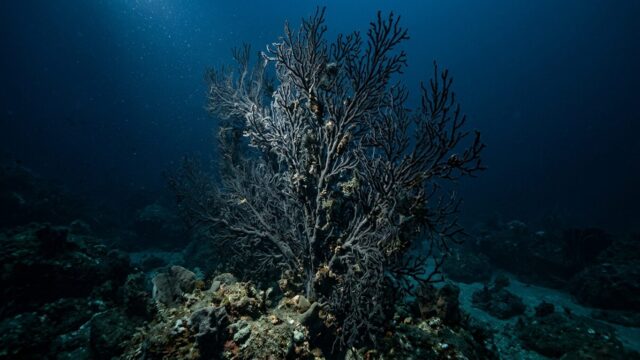
FIORDLAND — giant black coral standing 4 meters tall was found by researchers in the deep waters off Fiordland, New Zealand. It also measures 4.5 meters across, putting it among the largest black corals ever recorded in Aotearoa New Zealand waters.
The find matters not only because of its size. The coral is estimated to be 300 to 400 years old. For readers who care about the ocean, that number says a lot: this organism grows extremely slowly, then survives for centuries in dark waters that people rarely reach.
A major find from the dark sea
The discovery came while a research team was surveying Fiordland’s deep waters. Life in the deep sea often holds surprises there. This coral stood out immediately. Professor James Bell, a marine biologist at Te Herenga Waka — Victoria University of Wellington, called it “absolutely huge.”
“This is by far the largest black coral I’ve seen in my 25 years as a marine biologist. Most black corals we encounter while diving are small, and the large ones are usually less than two to three meters. So finding this one was really cool,” Bell said, according to material provided by Te Herenga Waka — Victoria University of Wellington.
Bell was not exaggerating. In marine ecology, the difference between an ordinary coral colony and a giant one matters. A large coral like this is not just an underwater photo subject. It also carries information about age, growth patterns, and the health of the surrounding habitat in the fiords.
Why the coral’s size matters
Black corals grow very slowly. That is why large colonies are highly valuable for conservation. They can serve as a kind of “parent stock” that helps the species persist. If an old, large colony is damaged, it can take a very long time to recover. Very long.
Bell said knowing where large corals are located helps conservation teams protect them more effectively. “Identifying where large corals are means we can protect them better by telling people where they should not drop anchors or set traps,” he said.
That warning matters for shipping and fishing activity in the fiords. A single anchor placed in the wrong spot, or a trap dropped to the seabed, can damage a coral structure that took centuries to grow. The damage is not limited to one branch. It can spread through the entire colony.
Richard Kinsey, a senior biodiversity ranger at the Department of Conservation, joined the dive team that found the coral. He said the sight felt deeply special. “Seeing a coral that size rise out of the darkness was incredible. I’ve been a marine ranger in Fiordland for almost 20 years, and I rarely see corals this large. This is easily the biggest I can remember,” Kinsey said.
Mapping the sea for protection
The research team from Victoria University is now working with the Department of Conservation and Fiordland Marine Guardians. The goal is clear: better understand where protected coral species appear across the fiords. That distribution data will feed into the next round of conservation planning.
That kind of work matters because marine protection is not solved by broad rules alone. Rangers need locations, depths, and distribution patterns. From there, field rules can be drawn more precisely. Ships know which areas to avoid. Fishers know which spots are sensitive. Managers can also set protection boundaries that actually fit the habitat.
Bell has even asked the public to help with reporting. He urged anyone who knows of a large black coral more than 4 meters across to pass on the information so the team can map its distribution in Fiordland. That matters because giant corals are not always found in places researchers can easily reach.
In the deep sea, one discovery can raise many questions. How many large colonies are still out there? Are they spread evenly or clustered in certain places? And, most important, which areas remain safe from human disturbance?
Black coral is not really black
The name black coral can be misleading. The living outer part of the coral is actually white. The black color appears in the internal skeleton. So visually, it does not always look as dark as its name suggests.
In New Zealand, black coral is protected under the Wildlife Act. That means taking it or deliberately damaging it is illegal. The law adds weight to the Fiordland discovery, because a colony this large and old is especially valuable both scientifically and as habitat protection.
For readers, the story offers a simple reminder: the deep ocean still holds ecosystems that people have barely touched. Some organisms grow slowly, last for centuries, and quietly create habitat for other species. Once damaged, they do not bounce back quickly.
The giant black coral find also shows why field research still matters, even as ocean mapping technology improves. Underwater cameras, GPS data, and conservation monitoring still depend on direct discoveries in the field. Without that work, a colony like this could easily go unnoticed.
Bell closed with a direct appeal. “We want to receive reports from anyone who knows of a very large black coral, more than 4 meters, so we can map its distribution and find out how common colonies of this size are across Fiordland,” he said. In short, this discovery is only the beginning. Not the end.