5 Plumbing Business Software Tools for 2026 Efficiency
Plumbing business software can cut admin, speed response, and organize crews in 2026. TechRadar Pro tested five useful tool categories.
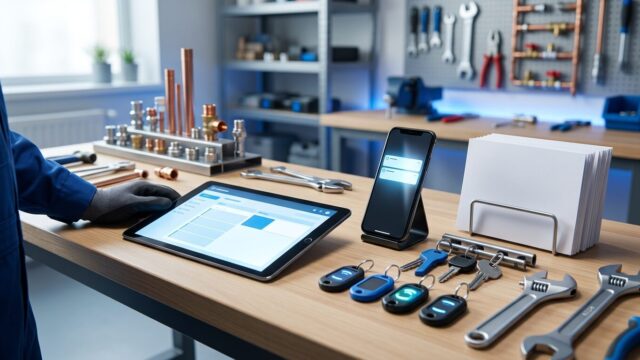
JAKARTA — plumbing business software is now a key factor in how fast service gets delivered, because in pipe work, the first team to answer the phone often gets the job. A TechRadar Pro report that tested five tool categories in realistic scenarios found that digital systems can reduce admin work, speed up responses, and help small to mid-sized plumbing shops run more neatly in 2026.
The problem is simple. Plumbing jobs rarely arrive on office hours. A leaking pipe will not wait. Technician schedules can fall apart, tools go missing, and invoices pile up in service vans. At that point, software is no longer a nice extra. It becomes a daily work tool.
Why plumbing business software matters more now
The TechRadar Pro report highlights something that feels very close to field work: plumbing businesses live and die by response speed and coordination. If an incoming call is answered too late, the customer can move to a competitor. If client data gets scattered, a technician arrives without job history. If bookkeeping stays manual, the night disappears into Excel instead of new sales follow-up.
That pressure is sharper because the labor market remains tight. The article says the industry is short on skilled technicians, while demand keeps moving. In that kind of setup, owners cannot rely on team memory alone. They need a system that moves information from the phone to the schedule to the invoice with as little friction as possible.
In short, the right software helps owners do more with the same crew. Not magic. But the effect is real.
1. Field service management for schedules and dispatch
The first category tested was field service management, or FSM. It handles job scheduling, sends the nearest technician, and keeps customer repair history in one dashboard. In TechRadar Pro’s test scenario, the tool was used to build a full week of work, from emergency calls to routine maintenance.
The result: less administrative burden. Job notes, field photos, and status updates synced directly to the dashboard. That matters because technicians in the field do not have time to rewrite every detail at the end of the day. One clean app can prevent a lot of misunderstandings.
Still, there is an important catch. Teams used to working with clipboards do not automatically feel comfortable moving to a new system. Training is needed. If the transition is messy, the busy season can get disrupted.
2. Asset tracking for tools and fleet
Lost equipment is often treated as a small cost. In practice, if you add it up over a year, the number can be large. TechRadar Pro tested an asset-tracking app that assigns QR codes or GPS tags to trucks and essential tools. In the simulation, equipment left idle for several days was flagged quickly.
For plumbing businesses, this is not a minor detail. Drain snakes, meters, drills, and other gear often move from one hand to another without a clear record. Once a single tool fails to come back, the next job gets delayed too. In a small operation, one missing item can throw off an entire service schedule.
The report also cites industry analysis showing that full asset visibility can improve maintenance productivity and reduce repair costs. The numbers are interesting. And they make sense.
3. AI to capture leads after hours
The third category is tied to AI. It can take the form of a chat widget on a website, or an automated phone agent that answers calls after business hours. In TechRadar Pro’s testing, several after-hours calls turned into booked appointments before staff even saw the missed-call notification.
That matters because fast response determines opportunity. A prospect-response study cited in the report says contractors who reply within five minutes are far more likely to win the work than those who wait half an hour. Five minutes. A short gap, with a big outcome.
Even so, AI adoption among contractors remains cautious. TechRadar Pro cites a survey of more than 1,000 contractors in which only 25 percent were using AI in a meaningful way. So yes, the technology is attractive, but it needs a clear rollout plan. Do not just switch it on.
4. Accounting to stop cash flow leaks
Of all the categories, accounting may be the least glamorous. It is also the one that often delivers the most visible benefit. Accounting software pulls in bank transactions automatically, groups receipts, and builds profit-and-loss reports without forcing someone to dig through piles of paper one by one.
In TechRadar Pro’s simulation, dozens of receipts from field activity were assigned to the correct expense columns in seconds. A profit-and-loss report that would normally take a full evening was finished much faster. For small owners, that means more time checking margins and less time cleaning up numbers.
The report also notes that manual bookkeeping can take 8 to 12 hours a month for the average small-business owner. Good software can bring that down to 2 to 4 hours. Those eight saved hours can be used to follow up with new customers. Or to rest. Both matter.
5. Onboarding and training new technicians
The labor shortage has pushed training higher on the priority list. Plumbing work often takes 45 to 60 days just to hire the right person, then 12 to 18 months before that person becomes truly productive. If a new technician leaves quickly, the hiring cost goes to waste.
TechRadar Pro tested an onboarding platform by building a new employee profile and certification checklist. The process of checking documents and licenses finished faster because the system flagged which certificates were still missing. No need to rely on a supervisor’s memory.
It looks small on paper. But in service businesses, removing one point of friction can trigger a chain reaction. Technicians get field-ready faster. Operations teams feel less stressed. Customers wait less.
What matters most for readers in Indonesia
If your plumbing business runs in a big city like Jakarta, Surabaya, or Bandung, the core needs are similar: fast response, clean records, and tool control. Even for a family business, those three things often decide whether the schedule stays under control or turns messy.
In the Indonesian context, software choices also need to fit how teams already work. Many service businesses still rely on WhatsApp, spreadsheets, and paper notes. That is not wrong. But once orders start picking up, manual systems wear out quickly. That is where plumbing business software comes in: not to replace a plumber’s skill, but to reduce unnecessary rework.
The TechRadar Pro report closes with a blunt message: these five categories do not replace a good plumber, but they remove the obstacles around the job. Scheduling, asset tracking, AI lead capture, accounting, and staff training work like a frame. Without a neat frame, the business gets tired of itself fast.
Or, as the report’s core idea puts it: modern plumbing businesses win not only because the technicians are skilled, but because the system behind them is not falling apart.
Quick summary
1. Plumbing business software helps answer calls faster, organize schedules, and clean up field work.
2. The five most relevant categories are FSM, asset tracking, AI lead capture, accounting, and technician onboarding.
3. TechRadar Pro found the tools most useful when tested in real work scenarios, not just sales demos.
Short FAQ: Do small businesses need all of these tools? Not always. Start with what hurts most: scheduling, bookkeeping, or incoming leads. When is AI most useful? After the office closes and calls keep coming in. What benefit shows up first? Usually less admin work and faster customer response. TechRadar Pro wrote, “The company that answers the phone first usually wins the work.” The point is clear. Speed often wins.