NHTSA Wants to Remove Robotaxi Brake Pedals
NHTSA wants to remove robotaxi brake pedals while keeping stopping standards. Here’s what the proposal could mean for safety and design.
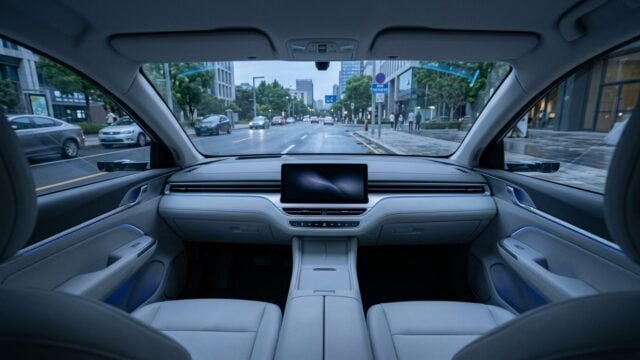
JAKARTA — robotaxi brake pedals are now the target of a new U.S. rule. The National Highway Traffic Safety Administration, or NHTSA, wants autonomous vehicles with no manual controls to be built without brake pedals or hand parking brakes.
The proposal comes as regulators argue that requiring manual controls could slow innovation. At the same time, NHTSA still wants autonomous cars to stop safely and meet the stopping-distance standards already on the books.
Robotaxi brake pedals are seen as a design problem
In an official notice published Friday, NHTSA said federal safety rules for light passenger vehicles need to change. The focus is on vehicles that use automated driving systems, or ADS, without steering wheels, pedals, or other manual levers.
For now, federal standards require vehicles to have a foot-operated service brake and a manual parking brake. NHTSA says that rule fits conventional cars, but not robotaxis that are fully controlled by automation.
The regulator wrote that such manual controls could create a new risk. Passengers, NHTSA said, could intentionally or accidentally interfere with a system that is supposed to run on its own. In a driverless vehicle, everyone in the cabin is a passenger, not a driver.
“Regardless of how the brake is operated, the braking system must still be capable of stopping the vehicle safely, as the standard already requires,” NHTSA said in its proposal. The agency added that the new rule would remove unnecessary regulatory burden and cost without harming vehicle safety.
Stopping standards stay, but there is no single way to stop the car
What changes is not the ability to stop, but the control layout. NHTSA is keeping the stopping-distance requirement for robotaxis. The agency also admits that test methods for driverless vehicles still need to be developed further.
That is where things get messy. NHTSA is not asking for one standard way for passengers to stop a vehicle. That means each manufacturer could use a different system, as long as passengers are given a way to tell the car to stop.
“NHTSA expects that if these controls are removed, passengers will still be provided a means to direct the ADS-operated vehicle to stop,” the agency wrote. “However, the way passengers indicate that desire is likely to vary by manufacturer.”
That matters. Without a common standard, an emergency button on one brand could look and feel very different from another. One car may use a physical button. Another may rely on voice commands, an app, or a touchscreen. For passengers, that is not just a design issue. It is a split-second safety issue.
Waymo, Tesla, and the long safety debate around robotaxis
NHTSA’s proposal arrives as several manufacturers and ride-hailing operators are already preparing vehicles without manual controls. Tesla, Waymo, and Amazon are among the names linked to this kind of development, although each is taking a different approach.
By contrast, driver-assist technology that still uses pedals will remain under the old rules. Cars with steering wheels, pedals, or driver-assist systems such as Tesla Autopilot and Ford BlueCruise will still need brake pedals. So this easing would apply only to pure ADS vehicles, not ordinary cars that simply have smart assistance.
NHTSA is also walking a fine line. The proposal acknowledges that ADS technology is still evolving and that many of its benefits have not yet been fully realized. At the same time, the regulator is preparing to loosen one of the most basic controls in a vehicle.
That is why the debate is drawing attention. Robotaxis promise efficiency and rides without a driver, but safety questions keep following the technology. From a Waymo vehicle that once drove into floodwater to the fatal crash that involved Tesla Autopilot, the public still wants proof that autonomous vehicles are truly safe on public roads.
NHTSA oversight also comes under scrutiny after staffing cuts
The debate over robotaxi brake pedals cannot be separated from NHTSA itself. The Verge reported that the agency has repeatedly faced off with manufacturers pushing controversial driving-assist technology, especially Tesla. But its oversight was said to have taken a hit after staffing cuts while Elon Musk led the Department of Government Efficiency.
According to that report, the steepest cuts hit employees responsible for regulating autonomous vehicles. If true, the situation makes new rulemaking even more sensitive. Too little regulation can create risk. Too much can stall innovation.
That is the stakes for this proposal. For manufacturers, removing robotaxi brake pedals would simplify cabin design and help open the door to fleets without manual controls. For passengers, the question is much simpler: if a car needs to stop hard, who can actually stop it, and how fast?
Public comments on the NHTSA proposal are open until July 27. The document number, NHTSA-2026-0728, was listed in the notice, though it has not yet appeared on the portal for support or objections. The process is still underway, and the outcome will shape how far autonomous vehicles can move away from human control inside the cabin.
Short summary:
1. NHTSA is proposing that pure ADS vehicles can be built without brake pedals and manual parking brakes.
2. Stopping-performance standards would remain, but the method for requesting a stop is not standardized.
3. The proposal is open for public comment until July 27 and could affect future robotaxi design.
Quick FAQ:
What is NHTSA changing? The rule that requires brake pedals and manual parking brakes in autonomous vehicles without manual controls.
Does this apply to every automated car? No. Cars with steering wheels and pedals, including those with driver-assist features, would still need brake pedals.
Why does this matter? Because the decision will shape robotaxi design, how passengers stop a vehicle, and future safety standards for driverless cars.
Looking ahead, the debate will shift from whether a pedal is present to a more basic question: what kind of emergency control makes the most sense for a vehicle that no longer has a driver at all.