Robotaxi: The Future of Public Transport
Robotaxi is already on the road in major cities. Here’s how it works, who operates it, and why it matters for transport.
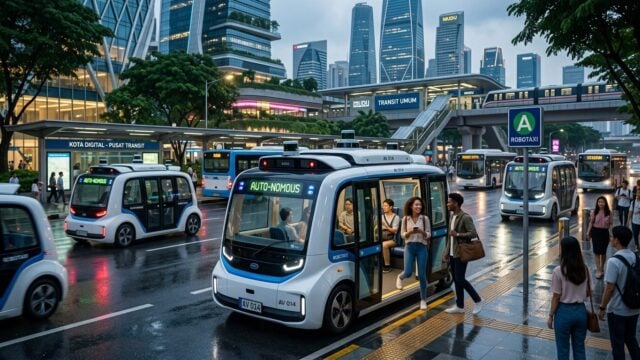
JAKARTA, JOURNALARTA.COM - Robotaxi: The Future of Public Transport is no longer a lab concept. Driverless taxi services are already carrying paying passengers in cities including Phoenix, San Francisco, Los Angeles, and several major Chinese hubs.
That shift matters because it changes more than how people hail a ride. It raises fresh questions about safety, cost, liability, and whether cities are ready for vehicles that do not need a human behind the wheel.
What a robotaxi actually is
A robotaxi is a passenger vehicle built with automated driving systems that can handle part or all of the driving task without direct human control. Under the SAE International standard, the most advanced commercial services today operate at Level 4, meaning the car can drive itself within a defined area and set of conditions.
Level 5 sits at the far end of the scale. That would mean full automation in any location, in any condition, with no human backup. That stage is still out of reach for public deployment. Most real-world robotaxi fleets today stick to Level 4, and they do so with tight limits on where and when they can operate.
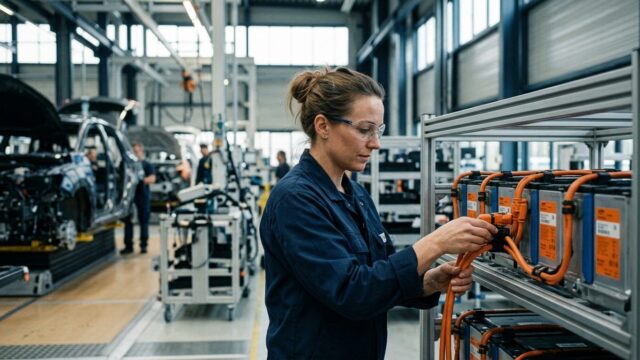
To make that work, companies load the vehicles with lidar, radar, high-resolution cameras, precise maps, and artificial intelligence systems that read the road in real time. The software tracks pedestrians, monitors other cars, reacts to lane markings, and adjusts routes as conditions change. It has to be fast. It has to be careful.
Who is already operating
Waymo, Alphabet’s autonomous vehicle unit and Google’s parent company, is the most visible leader in the market. Its commercial robotaxi service runs in Phoenix, San Francisco, and Los Angeles, where passengers can book through an app, get in, and ride without a driver.
General Motors’ Cruise unit also pushed ahead with large-scale testing in North American cities before a safety incident in 2023 forced a suspension. That episode slowed momentum and showed how quickly public confidence can shift when a self-driving system fails in the real world.
In China, Baidu Apollo has obtained robotaxi licenses in more than 10 major cities and has logged millions of rides. Tesla has also talked up a mass robotaxi launch built around its Full Self-Driving platform, though the timeline has moved several times. The race is moving, but not evenly.
Why companies keep pushing this model
Supporters say the biggest payoff is safety. Road crashes are still driven largely by human mistakes such as distraction, fatigue, speeding, and rule-breaking. Robots do not get tired. They do not check a phone at the wrong moment. They do not drink before a shift.
Costs matter too. Without a driver, operators can cut labor expenses, and that could reduce fares over time if the business model scales. A robotaxi fleet can also run for long hours, even around the clock, which gives companies a way to serve neighborhoods and travel windows that regular transit often misses.
Many of these vehicles are built on electric platforms, which gives the sector another selling point. Cities looking to cut emissions see a possible fit between autonomous fleets and cleaner urban mobility. That is the promise on paper.
The real-world impact is more immediate for riders and cities. If robotaxi services spread, passengers could see more late-night options, shorter waits, and new competition for ride-hailing firms. Public transport planners would also have to think about curb space, traffic flow, and rules for vehicles that can operate without a human driver inside. For consumers, the payoff could be lower fares. For regulators, the pressure is clearer: write rules before the market outruns them.
The hard problems are still there
Regulation is the biggest obstacle. When a robotaxi crashes, who carries the blame? The maker, the operator, the software provider, or the person who booked the ride? Different countries are answering that differently, and some are still avoiding the question altogether.
Technical limits also remain. Autonomous systems still struggle when weather turns ugly, roadworks appear without warning, or pedestrians behave unpredictably. A clean demo on a mapped route is one thing. A crowded street in bad rain is another.
Cybersecurity adds a second layer of risk. Connected vehicles can be targeted by hackers, and a compromise in one fleet could have broad consequences. SAE International and the United Nations Economic Commission for Europe have helped set global technical standards, but real-world enforcement still varies by country and city.
Public trust is the final test. Many riders are still uneasy about stepping into a car with no one at the wheel. That hesitation is not irrational. It comes from the simple fact that a mistake in a driverless vehicle feels different. There is nobody to look at. No one to blame in the seat next to you.
Indonesia is watching, not rushing
In Indonesia, discussion on autonomous vehicles has already reached the Ministry of Transportation and the National Research and Innovation Agency, or BRIN. The focus remains on safety standards and supporting infrastructure, while no official public pilot has been announced.
That cautious stance makes sense. Jakarta and other big cities already deal with dense traffic, mixed road users, and uneven discipline on the road. A robotaxi system would need mapped streets, strong connectivity, clear liability rules, and enforcement that can keep up.
Industry forecasts still suggest that robotaxi services could become part of urban mobility in major cities within the next five to 10 years, especially as they are integrated with ride-hailing apps, public transit, and smart traffic systems. Investment is still flowing. Competition is getting tighter. And for countries like Indonesia, the issue is no longer whether the technology exists, but how fast the rules can catch up.
Note: This article draws on official developer publications, SAE International standards, UNECE technical references, and ministry documents cited in the source material.