Trump taps old Smoot-Hawley tariff power to target Canada
President Donald Trump is reaching back to a long-dormant corner of U.S. trade law to impose extra tariffs on Canada, reviving an authority tied to
President Donald Trump is reaching back to a long-dormant corner of U.S. trade law to impose extra tariffs on Canada, reviving an authority tied to the 1930 Smoot-Hawley Tariff Act. The move gives fresh fuel to a fight over presidential power just as courts are narrowing Trump’s ability to use tariffs at will.
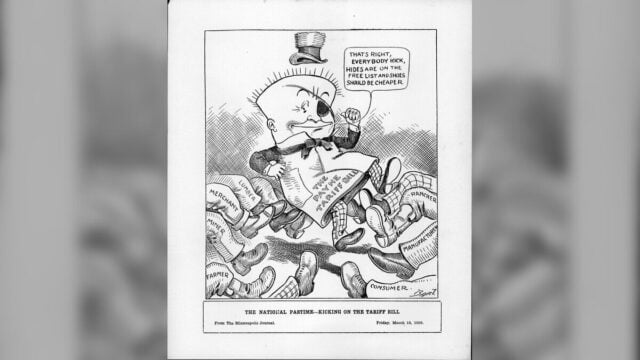
The White House is moving against Canada on the grounds that it discriminates against U.S. exports, according to the source material. The legal hook matters almost as much as the tariff threat itself. Smoot-Hawley has long carried toxic baggage in global trade circles, remembered for deepening protectionism in an earlier era. Now, a provision from that law that had sat unused is back in play.
A dormant law returns
For decades, the Smoot-Hawley Tariff Act stood more as a warning than a tool. Trade lawyers and policymakers knew the name. Few expected a modern president to lean on it again. Trump’s decision to invoke that authority adds a new layer to an already combative approach to tariffs, and it signals that the administration is looking for legal pathways that still remain open.
That search comes at a sensitive moment. The Supreme Court has been limiting Trump’s ability to wield tariffs, which raises the stakes around every new attempt to set duties unilaterally. If one channel closes, another opens. Or at least the White House appears determined to test that proposition.
Canada sits at the center of the latest dispute. It is one of the United States’ closest trading partners and a core part of North American commerce. Any tariff escalation between the two countries would not stay on paper for long; it would ripple through supply chains, contracts and pricing decisions that already connect manufacturers, farmers and consumers across the border. The source material does not spell out the size of the tariff, but the direction is clear. Washington is preparing to add pressure.
Why the legal route matters
The significance is bigger than one bilateral fight. Trump’s use of an unused provision suggests he is not giving up the tariff fight even as judges scrutinize his powers. That leaves businesses, exporters and foreign governments watching for the next legal pivot. The issue is no longer only what tariff Trump wants to impose. It is how far he can stretch old law to do it.
Smoot-Hawley still carries symbolic weight in trade history. Its name has become shorthand for protectionist excess, and its return in this context will not be lost on trading partners already wary of U.S. tariff policy. For Canada, the move adds a fresh layer of uncertainty. For other governments, it is a signal that dormant statutes can suddenly become relevant again when a president looks for leverage.
The broader fight is likely to keep moving between the executive branch and the courts. Trump wants room to act quickly. The judiciary is drawing lines around that authority. In the middle sits a 96-year-old tariff law that few expected to matter in 2026.
For now, the White House has set its sights on Canada, using a provision many considered idle. What happens next will depend not just on trade pressure, but on whether courts allow the president to keep reaching into the past to shape the future of U.S. tariffs.