Australia’s AI Ambitions Hinge on 1968 Copyright Law
Australia’s goal to become a global artificial intelligence powerhouse sits in the hands of a legal framework drafted when the world watched black-and-white ...
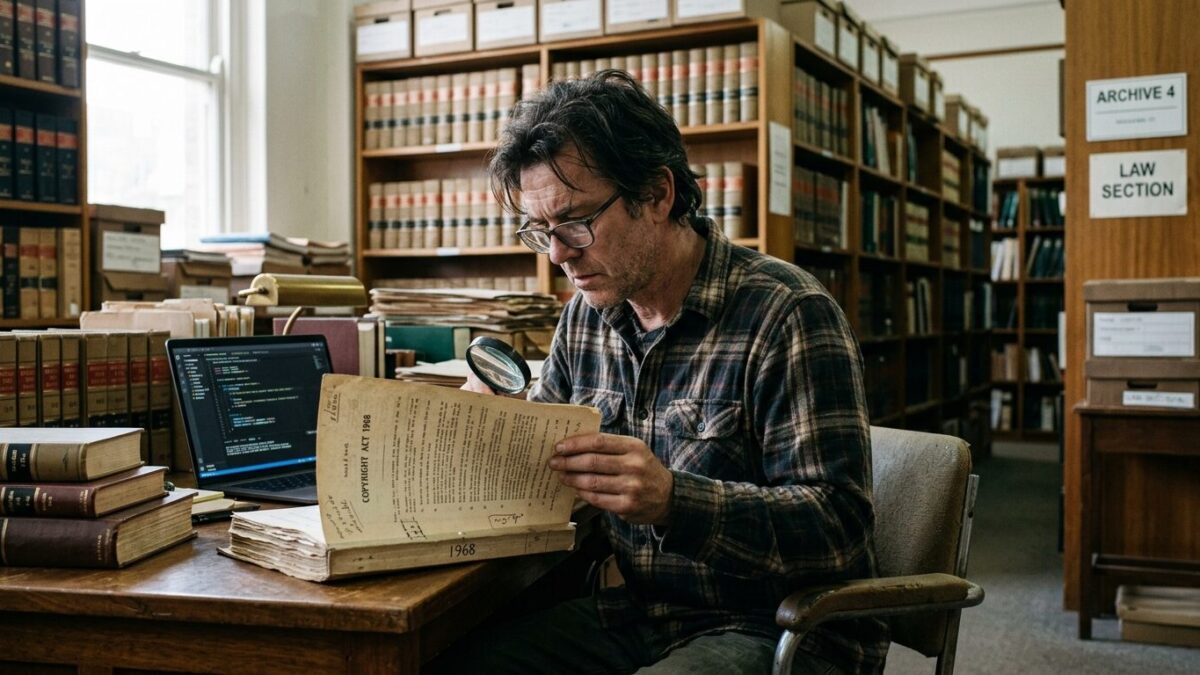
Australia’s goal to become a global artificial intelligence powerhouse sits in the hands of a legal framework drafted when the world watched black-and-white television. Prime Minister Anthony Albanese is expected to signal a decisive shift in his Sydney speech this Wednesday, moving away from a fragmented, issue-by-issue regulatory approach toward a unified national framework designed to capture the economic promise of AI while addressing mounting public anxiety.
The stakes are immense. Tens of billions of dollars in potential investment are currently tethered to how Canberra interprets and updates copyright protections for the digital age. The current 1968 legislation, designed for radio and film, struggles to account for the massive data ingestion required to train large language models.
The $21 Billion Dilemma
At the heart of the government’s challenge is a high-stakes lobbying effort from global tech giants. Anthropic has reportedly dangled a $21 billion investment carrot, promising to secure 1.5 gigawatts of data center capacity in Australia. Leaked documents from the Department of the Prime Minister and Cabinet, along with Treasury disclosures, reveal that the firm envisions Australia as a "second home"—a critical location for its first proprietary data center outside the United States.
But critics argue that data centers alone do not build an industry. Industry observers point out that these massive facilities are primarily "extractive." Once construction is finished and the cooling systems are humming, they provide few long-term jobs. The real value, they argue, lies in whether the government can force a trade-off: securing commitments for applied research and development facilities that integrate with the nation’s academic sector.
Beyond Infrastructure
Prime Minister Albanese’s announcement of a new Office of AI aims to provide a centralized hub for this complex policy balancing act. For months, the federal government has watched as individual states adopted wildly different strategies for approving the power-hungry infrastructure needed to sustain AI growth. This inconsistency has created a bottleneck, leaving developers and local communities alike unsure of the rules of engagement.
Community pushback is growing. Australians have expressed clear concerns about how AI will reshape their jobs, impact the rights of artists and creators, and influence national defense. The upcoming framework is intended to reassure a wary public that the government is not merely handing over the keys to the kingdom to foreign corporations.
The Tax and IP Challenge
Beyond the immediate question of infrastructure, the federal government faces the thorny issue of "intangible migration." Policy experts are closely watching how the Australian Taxation Office (ATO) will handle situations where valuable intellectual property is shifted offshore, even when the underlying work and support systems are Australian-born. If the intellectual value generated by local talent is siphoned away to international tax jurisdictions, the economic benefit of hosting these billions in AI investment could evaporate before it reaches the national ledger.
The legislative struggle over copyright remains the most unpredictable variable. While tech companies push for settings that allow them to train models on vast swaths of existing data, the government must balance this against the rights of those whose work powers the technology. The 1968 law, clearly outdated, is now a primary battlefield. The government must decide whether to modernize the statute to encourage innovation or tighten it to protect local creators, a choice that will likely dictate the country's technological trajectory for the next several decades.
As the Prime Minister prepares to take the stage in Sydney, the pressure is mounting to deliver a plan that moves past simple construction projects. The aim is to build a sustainable ecosystem. Whether this new Office of AI can successfully navigate these competing interests—protecting the rights of the individual while chasing the massive capital of the global tech giants—will determine if Australia becomes a true AI hub or merely a site for foreign-owned, automated server farms.