Jaishankar presses Wang Yi on trade imbalance, market access and supply-chain certainty
India’s external affairs minister S. Jaishankar used talks with Chinese Foreign Minister Wang Yi in Manila to put three stubborn economic issues back on the
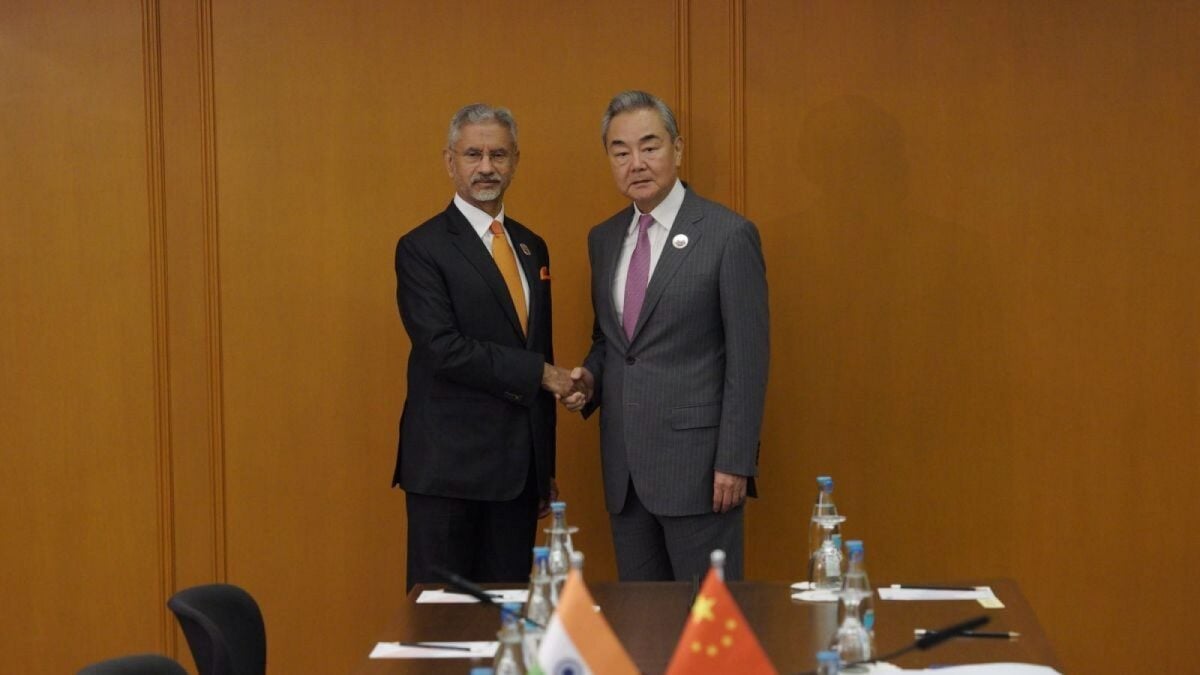
India’s external affairs minister S. Jaishankar used talks with Chinese Foreign Minister Wang Yi in Manila to put three stubborn economic issues back on the table: market access, India’s widening trade deficit with China and the need for more predictable supply chains. The meeting came as both sides have been trying to steady a relationship that has gradually edged back toward normal, but the economic gaps remain open.
The talks took place on Wednesday on the sidelines of the East Asia Summit and the ASEAN Regional Forum, giving the two ministers a chance to review bilateral ties as well as regional and global developments. For New Delhi, the timing mattered. Trade frictions have lingered even as travel and border-related arrangements have begun to ease. For Beijing, the conversation showed that trade cannot be separated from the broader thaw.
Market access stays at the centre
In opening remarks posted on X, Jaishankar said fair market access and a trade balance ranked high among the issues that need attention. The wording was measured. The message was not. India has for years complained that access to the Chinese market remains uneven, while its deficit with China has continued to widen. That imbalance has become one of the most visible pressure points in the relationship.
Trade numbers were not cited in the meeting summary, but the political signal was clear. New Delhi wants the economic side of the relationship to move beyond diplomacy and into something more balanced. That is a harder ask than it sounds. Market access issues often sit deep in regulation, licensing and industrial policy. They do not shift quickly. Not quickly at all.
Supply chains and bilateral mechanisms
Jaishankar also called for greater predictability in supply chains, a concern that resonates far beyond India and China. Governments across Asia have spent recent years watching supply routes, manufacturing links and shipping flows become more exposed to shocks. In that setting, predictability has become a commercial requirement, not a diplomatic slogan.
He also sought agreement on convening meetings under bilateral mechanisms based on the priorities of both sides. That detail matters. It suggests New Delhi wants the machinery of the relationship to keep working, but on terms that reflect current concerns rather than old habits. The talks were “wide-ranging,” Jaishankar said, and the two sides exchanged views on regional and global developments. The economic file, though, sat near the top.
Border peace still the شرط
Jaishankar welcomed the resumption of direct flights, changes to the visa regime, the restart of the Kailash Manasarovar Yatra and the recommencement of border trade. Those steps point to a gradual easing after years of strain. Travellers can move again. Pilgrims can return. Some local commerce is back.
Tensions have not vanished. Jaishankar reiterated that peace along the border remained a prerequisite for normal relations. He also said relevant mechanisms in that domain must be used. The line was firm, and it linked economics back to security in the blunt way Indian diplomats have used before: no durable normalisation without stability on the frontier.
That is the framework now. Flights are back, visa rules have shifted, border trade has resumed, and the Kailash Manasarovar Yatra has restarted. But the tougher questions remain parked in plain sight — especially the trade gap with China, which Jaishankar put high on the agenda in Manila on Wednesday.