London police seize record 2,500 illegal e-bikes and e-scooters in 2026 crackdown
Police have seized more than 2,500 illegal e-bikes and e-scooters so far this year, a record pace that has already overtaken the total for
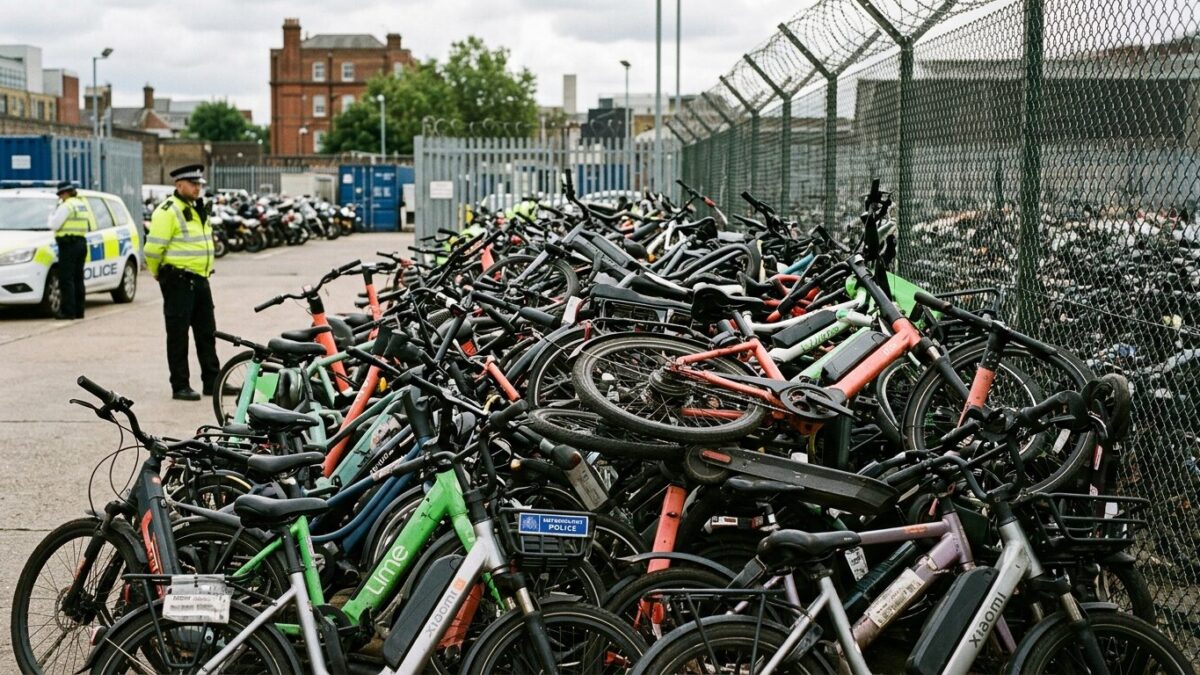
London police have seized more than 2,500 illegal e-bikes and e-scooters so far this year, a record pace that has already overtaken the total for all of 2025. The Metropolitan Police says the haul reflects a sharper push to clean up streets that have become a flashpoint for dangerous riding and phone thefts.
The figure matters because the rules are blunt. Privately owned e-scooters are illegal on public roads in the UK, and e-bikes have to meet specific requirements before they can be used legally. Officers in the capital have spent the year pulling over bikes they suspect are modified, then checking for the telltale signs: excess speed, throttles that let riders move without pedalling, and oversized batteries.
Targeted stops, then the crusher
Cdr Neerav Patel, who leads the Met’s crackdown on e-bikes, said the force has paired new technology with an intelligence-led approach to hit hotspots more precisely. “We have cleared thousands of two-wheelers from our streets and crushed them,” he said.
That language is direct for a reason. The police want riders, delivery operators and thieves alike to understand the risk. Not every two-wheeler is illegal, but some are obvious enough to raise suspicion at a glance. Fast. Too fast. Then a stop-site follows.
On Friday, officers seized 29 e-bikes and seven e-scooters near Tottenham Court Road Station after setting up a stop-site to test modified vehicles. It was the seventh such operation in London this year, and five more are already planned. The location was no accident. Central London sees heavy foot traffic, easy getaway routes and a steady flow of riders weaving through crowded streets.
A growing enforcement problem
The Met’s campaign has gathered pace as e-bikes and e-scooters have spread across cities worldwide, from informal courier work to private commuting and short urban trips. That growth has also brought a familiar mix of enforcement headaches: illegal modifications, unsafe speeds and machines that do not fit the legal framework built around them.
London is not alone in facing that pressure. Across major cities, police and transport authorities have struggled to keep up with the speed at which cheap conversion kits and powerful batteries can turn a standard bike into something very different. The challenge is practical as much as legal. Officers must spot the illegal machines on busy roads, then separate them from riders using compliant vehicles. It takes time. And patience.
So far in 2026, the Met’s tally is already above last year’s total of 2,241 illegal e-bikes and e-scooters seized in the capital. The new record suggests the crackdown is not slowing the flow of illegal vehicles through London, even as officers increase stop-sites and focus on areas where complaints and offending cluster together.
Road safety and theft fears
Police say the seizures are about more than technical compliance. They are also tied to road safety and to crimes such as phone thefts, where fast two-wheelers can be used to snatch devices and disappear before victims can react.
That link has made e-bikes and e-scooters a politically sensitive issue in London and other dense cities. For commuters, they can offer a cheap, quick trip across town. For police, they can also mean silent approaches, rapid escapes and crowded pavements made riskier by riders pushing the limits of what the law allows.
The Met’s latest figures show the force is betting on visible enforcement to change that picture. More stop-sites. More checks. More seized vehicles. And, as Friday’s operation showed, the work is still going on. Five more tests are scheduled in London this year, with police likely to keep watching the same hotspots where modified two-wheelers keep turning up.