Berlin Pride van attack leaves one dead as police kill suspect in suspected Islamist assault
Berlin woke to a grim aftermath on Sunday after a van rammed into a crowd at a Pride event, killing one woman and injuring at. Berlin Pride — full details here.
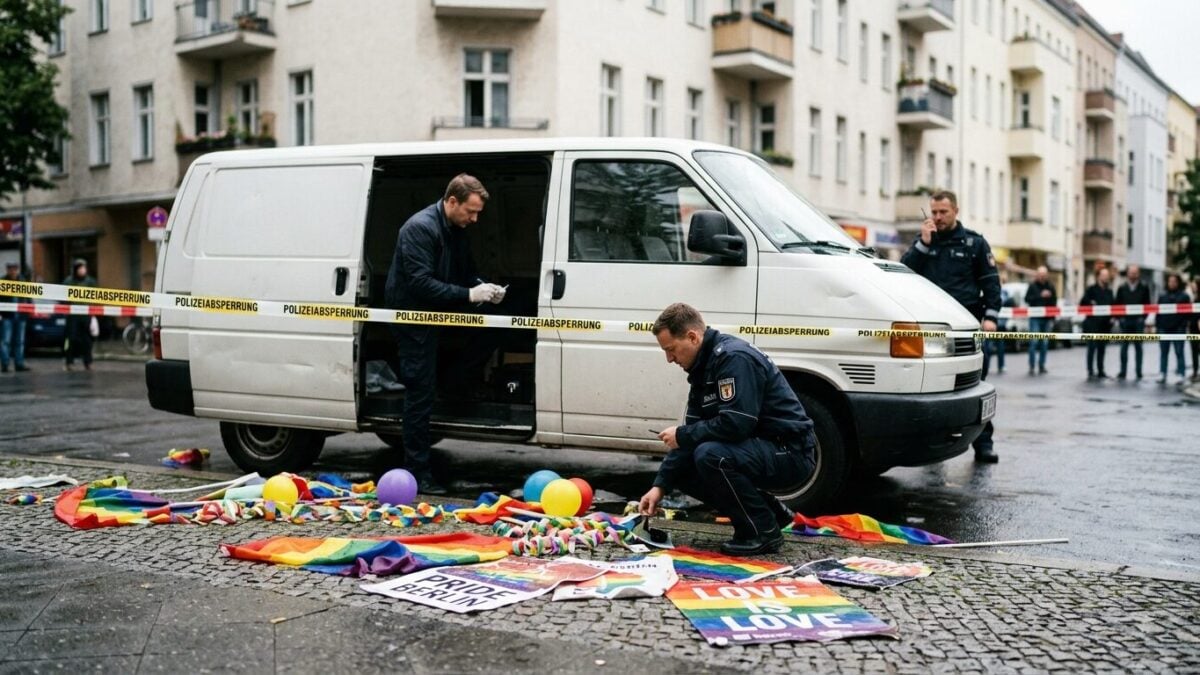
Berlin woke to a grim aftermath on Sunday after a van rammed into a crowd at a Pride event, killing one woman and injuring at least 29 people before police shot dead the suspect at the scene. The attack landed in the middle of a celebration. Now the city is facing the kind of fear that follows fast and lasts.
German prosecutors said the suspect, identified as 21-year-old Abdul Ballout, drove the vehicle into the crowd and then stabbed multiple people. Police said officers fired after he charged toward emergency forces with a stabbing weapon. He died where he fell.
Police and prosecutors point to Islamist motive
Officials described the attack as likely an Islamist terror attack, a stark label for violence aimed at a Pride gathering in the German capital. Ballout was a German citizen of Lebanese background, and authorities said he was already known to police. He had also tried to join the Islamic State group, according to the prosecutor’s office.
The force of the assault and the setting matter. Pride events are built around visibility, safety and celebration. That mix makes them open, public and, as Berlin learned again, vulnerable. For police and city officials, the immediate questions are no longer only about the attacker’s path through the crowd. They are about whether the threat was isolated or part of a wider pattern.
Germany raises the alarm
Germany’s interior minister said the country cannot rule out copycat attacks and announced that the threat level would be raised. The warning lands at a sensitive moment for Europe’s largest economy, where public events, transport hubs and crowded city centers already sit under constant security scrutiny. Berlin police searched train stations, airports and border crossings for the suspect during the manhunt before the shooting, underscoring how quickly one assault can trigger a wider security operation.
The prospect of imitation is what worries security officials most. A public attack that gains attention can spread fear far beyond the original scene. In a country that has faced repeated extremist threats, the challenge is not only stopping one attacker. It is keeping the next one from believing the message worked.
A city shaken after a night of celebration
By Sunday morning, Berlin had shifted from festival noise to sirens and investigation tape. A reporter in the city described the mood as a sobering wake-up call after what should have been “a massive hangover after a great party.” The line fits the shock on the ground. Pride events in many cities carry that mix of music, protest and relief, and the attack cut through all of it.
Authorities have not given a full account of the sequence beyond the van ramming, the stabbings and the police shooting. But the scale is already clear: one woman dead, at least 29 injured, and a city trying to understand how a night of public gathering turned deadly so fast. For Berlin, the question now is how much of this can be contained by policing, and how much lingers in the public mind long after the scene is cleared.
The minister’s warning hung over the day: “We cannot rule out the possibility of copycat attacks.”