Europe’s wildfire emergency spreads from Bordeaux to Madrid as heatwaves fuel record damage
Wildfires are ripping across France and Spain, driving more than 300,000 people from their homes. The flames have moved fast. In some places, officials say,
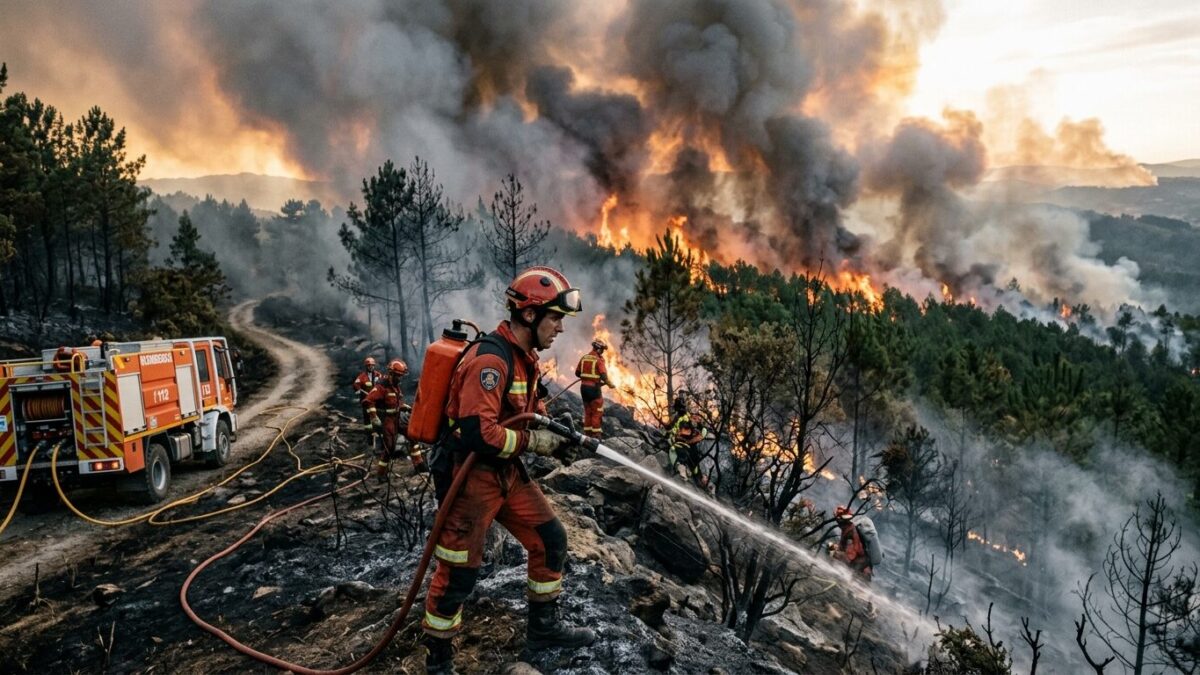
Wildfires are ripping across France and Spain, driving more than 300,000 people from their homes. The flames have moved fast. In some places, officials say, they are the worst in years — and in the Madrid region, the worst ever recorded.
The fires come after a punishing summer of heatwaves across Europe, with temperatures topping 40C in many areas. Dry ground and strong winds have turned forests and fields into fuel. The result is a broad emergency that now stretches from southwest France to central Spain.
France’s hardest-hit area near Bordeaux
France has been hit especially hard in Gironde, the area around Bordeaux, where more than 200,000 people have had to leave their homes. The blaze has raced through the country’s famous wine region, burning forests, fields and everything in its path.
Authorities say the fire has consumed more than 162 sq miles, or 420 sq km, in less than four days. That is roughly four times the size of Paris. It is now about nine miles, or 15 km, south of Bordeaux. Fast-moving and unpredictable. That makes it harder to contain, and harder for residents to know when — or if — they can go back.
The fires have also raised concern around sensitive military and industrial sites in the area, including facilities linked to French ballistic missiles, rocket motors and hazardous chemical processing. The risk is not only to homes and farmland. It reaches into critical infrastructure too.
Madrid region faces its worst fires ever
In Spain, authorities in the Madrid region say the current fires are the worst the area has ever seen. Separate wildfires outside the capital have together burned about 297 sq miles, or 770 sq km, according to estimates from officials. That is larger than Madrid itself.
The scale matters. These are not isolated blazes. They are part of a wider regional emergency that has stretched firefighting crews and local authorities. With so much land already scorched, the challenge is no longer just stopping one front. It is holding several at once.
Europe has seen wildfire threats before, but the combination of heatwaves and the speed of these fires has pushed pressure to another level. Towns, roads and open countryside sit close together across much of the continent. When fires break out, they can move quickly from remote terrain toward populated areas. That has been visible in both France and Spain this week.
Why the fires have spread so fast
The weather has done much of the damage. A sweltering summer has sent temperatures above 40C in many places across Europe. That kind of heat dries out vegetation and leaves little margin for error. One spark can become a wall of flame.
Fire crews are now trying to slow the advance while keeping people away from danger zones. Evacuation is part of that response. So is protecting critical sites and prioritising areas where flames could jump into towns or industrial zones. The work is messy, exhausting and uncertain.
Satellite imagery has been tracking the scale of the damage from above, showing just how much ground has already been lost. The images underline what people on the ground already know: this is a large, fast-moving disaster, and the land itself is changing by the hour.
For Bordeaux, for Madrid, for the villages and countryside in between, the immediate question is whether crews can stop the fires before more homes are lost. The latest estimate from France puts the Gironde blaze at more than 162 sq miles burned in under four days — and still moving close to a major city.