South Africa’s President Admits ‘Shame’ Over Anti-Migrant Violence as SADC Summit Looms
President Cyril Ramaphosa acknowledged his nation's culpability Friday in a stark admission to fellow African leaders gathered in Durban. Vigilante campaigns...
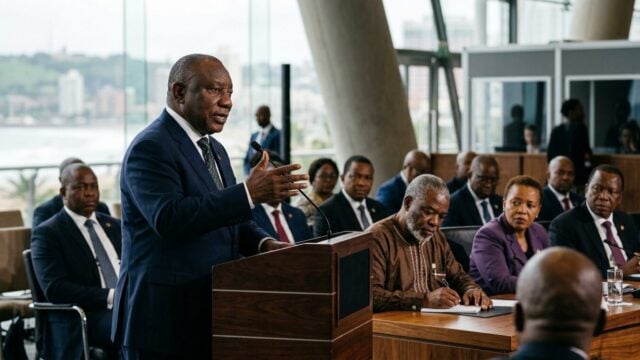
President Cyril Ramaphosa acknowledged his nation's culpability Friday in a stark admission to fellow African leaders gathered in Durban. Vigilante campaigns targeting foreign nationals have forced more than 178,000 migrants from the continent to flee, he told the Southern African Development Community ahead of its 46th summit.
"We cannot accept intimidation directed at people simply because they come from elsewhere," Ramaphosa said during a public lecture at the University of KwaZulu-Natal. The candor marked a rare moment of public reckoning for a country whose moral standing on the continent has deteriorated sharply.
Scale of the Crisis
The wave of anti-immigrant action this year has been sustained and methodical. Organized groups have invaded homes, businesses, and workplaces demanding documentation and pressuring foreign workers to leave. Violence, forced closures, and looting have accompanied these operations. Citizens from Malawi, Zimbabwe, and Mozambique have borne the brunt, fleeing in the largest exodus in recent memory.
Ramaphosa made the point directly to his audience—many of whom represent the very nations losing citizens. Regional leaders sat listening to a confession that their nationals had been "subjected to discrimination and ill-treatment" and threatened with violence.
The Contradiction at the Heart of SADC
The president drew a sharp line between rhetoric and reality. "We cannot preach integration at our summits and practice exclusion in the streets," he said. That tension captures the core problem: while regional governments speak of solidarity and shared economic interests, street-level mobs act with impunity.
Ramaphosa framed the attacks as work of "a few within our communities," yet the scale—over 178,000 displaced—suggests systemic breakdown rather than isolated incidents. He called the violence "a repudiation of the solidarity upon which this Southern African community is built," positioning the crisis not as a domestic South African matter but as a regional wound.
The statement carries weight because it was delivered not to sympathetic domestic audiences but to neighboring governments whose people have suffered. Ramaphosa offered no policy details or enforcement mechanisms to reverse the trend, leaving the question of what comes next unresolved as SADC enters its summit weekend.