Ramaphosa Challenges Lead Investigator in Presidential Impeachment Over Conflict of Interest
President Cyril Ramaphosa has formally objected to the appointment of advocate Thandazani Madonsela SC as the chief evidence leader in an ongoing impeachment...
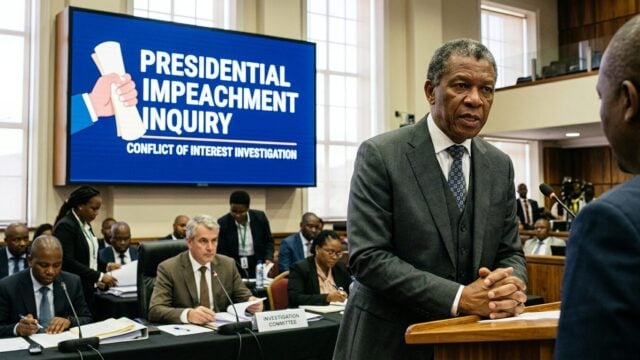
President Cyril Ramaphosa has formally objected to the appointment of advocate Thandazani Madonsela SC as the chief evidence leader in an ongoing impeachment inquiry, citing potential conflicts rooted in past professional dealings and political ties. The objection, submitted in writing on August 18, threatens to complicate an already high-stakes investigation into whether the president mishandled a large cash discovery at his private game farm.
In a letter to National Assembly Speaker Thoko Didiza and other parliamentary leaders, Ramaphosa argued that Madonsela fails to meet a core requirement: having no real or perceived conflict of interest. Two specific concerns drove the president's challenge.
The JSC Appointment Friction
Ramaphosa first raised the removal of Madonsela from the Judicial Service Commission, where the advocate had served as a presidential appointee. The president terminated that role shortly after 2022 chief justice interviews concluded. Ramaphosa suggested this abrupt departure could breed resentment—and that Madonsela might harbor a grievance that could unconsciously influence his role as chief investigator.
The ANC Legal Work Question
The second concern centers on Madonsela's previous legal work for the African National Congress. Ramaphosa referenced recent remarks by ANC Secretary-General Fikile Mbalula, who had publicly explained ANC positioning within the impeachment process. The implication: ties to the ruling party—however distant—cast doubt on Madonsela's impartiality in an inquiry where the party itself has a stake.
Madonsela Fights Back
Madonsela did not accept the criticism quietly. In a response to parliament dated August 19, he said he disclosed all potentially relevant information before his appointment. He submitted written disclosures to parliament's senior legal adviser on July 27—well before the impeachment committee voted on August 5 to name him evidence leader.
Crucially, Madonsela argued the committee had already weighed the conflict-of-interest standard and determined that prior unrelated legal work for or against political parties did not automatically disqualify someone. The committee found no grounds for his recusal.
The escalating dispute cuts to the heart of judicial independence in South Africa. How investigators are selected, and whether they face political pressure before their work even begins, shapes public confidence in whether any inquiry can fairly examine presidential conduct. Ramaphosa's intervention—coming from the subject of the investigation itself—underscores that confidence tension.