Europe’s rivers hit record lows as summer heat strains trade, power and water supplies
?s summer heat is hitting more than people and crops. Rivers that carry fuel, grain and chemicals across the continent are drying to record-low levels,
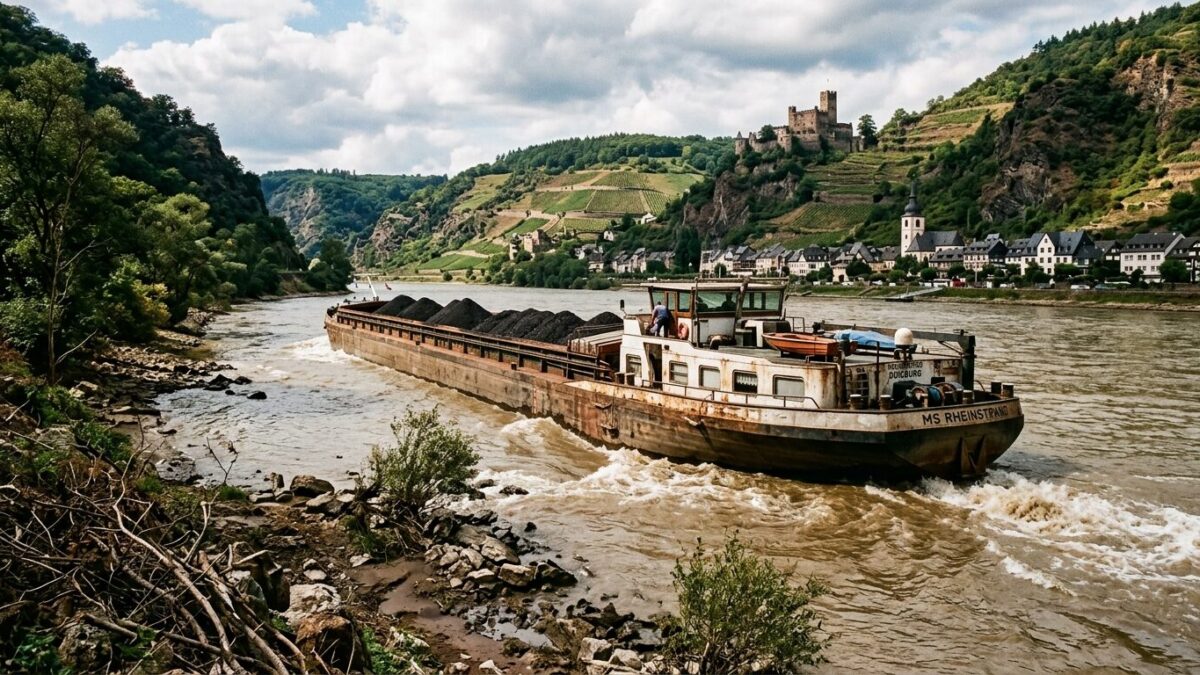
Europe’s summer heat is hitting more than people and crops. Rivers that carry fuel, grain and chemicals across the continent are drying to record-low levels, jolting inland shipping and exposing how tightly Europe’s economies depend on water.
The Rhine, Danube and Po are all running low after weeks of extreme weather. In Cologne, the Rhine gauge fell earlier this month to its lowest reading since 1816. At Kaub, one of the river’s shallowest stretches, the level dropped to 6 centimetres two weeks ago, well below the previous low of 25 centimetres recorded in 2018.
A supply chain with little room to fail
These waterways are small on the map, but they are central to Europe’s logistics network. Barges move liquid bulk such as oil, gasoline and chemical products, along with dry bulk including iron ore, coal and grain. They also help supply drinking water, cool power plants, generate hydro-electric energy and support tourism.
That makes low water levels a problem far beyond riverbanks. Rommert Dekker, a logistics expert at Erasmus University in Rotterdam, said it is rare for operations across these waterways to be hampered. “But then if it happens, it has huge consequences because everybody’s used to it. There is no real backup,” he said.
So when water levels on the Rhine fall too low to carry coal, the pressure moves quickly through the system. Ships load less. Delays build. Costs rise.
Why this summer stands out
Experts say this year’s heatwaves are exceptional, and that the Rhine is at “breaking point”. The warning carries weight because Europe has seen hot summers before, but this one is pushing multiple rivers down at once, leaving fewer alternatives for shippers and utilities.
The wider picture is not confined to transport. New Scientist reported separately that drought and heat are also pushing Europe’s power grid to breaking point, underlining how one weather pattern can strain both energy and transport infrastructure at the same time.
For Europe, the timing is awkward. Waterways that usually move goods quietly in the background are now a visible fault line. And the lowest Rhine reading in Cologne since 1816 is a stark marker of how far this summer has gone.