Australia’s lung cancer screening program spots tumours earlier, offering patients a better shot at treatment
BRISBANE — Suzi Scott was 57 when a free low-dose CT scan picked up a 1.6-centimetre tumour in her right lung. The finding came through
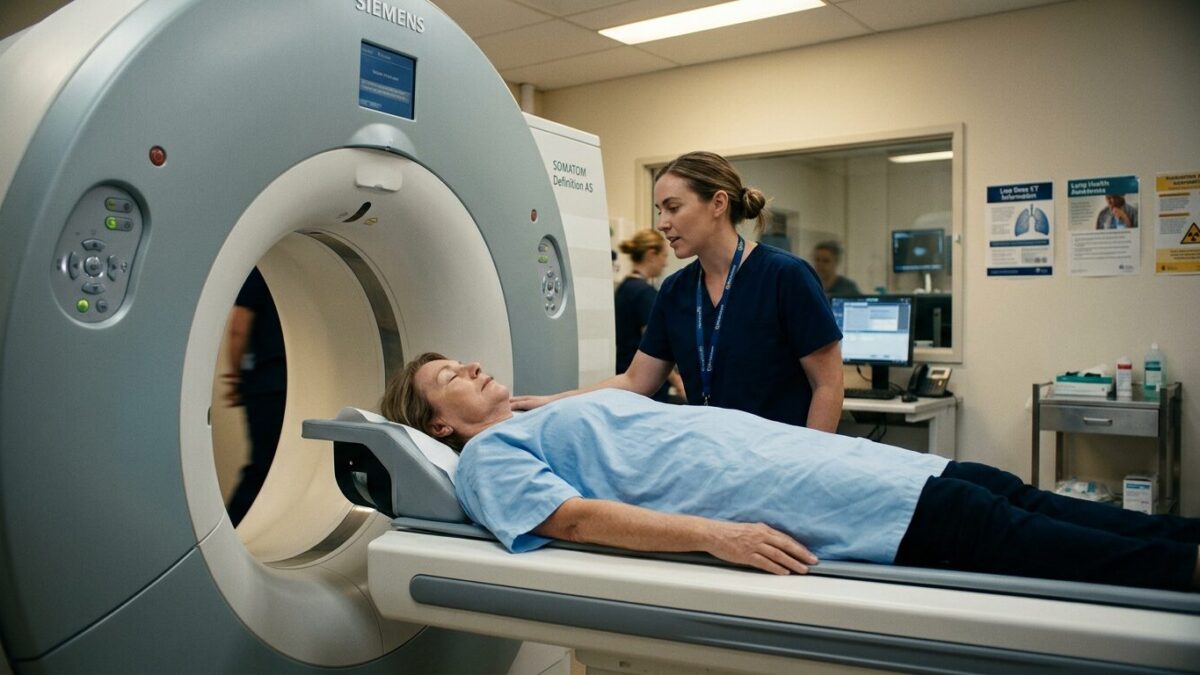
BRISBANE — Suzi Scott was 57 when a free low-dose CT scan picked up a 1.6-centimetre tumour in her right lung. The finding came through Australia’s National Lung Cancer Screening Program, launched in July last year, and led to surgery about four weeks later at The Prince Charles Hospital in Brisbane.
Scott had no symptoms when the cancer was found. That was the point. She is one of more than 117,000 people scanned since the national program began, part of a push to catch Australia’s deadliest cancer before it spreads.
A diagnosis that came too late for her mother
For Scott, the screening carried a family shadow. Her mother, June, died of lung cancer when Scott was nine, aged 49. By the time doctors diagnosed her mother in the 1970s, the disease had already moved beyond the lungs.
“I remember a big lump had appeared on mum’s neck,” Scott said. “That was the reason why she got checked.”
That experience stayed with her for decades. After recalling the loss, Scott spoke with her general practitioner about joining the free screening program and, in her words, “made it happen.” She is convinced the scan saved her life.
How the screening program is changing the odds
The program gives eligible Australians a bulk-billed low-dose CT scan, designed to find lung cancer early, before symptoms appear. That matters because lung cancer is often diagnosed only after it has advanced, when treatment options narrow and survival chances fall.
Scott’s case shows the change in practical terms. The scan found the tumour early enough for surgeons to remove it. She spent four days in hospital, stayed off work for six weeks, and has not needed further treatment.
For patients, that can mean the difference between a fast surgery and a long fight with more invasive therapy. For doctors, it offers a better chance to intervene before cancer spreads. For families who have already lost someone, it offers something harder to measure: time.
A growing pool of scans, and a different kind of diagnosis
More than 117,000 people have now been screened under the program. The number points to a wider shift in how Australia is handling lung cancer — moving from diagnosis after symptoms to earlier detection through routine access.
Scott’s story sits at the human centre of that change. One scan. One tumour. One operation. And a result that her mother never had the chance to get.
The program is still young, but cases like Scott’s are already shaping its case for why screening matters. The next test is whether more Australians at risk will come forward early enough for the same outcome.