Senior German leaders push court move to curb AfD’s hardline wing
Germany’s debate over the far right sharpened on Friday as senior politicians Boris Pistorius and Cem Özdemir called for the country’s top court to examine
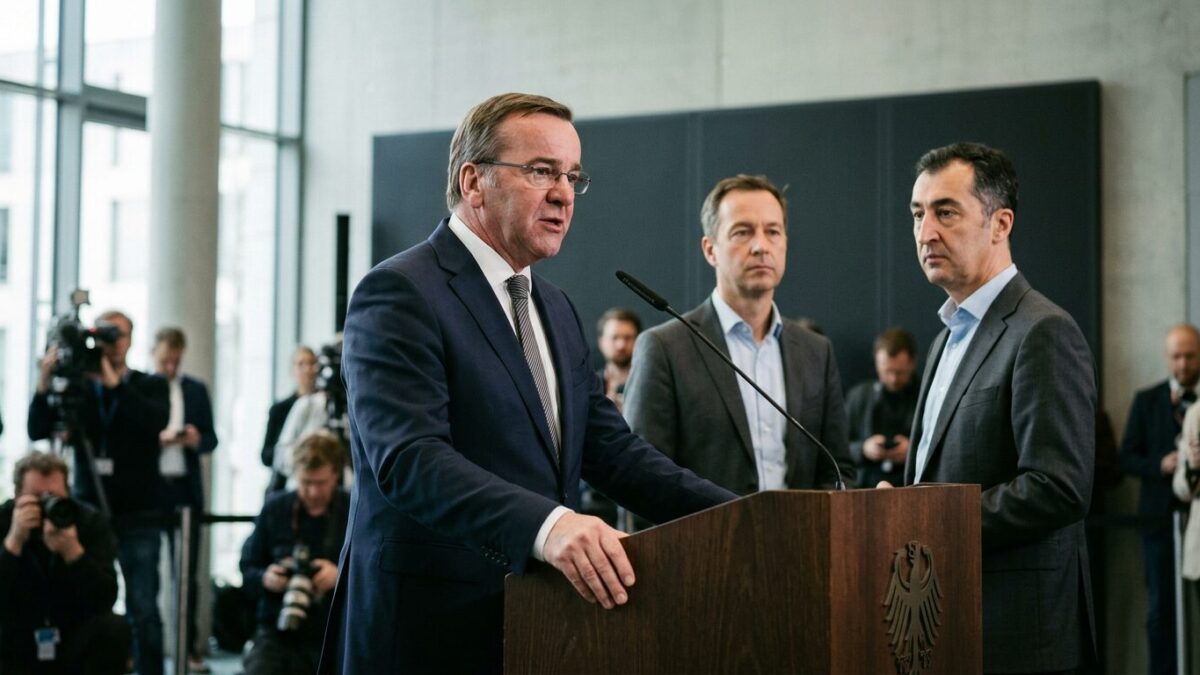
Germany’s debate over the far right sharpened on Friday as senior politicians Boris Pistorius and Cem Özdemir called for the country’s top court to examine whether parts of Alternative for Germany can be outlawed. Their focus is the party’s most radical flank, not the entire movement.
Pressure builds from within politics
Pistorius, a senior figure in German politics, and Özdemir, another prominent national voice, want the constitutional court to weigh whether a ban can be applied to the most extreme elements tied to AfD. The call matters because it goes beyond routine criticism of the party and lands squarely on Germany’s legal threshold for limiting a political force.
AfD has long stood at the center of Germany’s far-right debate. What changes here is the intensity. When leading politicians openly ask the top court to consider an outlawing move, they are not just condemning rhetoric. They are pressing the state to test the legal line.
A legal test, not a political slogan
Any move to ban part of a party in Germany would carry heavy constitutional weight. That is why Pistorius and Özdemir are pointing to the court rather than to parliament or the campaign trail. They want judges to decide whether the most radical part of AfD crosses the line set by German democracy.
The issue has global resonance. Across Europe, parties on the hard right have gained ground by mixing protest politics with sharper nationalist messages. Germany, because of its history, tends to handle such questions with particular caution. A court review would signal that concern is now moving from political debate into formal legal scrutiny.
So far, the call is limited in scope. The target is not AfD as a whole, but its most radical flank. That distinction matters. It suggests the argument is built around specific extremist tendencies rather than a blanket attempt to remove a major opposition party from the political field.
What happens next
Any next step would depend on whether Germany’s top court agrees to take up the question. If it does, the case would likely deepen a national fight over how far democratic institutions can go when confronting the far right without undercutting pluralism.
For now, the political signal is clear. Two senior German figures are asking the court to look at the hardest edge of AfD, and the conversation has shifted from criticism to possible prohibition. The debate now reaches Germany’s constitutional core.