Ukrainian drone strikes expose cracks inside Russia’s war economy
Drones are hitting deeper inside Russia, killing civilians, burning warehouses and pushing shortages into public view as Moscow struggles to keep t...
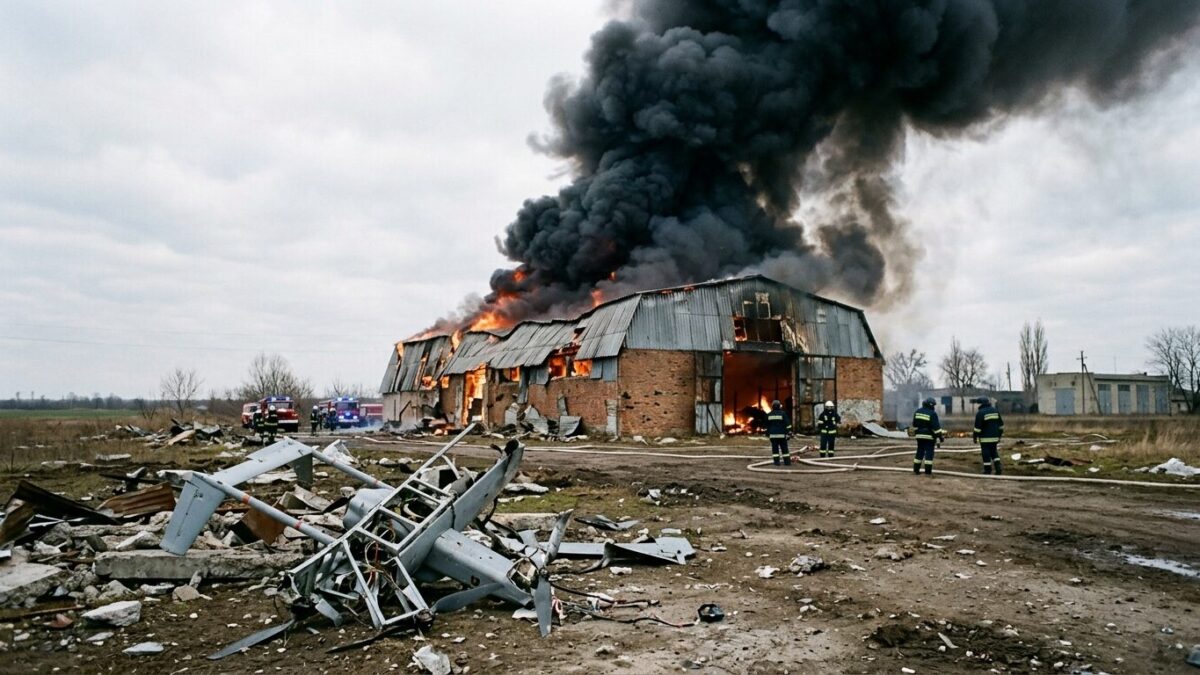
Ukrainian drones are hitting deeper inside Russia, killing civilians, burning warehouses and pushing shortages into public view as Moscow struggles to keep the war contained. The pressure is now visible in fuel supplies, internet controls and a new Kremlin order that lets the state seize critical facilities that fail to defend themselves.
For years, the Kremlin worked to keep the war at a distance from ordinary Russians. That buffer is thinning fast. Western officials told The i Paper the conflict has “unquestionably escalated” in recent months, with Ukrainian drones striking targets far beyond the border zone.
Smoke, deaths and public anger
Warehouse fires at major ecommerce companies Wildberries and Ozon have killed Russian citizens and sent thick black smoke into the sky. The attacks also sparked rare public anger, with traders posting videos in tears after losing businesses built over years. The images spread quickly. So did the fear.
Moscow’s response has been tighter control. Warehouse staff are now banned from bringing smartphones to work, and internet restrictions remain in place. Authorities appear worried not only about security, but about what the videos reveal to Ukrainian intelligence analysts.
It is a familiar reflex. Clamp down. Limit the view. But the war is already inside the frame.
Putin widens the state’s powers
On August 24, Vladimir Putin signed a decree allowing Russian authorities to place critical infrastructure under temporary state management if owners fail to take adequate security measures. The rules are broad. A federal property agency, Rosimushchestvo, or another authority-chosen administrator can take over all or part of a company’s property and assets.
The decree gives the administrator an owner’s powers, but not the right to sell the facility. It also sets no time limit. Authorities decide how long the takeover lasts, with revenue from the property meant to cover upkeep.
The grounds are wide-ranging: late security measures, failure to meet official requirements, ineffective protection against drone attacks, or a slow return to normal operations after damage.
In practice, almost any large enterprise could fall under scrutiny.
Economy under strain, but not breaking yet
Russia’s economy is under pressure from fuel shortages, higher prices, tax increases and tighter internet controls. Still, analysts cited in the source material say the strain has not yet forced Putin to change course in Ukraine.
The central bank cut its growth forecast in July. That fits a broader picture of a war economy losing momentum. Private and public analysts are watching the same signs: weaker growth, heavier costs and more disruption at home.
Casualties also keep mounting. A CSIS study says Russia has lost the military initiative in Ukraine and suffered about 1.4 million battlefield casualties, including as many as 450,000 deaths since the full-scale invasion in February 2022. The group said Ukraine has stepped up strikes on Russian military and economic targets using AI-enabled systems and a new air-power approach.
Putin’s own caution has shifted with the risks. In May 2026, he scaled back Russia’s annual Victory Day parade because of concerns about Ukrainian long-range strikes and battlefield setbacks. That same year, everyday Russians were dealing with a sputtering economy and a tougher line on speech and information.
The war is no longer just something Russia exports. It is coming home, by drone and by decree. And the Kremlin is now preparing for more damage: not only to warehouses and oil ports, but to the companies it may decide did not defend them well enough.