Saudi Oil Tankers Attacked in Hormuz as Middle East Tensions Escalate
Two supertankers loaded with Saudi crude came under fire in the Strait of Hormuz late Monday, struck by unidentified projectiles minutes apart in what maritime
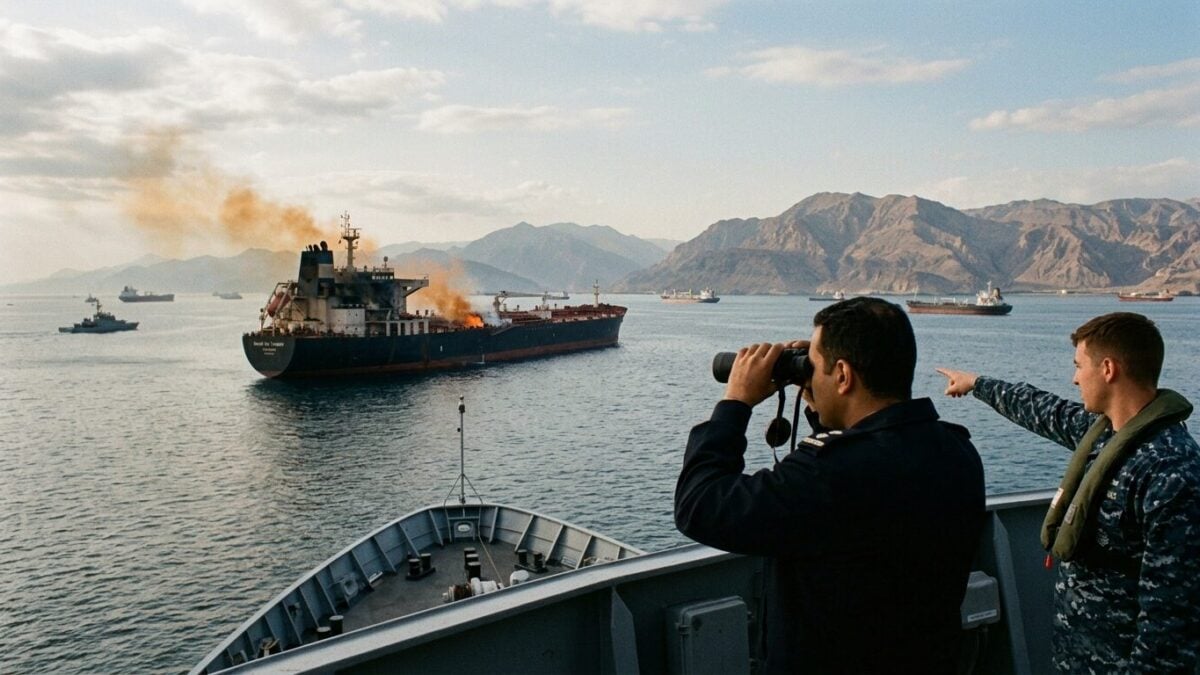
Two supertankers loaded with Saudi crude came under fire in the Strait of Hormuz late Monday, struck by unidentified projectiles minutes apart in what maritime risk analysts called a sharp escalation of threats to one of the world's most critical oil chokepoints.
The Saudi-flagged Sidr, operated by Saudi Aramco's Bahri shipping arm, took hits about 16.6 nautical miles northeast of Khasab, Oman. Within minutes, a second vessel—the Liberian-registered Senegal Prosperity, run by South Korean operator Sinokor—was targeted by three projectiles roughly 17 nautical miles east of the same location. All crew members aboard both ships remained safe.
A Corridor Under Strain
Each tanker had loaded 2 million barrels of Saudi oil at the Ju'aymah terminal the week prior, according to tracking data from Kpler. The back-to-back strikes underscore how volatile the passage has become. Maritime risk firm Marisks flagged the incidents as evidence of "further escalation in the threat environment within the Omani corridor."
The timing matters. Saudi Aramco only resumed loading and selling oil from inside the strait in August—a decision that itself reflected efforts to restore some normalcy to energy flows through a waterway that has faced repeated closures and restrictions.
Broader Geopolitical Backdrop
The Hormuz corridor moved from critical to dangerous six months ago. A U.S. military operation against Iran triggered Iranian and American efforts to assert control over the strait, which previously accounted for at least one-fifth of global oil supply. Mediation attempts by Qatar and Oman to broker a reopening have stalled.
Oil markets responded swiftly. Prices jumped Tuesday after U.S. President Donald Trump signaled readiness to strike Iran again—the first direct threat since late July. Energy traders fear any further escalation could choke off supplies already constrained by the ongoing blockade.
For shipping companies and refineries worldwide, Monday's attacks crystallize a hard reality: even with Saudi Aramco attempting to move crude outbound again, the corridor remains a high-risk transit zone where crews face unexpected projectiles and geopolitical gambits that can shift crude prices in hours.