Chevron commits $7 billion to Venezuelan oil projects, eyes output doubling by 2031
Said on Wednesday it will invest $7 billion in its Venezuelan oil projects, a move the company says could lift output to twice its. Chevron — full details here.
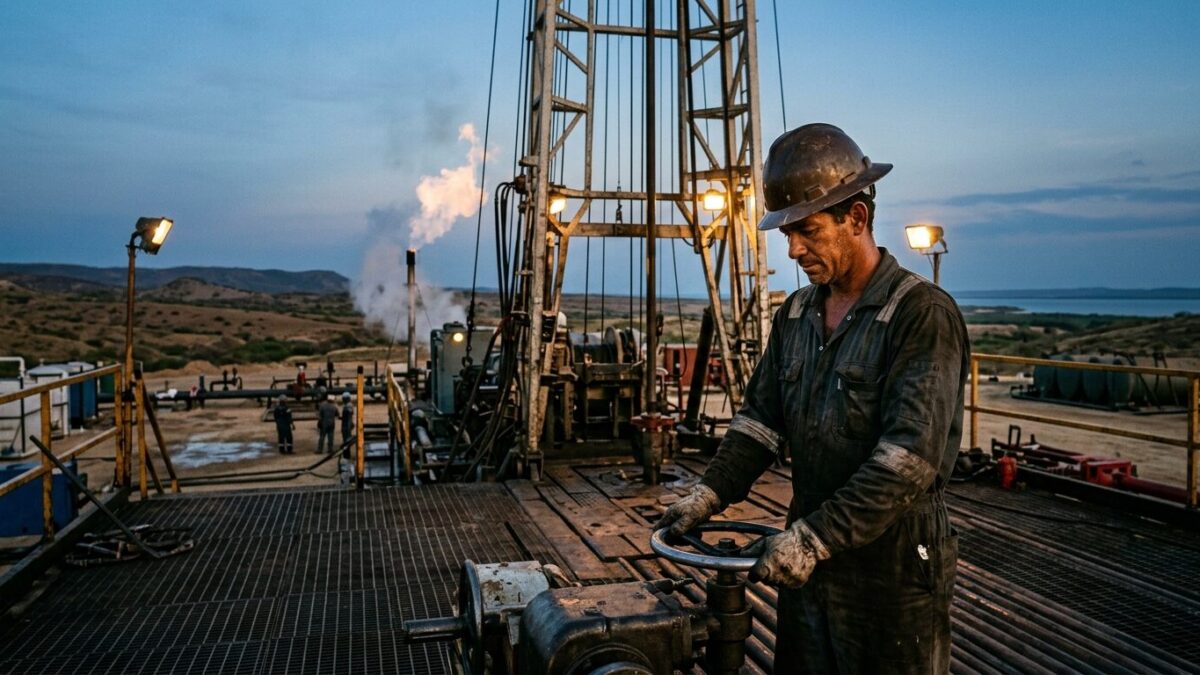
Chevron said on Wednesday it will invest $7 billion in its Venezuelan oil projects, a move the company says could lift output to twice its current level by 2031. The pledge marks a cautious but significant expansion in a country where many international oil companies have kept their distance for years.
The US company did not arrive there quickly. Even after President Donald Trump pushed US oil firms to move into Venezuela following his administration’s January ouster of former President Nicolás Maduro, the political risks have kept fresh investment slow. Chevron, which has stayed in Venezuela through decades of turbulence, is still the most entrenched major US oil player in the country.
A deeper bet on heavy crude
In April, Chevron increased its stake in a joint venture with Petróleos de Venezuela, S.A., or PDVSA, the state oil company, to 49%. The company now says Venezuela has assigned new oil fields for it to exploit in the Orinoco Belt, a vast region known for thick, tar-like crude.
That oil matters for a practical reason. Many US Gulf-area refineries are designed to process heavy crude, and Chevron said production costs there are relatively low, at less than $20 a barrel. That compares with the roughly $90 a barrel US oil has been fetching. Cheap to lift. Harder to reach.
Why the move matters beyond Caracas
The pledge offers a window into how global oil firms are weighing opportunity against political uncertainty. Venezuela holds some of the world’s largest oil reserves, yet years of strained relations, sanctions pressure and policy swings have made long-term commitments difficult for outside companies to lock in.
Chevron’s decision stands out because it remained active in Venezuela while other major US producers backed away. The company’s continued presence gave it a foothold when the door reopened for a larger investment push, and now it is betting that the Orinoco Belt can deliver scale over time.
The next test is execution. Chevron expects the investment plan to translate into higher production by 2031, but that will depend on how smoothly its projects advance in a country where oil policy has often shifted with the political wind. For now, the company has set its course.