Indonesia Extends Airport Closures as Krakatau Ash Blankets Region
Six major airports in Indonesia, including Soekarno-Hatta, remain closed until 5:00 p.m. local time due to volcanic ash from the Anak Krakatau eruption.
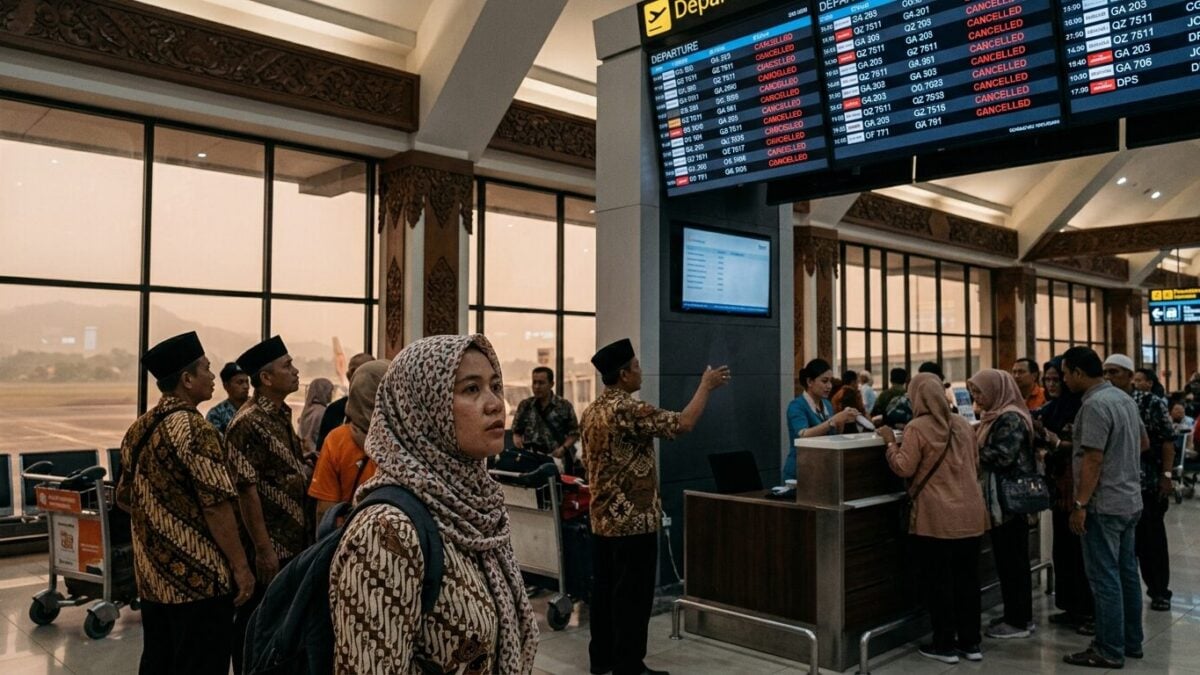
TANGERANG, Indonesia — Indonesian authorities have extended the closure of six major airports by four hours as volcanic ash from the erupting Anak Krakatau volcano continues to pose a severe threat to aviation safety across the Jakarta metropolitan area. The extension follows positive results from “paper tests” conducted at runway sites, confirming that hazardous silica ash remains present in the atmosphere.
Transportation Minister Dudy Purwagandhi confirmed the decision during a press briefing at Soekarno-Hatta International Airport on Sunday, Sept. 6, 2026. The airports affected—Soekarno-Hatta, Halim Perdanakusuma, Radin Inten, Budiarto, Pondok Cabe, and Husein Sastranegara—are now scheduled to remain shuttered until at least 5:00 p.m. local time (WIB), pending further air quality assessments.
Aviation Gridlock and Displaced Passengers
The shutdown has forced the cancellation of hundreds of flights, leaving thousands of travelers stranded. The congestion at airport terminals has prompted regional transit operators to scramble for solutions. State-owned rail operator PT Kereta Api Indonesia has deployed additional train services between Semarang Tawang and Jakarta's Gambir station to accommodate passengers opting for ground transportation as an alternative to air travel.
“Monitoring via paper tests consistently shows the presence of volcanic ash at all six locations,” Minister Purwagandhi stated. The tests are a critical safety protocol, as ingested volcanic ash can cause total engine failure and damage cockpit windows, posing a catastrophic risk to aircraft.
Ash Cloud Spreads Across Five Provinces
Data from the Geological Agency of the Ministry of Energy and Mineral Resources indicates that the volcanic plume has drifted across five provinces: Banten, West Java, Jakarta, Lampung, and Bengkulu. Lana Saria, head of the Geological Agency, reported that the distribution was confirmed through satellite imagery from the Himawari-9 weather satellite and coordination with the Darwin Volcanic Ash Advisory Centre.
Meteorological data collected at 10:30 a.m. local time revealed that the ash has reached multiple atmospheric layers. While the densest plumes have drifted southwest toward the Indian Ocean, shifting winds continue to push lighter particles toward the southern Sunda Strait, complicating efforts to clear flight paths.
Long-Term Volcanic Unrest
The current crisis is the culmination of increased activity that began in July 2026, with volcanic intensity peaking on Sept. 5, 2026. The volcano is exhibiting a pattern of sustained, repetitive eruptions that far exceed the intensity observed in previous cycles. Government agencies remain on high alert, with officials urging the public to remain indoors and strictly observe a three-kilometer exclusion zone around the crater.
Beyond aviation, the impact of the eruption has reached local infrastructure. Schools in cities such as Serang have pivoted to remote learning to protect students from the respiratory risks associated with falling ash. Authorities continue to review meteorological data every few hours to determine if flight operations can safely resume.